
You finish a meal, feel full, and then an hour later, you’re hungry again. Not a little peckish, genuinely hungry, maybe even craving something sweet. If that sounds familiar, it’s not because you didn’t eat enough. It’s because of what happened to your blood sugar after you ate.
Blood sugar spikes happen when certain foods break down fast and flood your bloodstream with glucose. Your body responds: blood sugar drops, and that drop signals your brain that fuel is running low. So your body does what it’s designed to do: it pushes you to eat again. The cycle can repeat several times a day, and it has very little to do with willpower.
Understanding what’s driving it changes how you think about hunger. Once you see the pattern, it becomes a lot easier to interrupt it.
What Causes Blood Sugar Spikes in the First Place
Some foods break down fast. Refined carbs, white bread, white rice, sugary cereals, and sweet drinks move quickly through the digestive system and send a rush of glucose into your bloodstream. Your body responds by releasing insulin, a hormone that moves glucose from the blood into your cells.
The problem is that this process can overshoot. Insulin clears glucose efficiently, but sometimes it clears it a little too well, bringing blood sugar down sharply after a rapid rise. That sharp dip is called reactive hypoglycemia. It’s not a disease or a disorder. It’s simply your body reacting to a fast rise with a fast correction.
So the hunger you feel an hour after a sugary breakfast isn’t imaginary. Your blood sugar dropped, and your body is responding exactly as it should. The food caused the problem before it caused the fullness.
Why Blood Sugar Spikes Leave You Craving More
Your brain relies on glucose more than any other organ. When blood sugar dips, even briefly, the brain notices immediately. At the same time, ghrelin, a hormone that signals hunger, rises when blood sugar falls. Your body reads a sugar crash the same way it reads not having eaten for hours.
That’s why the craving after a spike is almost never for a salad. It’s usually for something sweet, or fast, or both. Your body wants to raise blood sugar quickly, and it knows from experience which foods do that fastest. So it points you straight back toward the thing that caused the problem.
Stress and poor sleep make this worse. Both raise cortisol, a stress hormone that pushes blood sugar up and makes the swings more pronounced. If you’ve noticed that you eat more on bad nights or stressful days, this is a big part of the reason.
The reassuring part is that none of this is a character flaw. It’s a biological feedback loop. And feedback loops can be adjusted.
The Foods Most Likely to Trigger the Cycle
Not all carbs behave the same way. Foods with a high glycaemic index (GI) raise blood sugar faster than those with a lower one. GI is a measure of how quickly a food raises your blood sugar compared to pure glucose. White bread, white rice, sugary drinks, and most processed breakfast cereals sit at the high end.
Ultra-processed snacks are particularly good at driving the cycle. Many combine refined carbs with enough fat and salt to override your natural fullness signals. So you eat past the point of satisfaction without realising it, then crash and want more.
Liquid calories are worth calling out separately. Fruit juice, fizzy drinks, and flavored coffees spike blood sugar faster than solid food. There’s no fiber, no chewing, and very little to slow the sugar’s entry into your bloodstream. A glass of orange juice raises blood sugar faster than eating an orange, even though the sugar content is similar. The fiber in the whole fruit makes the difference.
On the other hand, food that combines carbs with protein, fat, or fiber behaves very differently. That combination slows digestion and flattens the spike before it starts.
How to Prevent Blood Sugar Spikes Through Food
The goal isn’t to avoid carbs. It’s too slow to slow down how fast they hit your bloodstream. A few straightforward changes make a real difference.
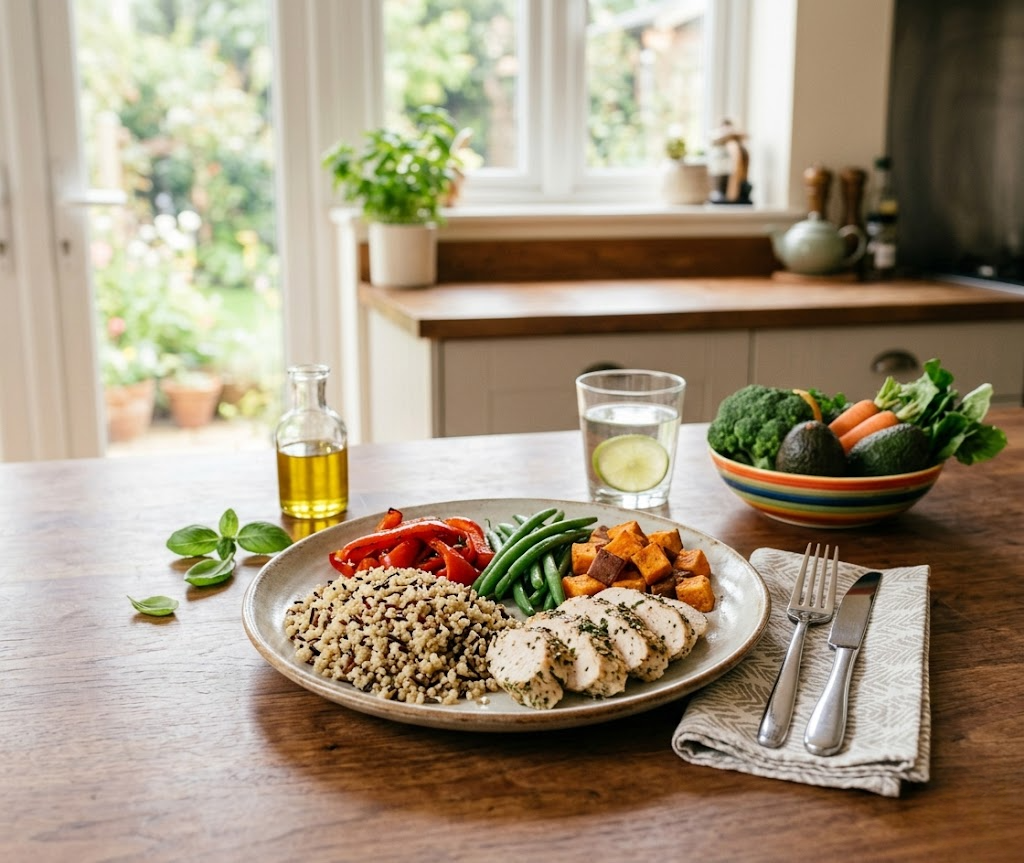
Pair carbs with something that slows them down. Protein, fat, and fiber all slow glucose absorption. Some easy pairings:
- Apple with nut butter
- Toast with eggs or avocado
- Rice with chicken, fish, or legumes
- Oats with Greek yogurt or a handful of nuts
- Crackers with hummus or cheese
Try eating in a different order. Starting a meal with vegetables and protein before the carb portion can noticeably flatten the blood sugar rise. Begin with a salad or some protein, then move to the rice or bread. The difference in how your body responds can be significant.
Don’t skip meals, especially early in the day. Arriving at lunch genuinely hungry tends to lead to faster eating and larger portions. Both push blood sugar up more sharply. A steady morning meal with protein and fiber sets a more stable baseline for the rest of the day.
Add a short walk after eating. Even 10 minutes of walking after a meal helps your muscles use glucose before it peaks in the bloodstream. A short walk around the block is enough to make a measurable difference.
Try a small amount of vinegar before a carb-heavy meal. A tablespoon of apple cider vinegar in water before eating can slow glucose absorption. It won’t transform your diet on its own, but it’s an easy addition if you know a meal tends to spike your blood sugar.
Small Shifts, Steadier Days
If you’ve been hungry an hour after eating, or caught yourself craving sugar mid-afternoon for no clear reason, now you know what’s likely behind it. It’s not a metabolism problem or a lack of self-control. It’s a blood sugar pattern, and patterns respond to small, consistent changes.
Start with one thing. Pair your next carb-heavy meal with a protein, or take a short walk after dinner. Neither takes much effort, but both give your body a chance to handle glucose more smoothly. Steadier blood sugar means fewer cravings, more consistent energy, and a lot less of that confusing hunger that shows up when you know you should still be full.
If hunger crashes, low energy, or intense cravings feel persistent despite these changes, it’s worth talking to your doctor. Sometimes these patterns point to something worth checking more closely.