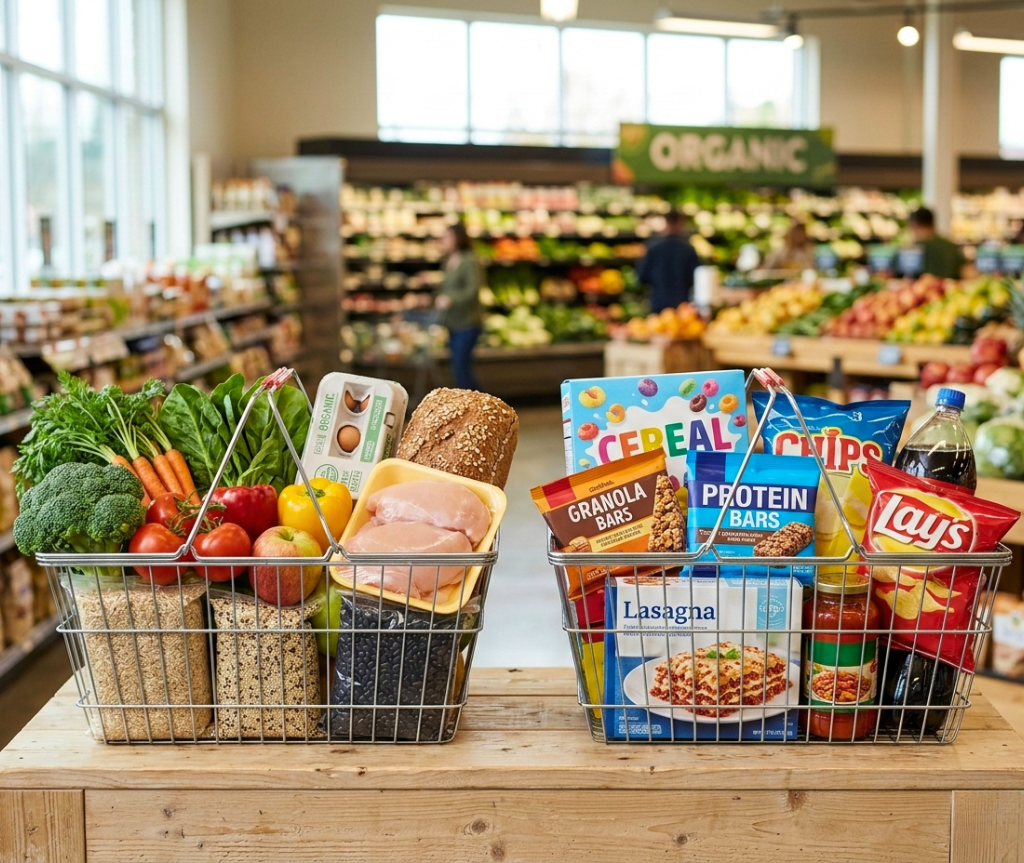

Ultra-processed foods are industrial products made mostly from refined ingredients and chemical additives, rather than whole foods.
They now make up 50 to 60% of daily calories in many Western countries, and that share is rising fast across Asia, Latin America, and Africa. Eating them regularly is linked to weight gain, blood sugar problems, gut damage, and an increased risk of disease.
You don’t need to cut out every convenience food. But swapping just a few ultra-processed staples for whole-food alternatives can make a real difference to how you feel.
You’re Probably Eating More of These Than You Realize
Pick up a box of cereal at the supermarket. The front says ‘wholesome’ and ‘packed with fiber.’ Flip it over, and your ingredient list runs 30 items long. Most of them sound more like chemistry than food.
Ultra-processed foods now make up roughly 50 to 60% of your daily calories in the UK and US. This isn’t just a Western issue. The same shift is happening in Asia, Latin America, and parts of Africa as these products get cheaper and more widely marketed.
What makes this worth your attention is that many foods marketed as healthy still fall into this category. Protein bars, flavored yogurts, plant-based meat alternatives, and most breakfast cereals all regularly make the list.
8 Foods That Raise Your Cholesterol (And What to Eat Instead)
What Actually Makes a Food Ultra-Processed
Not all processing is harmful. Freezing vegetables locks in vitamins. Canning beans makes them shelf-stable. Pasteurizing milk kills harmful bacteria. These are small changes that leave your food mostly recognizable and nutritious.
Ultra-processed foods are a different story. They’re built mostly from substances extracted from whole foods: oils, starches, sugars, and protein isolates. Then manufacturers add emulsifiers, stabilizers, artificial flavors, synthetic colors, and sweeteners. Your kitchen wouldn’t recognize the result as food.
Common examples: soft drinks, packaged chips, instant noodles, and sugary cereals. Add frozen ready meals, chicken nuggets, hot dogs, and most flavored yogurts to your list. If you spot ‘maltodextrin,’ ‘mono and diglycerides,’ or ‘high fructose corn syrup’ on your label, you’re holding one.
A simple test: flip the pack and read your ingredient list, not the front. If it has more than five items you wouldn’t cook with at home, that’s your signal.
What These Foods Do to Your Body
The effects build slowly. You probably won’t notice anything after one meal. But eat these foods every day, and your body starts to show the strain in four specific ways.
Your appetite stops working properly. People who eat ultra-processed foods tend to consume around 500 more calories per day than those who eat whole foods. Both groups had similar access to nutrients, but the ultra-processed group ate faster and felt less satisfied. These products are engineered to override your natural fullness signals. The sugar-fat-salt combinations keep you eating well past the point your body would normally stop.
Your blood sugar takes a hit. Most ultra-processed foods are low in fiber, which normally slows the absorption of sugar. Without that buffer, your blood sugar spikes fast and drops hard. Repeat that pattern often enough, and your cells become less responsive to insulin. That’s how type 2 diabetes develops. One large European study found that a 10% rise in your ultra-processed food intake pushes your diabetes risk up by about 15%.
Your gut bacteria suffer. Your gut microbiome needs fiber from whole plant foods to stay healthy. Ultra-processed foods give it very little. Certain emulsifiers in these products have also been shown to disrupt your gut lining and trigger low-level inflammation. You might not feel this directly. But that ongoing inflammation connects to heart disease, autoimmune conditions, and even depression.
Your heart pays the price, too. Many ultra-processed foods are high in sodium, saturated fats, and sometimes trans fats. Large studies found that your risk of cardiovascular disease and early death is significantly higher when these foods dominate your diet. The more you eat, the greater your risk.
How to Spot Them on the Shelf
Skip the front of the pack entirely. Health claims like ‘low-fat,’ ‘fortified,’ and ‘sugar-free’ don’t tell you what’s actually in your food. Flip the product over and read your ingredient list.
Watch for emulsifiers such as lecithin, mono- and diglycerides, or polysorbate 80. Watch for artificial sweeteners like aspartame or sucralose, modified starches, hydrogenated oils, and high fructose corn syrup. Your whole foods don’t need any of these. An apple is just an apple. Your canned chickpeas are chickpeas, water, and salt.
A useful rule of thumb: if your product has more than five ingredients and several are chemicals, put it back. It’s not a perfect test, but it catches most of what you need to watch for.
Simple Swaps That Make a Real Difference
You don’t need to cook every meal from scratch. A few targeted swaps can cut your ultra-processed food intake significantly without upending your routine.
Instead of sugary cereal, try rolled oats with fruit and nuts. It takes five minutes and keeps you full much longer. Instead of flavored yogurt, buy plain yogurt and add your own berries or a drizzle of honey. Flavored versions often have more sugar than ice cream.
Instead of packaged granola bars, eat an apple with almond butter. Instead of processed deli meat, use leftover roasted chicken, canned tuna, or hummus in your sandwich. Instead of soft drinks, try sparkling water with lemon or a cold herbal tea.
Instead of jarred pasta sauce packed with preservatives, sauté crushed tomatoes with olive oil, garlic, and herbs. It takes the same amount of time and tastes considerably better.
The aim isn’t to take away foods you enjoy. It’s to add more whole foods to your day. Over time, ultra-processed options just take up less space on your plate.
Start Small, Not Perfect
You don’t need to overhaul your diet at once. Small changes stick far better than dramatic ones.
Start with one meal. Make your breakfast from whole foods: oats, eggs, fruit, or nuts. One whole-food meal a day is a genuine improvement. Build from there at your own pace.
Read your ingredient lists, not just your nutrition labels. Two products can look identical in calories and fat but be completely different foods. If one has three ingredients and the other has twenty, they’re not the same. Your ingredient list tells you what you’re actually eating.
Aim to reduce, not eliminate. Cutting your ultra-processed intake by 20 to 30% already makes a real difference. You don’t need to reach zero. If you have diabetes or kidney disease, ask your doctor which swaps make the most sense for your situation.
The Key Takeaway
Ultra-processed foods are built to be convenient, cheap, and hard to stop eating. Your body notices when you eat less of them, even when your changes feel small.
Start by reading your ingredient lists. Swap one or two ultra-processed staples for whole-food alternatives this week. Cook a simple meal when you can. Small, consistent changes build up faster than you’d expect.
Your body is paying attention, even when your routine barely changes.