
You’re eating reasonably well, watching your portions, maybe exercising too. But your appetite feels harder to manage than it should. Hunger comes back too soon after meals, cravings hit at the wrong times, and the scale doesn’t move the way you’d expect.
Most people assume this is a calorie problem. Eat less, move more, stay consistent. But for many people, that approach only gets them so far. What’s often missing from the conversation is the role your gut bacteria play in controlling hunger signals before you even reach for food. Gut health and weight loss are more connected than most people realize.
The appetite signals driving your choices aren’t coming from willpower alone. A lot of them are coming from your gut.
Your Gut Bacteria Play a Bigger Role in Weight Loss Than You Think
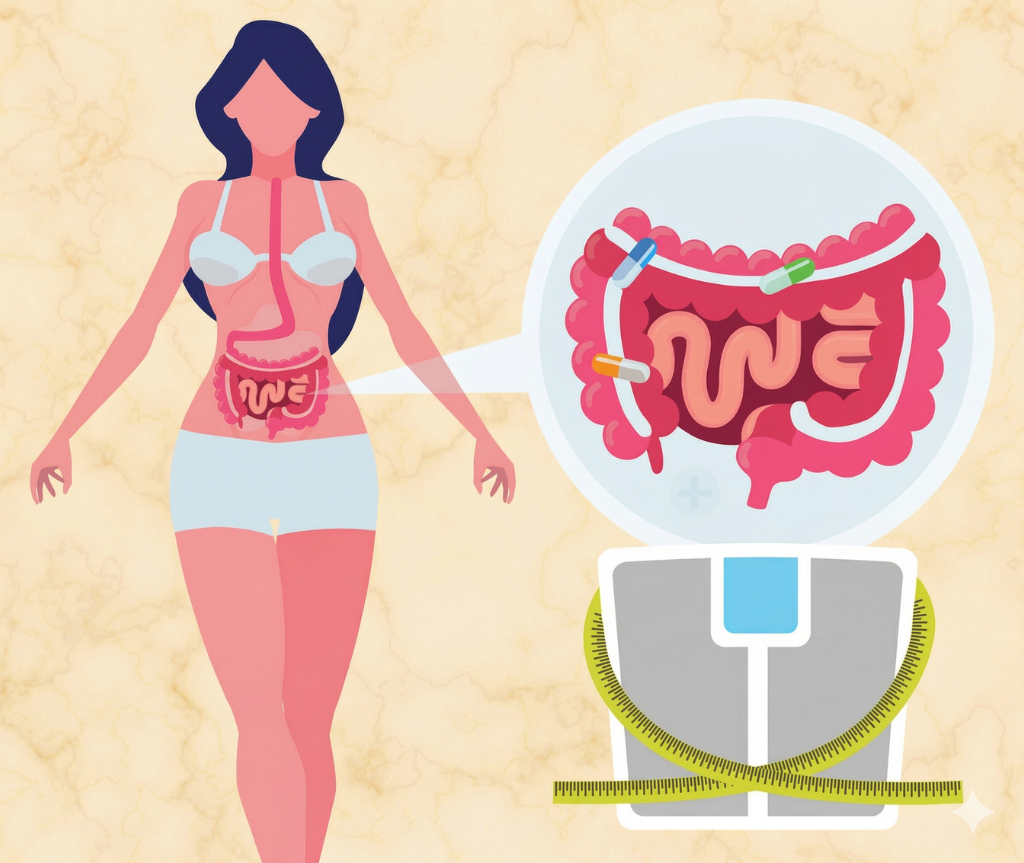
Your gut is home to trillions of bacteria, collectively known as the microbiome. This isn’t a passive community just breaking down your lunch. These bacteria actively produce chemicals that travel through your bloodstream and communicate directly with your brain.
One of the main routes they use is the vagus nerve, a direct line running between your digestive system and your brain. Think of it as a two-way messaging system. Your gut sends signals up, your brain responds, and those signals include information about hunger, fullness, and energy availability.
The scale of this is worth pausing on. Your gut produces around 90% of your body’s serotonin, a chemical most people associate with mood but which also plays a direct role in appetite. Plus, gut bacteria produce short-chain fatty acids when they ferment fiber. Those fatty acids trigger the release of hormones that tell your brain you’re full. So when the microbiome is working well, it’s actively helping you eat less without effort.
How an Imbalanced Gut Drives Hunger and Weight Gain
A healthy microbiome has high diversity. Many different bacterial species, each playing a different role. But when diversity drops, something shifts in how your body handles hunger and fat storage.
Two bacterial families are particularly relevant here. Firmicutes and Bacteroidetes are the two largest groups in the human gut. Firmicutes extract more energy from food than Bacteroidetes do. A gut with a higher proportion of Firmicutes pulls more calories from the same meal than a gut with a better balance. People with higher body weight consistently show a higher Firmicutes-to-Bacteroidetes ratio than people with a healthy weight.
On top of that, an imbalanced microbiome tends to produce less of two key fullness hormones, GLP-1 and peptide YY. Both signal to your brain that you’ve eaten enough. When production of these drops occurs, fullness signals arrive late or weakly, and you keep eating past the point you need to.
Then there’s the cravings piece. Certain bacteria thrive on sugar and processed food. When those bacteria dominate, they push you toward exactly the foods that keep them thriving. Cravings aren’t always about discipline. Sometimes they reflect what’s living in your gut.
The Foods That Support Gut Health and Weight Loss
The most powerful thing you can do for gut health and weight loss is feed the bacteria that work in your favor. That means two things above everything else: more fiber and more variety.
Gut bacteria ferment fiber to produce short-chain fatty acids, particularly one called butyrate. Butyrate fuels the cells lining your gut and triggers the release of fullness hormones. The best sources are prebiotic foods, meaning fiber that specifically feeds beneficial bacteria rather than just passing through. Good options include:
- Oats, lentils, and beans
- Garlic, onions, and leeks
- Asparagus and Jerusalem artichokes
- Slightly underripe bananas
- Cooked and cooled potatoes and rice, which increase in resistant starch as they cool
Fermented foods add something different. Yogurt, kefir, kimchi, sauerkraut, miso, and tempeh introduce live bacteria directly into your gut. Eating fermented foods regularly is linked to increased microbiome diversity, one of the strongest markers of a healthy gut.
Variety matters just as much as specific food choices. Different bacteria feed on different plant fibers, so a wider range of plant foods builds a more diverse microbiome. Aiming for 30 different plant foods per week, including vegetables, fruits, whole grains, nuts, seeds, and legumes, is one of the best-supported approaches to building gut diversity. Herbs, spices, and teas count toward that total, too.
Polyphenols are worth mentioning separately. Found in berries, dark chocolate, green tea, and olive oil, polyphenols fuel beneficial bacteria and are linked to reduced fat storage over time.
Fermented Foods for Gut Health: What They Are and How to Use Them
What Quietly Damages Your Gut Bacteria
Adding the right foods helps. But some common habits work against the microbiome, and it’s worth knowing which ones.
- Ultra-processed food reduces gut diversity fast. It feeds bacteria linked to inflammation and weight gain while starving the ones that produce fullness hormones. A diet heavy in packaged, highly processed food is one of the quickest ways to shift your microbiome in the wrong direction.
- Antibiotics are necessary when you need them. But they wipe out broad populations of gut bacteria, including beneficial ones, and recovery can take months without active effort to rebuild through diet.
- Chronic stress elevates cortisol, a stress hormone that, over time, disrupts the gut lining and reduces bacterial diversity. Poor sleep does something similar. Both are linked to increased appetite the following day, partly through their effect on gut bacteria.
- Artificial sweeteners, particularly saccharin and sucralose, alter gut bacteria in ways that may affect how your body handles glucose. The evidence is still developing, but it’s a reason not to assume calorie-free means consequence-free.
None of this requires perfection. Reducing processed foods and managing stress make a real difference to what’s living in your gut, and, by extension, to how your appetite behaves day to day.
Feeding the Right Gut Bacteria to Support Weight Loss
If appetite or weight has felt hard to manage despite doing the right things, gut health may be the missing piece in your weight loss efforts, worth paying attention to. Hunger isn’t purely a calories-in, calories-out equation. It’s also shaped by what your gut bacteria are telling your brain.
The good news is that the microbiome responds relatively quickly to changes in diet. Start with one addition this week. A serving of fermented food, an extra portion of legumes, or simply more variety in the plants on your plate. Consistency over time is what shifts the balance, not a single perfect day of eating.
If digestive symptoms, persistent cravings, or unexplained weight changes persist, a doctor or registered dietitian can help determine what’s driving them. Sometimes there’s more going on than diet alone can address.