
Most people are familiar with the Mediterranean diet—olive oil, fish, and vegetables. It’s often recommended, and for good reason. But there’s another healthy way of eating from a very different climate. The Nordic diet is what people in Denmark, Sweden, Norway, and Finland have eaten for generations.
It includes cold-water fish, hardy berries, and root vegetables that grow through harsh winters. These traditional foods aren’t trendy, but they’re great for your heart and brain.
The best part is you don’t have to live near a fjord or shop at fancy stores. You can find these foods in any regular grocery store. It’s easy to add them to your usual meals without changing everything you eat.
What You Actually Eat on This Diet
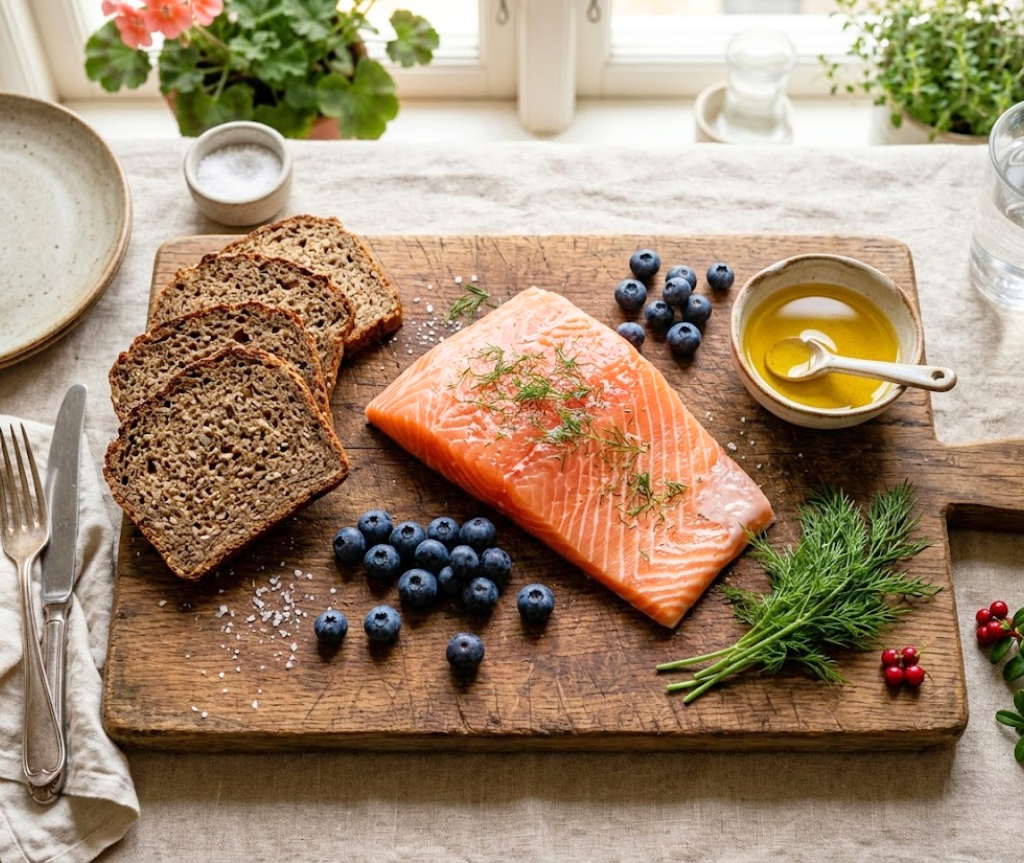
Aim to eat fatty fish like salmon, mackerel, or herring at least twice a week. These cold-water fish are rich in omega-3s. Berries, especially blueberries and lingonberries, are eaten daily. Root vegetables such as beets, turnips, and carrots often replace potatoes or rice. Whole grains such as rye, barley, and oats are important, and rapeseed oil (also known as canola oil) is used in place of olive oil.
You’ll end up eating less red meat, fewer processed foods, and not much added sugar. Still, the focus is on adding helpful foods, not just removing things. The main difference from the Mediterranean diet is the climate. Olive trees and leafy greens grow in warm places, while rye and cold-water fish thrive in colder regions. Both diets support your health, just with different foods.
This diet includes a good amount of carbohydrates, which might surprise people used to low-carb trends. However, these carbs come from whole grains that are high in fiber. That fiber helps manage cholesterol and blood sugar. There’s no need to count calories or buy special shakes—just eat real foods that grow well in colder climates.
How the Nordic Diet Protects Your Heart
Stress, poor diet, and everyday life can inflame your arteries. This inflammation damages blood vessel walls and increases the risk of plaque buildup. Omega-3s from fatty fish help reduce this inflammation. Eating salmon twice a week gives your body what it needs to repair and protect your arteries.
Fiber from whole grains works in another way. Soluble fiber in oats and barley binds to cholesterol in your digestive system, so your body removes it before it enters your bloodstream. If you switch from white bread to rye bread, your LDL cholesterol can drop within a month. The change may not be huge, but it’s often noticeable in your next blood test—no medication required.
Berries protect your body with compounds called anthocyanins. These help your blood vessels relax and tighten as needed to control blood pressure. Your arteries do this thousands of times each day, and anthocyanins help them function better. Both fresh and frozen berries offer the same benefits, so you can enjoy them all year.
Eating this way also helps you keep your sodium intake low with little effort. Since you’re avoiding packaged foods with hidden salt, you naturally eat less sodium. Root vegetables provide potassium, which helps balance the sodium you do consume. This keeps your blood pressure more stable.
All these benefits add up. Your risk of heart disease can drop by 20 to 30 percent, which is similar to the results some people get from cholesterol medication. But here, you’re achieving it through food. Your cholesterol improves, your blood pressure becomes more stable, and your arteries stay healthier as you age.
Lower Your Blood Pressure with the DASH Diet: A Simple Guide
Why Your Brain Stays Sharper Longer
Much of your brain is made of fat, especially a type of omega-3 called DHA. If you don’t get enough DHA, your brain cell membranes become stiff, and signals between cells slow down. This can show up as fuzzy thinking or forgetting things more often.
Eating fatty fish twice a week helps keep your DHA levels high. For most people, this is more effective than taking fish oil pills. Whole fish provide omega-3s, vitamin D, selenium, and protein, all of which your brain uses together.
Berries help protect your brain cells from everyday damage. Over time, normal metabolism creates unstable molecules that can harm cells and lead to memory problems as you age. The antioxidants in berries slow this process. People who eat berries regularly tend to keep their memory sharper into their 60s, 70s, and beyond.
Whole grains provide B vitamins that your brain needs to function well. These vitamins help your brain cells communicate by producing chemical messengers. Without enough B vitamins, your thinking can become foggy and your reactions slower. Rye bread and barley are good sources that your body can absorb easily.
When you put all these habits together, the benefits become clear over time. People who follow this diet keep their thinking skills stronger as they age, and their risk of dementia drops by 20 to 35 percent. The foods that protect your heart also protect your brain, so you get several benefits from the same meals.
How to Start Eating a Nordic Diet
If you are interested in trying the Nordic Diet and can easily find the food items, it is worth a try. But don’t try to change everything at once. Start with one change this week.
- Buy salmon or mackerel for dinner twice instead of your usual chicken or beef. If fresh fish is too expensive, choose canned mackerel or herring. Canned fish has just as much omega-3 and costs less.
- Next, change your cooking oil. Set aside your current vegetable oil and buy olive oil or rapeseed oil instead. They have a mild taste and work for almost any recipe. Rapeseed oil contains compounds that help lower cholesterol and can withstand higher heat than olive oil. Use it just like you used your old oil.
- Add berries to your breakfast tomorrow. Frozen blueberries are affordable and just as nutritious as fresh ones. You can stir them into oatmeal, add them to yogurt, blend them into a smoothie, or simply eat them thawed with a spoon. Either way, you’ll get the same protective nutrients.
- When you buy bread next time, choose rye instead of white or wheat. Real rye bread is dense and a bit tangy, and its fiber keeps you full for hours. If rye isn’t available, pick bread with visible seeds and grains. Check the ingredient list to make sure whole grain is listed first.
These four changes cover most of what makes the Nordic diet effective: fish twice a week, berries every day, heart-healthy oil, and whole grains instead of refined ones. You can do this anywhere, even if you live far from Scandinavia. Your local grocery store already has what you need.
Once these changes feel normal, you can add more. Roast beets or turnips as a side dish, or try skyr, the thick Icelandic yogurt high in protein. Eat red meat a little less often. Start with the basics, though. Even small changes help your heart and brain, and the benefits add up over time as this way of eating becomes your routine.
What you eat every day affects your heart and brain. The Nordic diet helps because it encourages you to add protective foods rather than giving up everything you like. Try starting with salmon this week, add berries to your breakfast tomorrow, and pick up rye bread on your next grocery trip. These simple steps can improve your cholesterol and blood pressure, and keep your mind sharp as you get older.
Small Swaps, Real Results
The Nordic diet works because it’s built on addition, not restriction. Swap one oil, add one serving of fish, and throw some berries into your breakfast. None of these changes requires a total kitchen overhaul, and none of them demands willpower you don’t have.
But over weeks and months, they quietly do something meaningful for your heart and your brain. Start with whatever feels easiest this week. That’s genuinely enough to begin.