
Some anxiety has a clear cause, but much of it does not. For many people, it feels like a constant, low-level unease with no obvious reason. If that sounds familiar, there are two things to know right away. First, this is very common. Second, everyday habits like your sleep, eating patterns, caffeine intake, and physical activity can have a bigger impact than you might think.
These tips are not a replacement for professional care, and we will return to that point later. But if your anxiety is mild and part of your daily life, the habits below are worth learning. There is more evidence supporting them than most people realize.
First, a reframe: anxiety isn’t only “in your head”
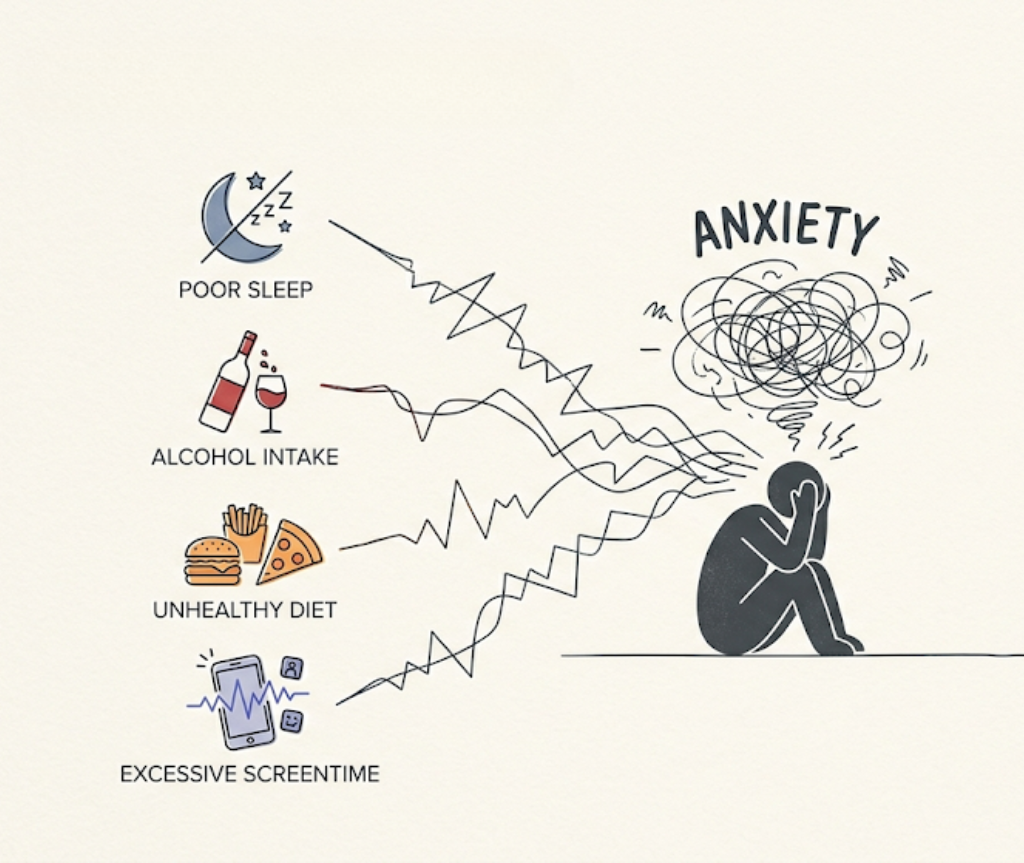
Anxiety feels like it is all in your mind, but it affects your body just as much. Your nervous system is always picking up signals from your environment and from inside your body to decide if you are safe. Things like blood sugar, lack of sleep, caffeine, and stress hormones all play a part. When several of these are out of balance, your body’s alarm system can become overactive, and anxiety can show up without warning.
So when anxiety appears, it can help to ask, “What is my body reacting to right now?” instead of “What’s wrong with me?” Often, the answer is connected to one of the habits discussed below.
One important distinction before we go further: this article is about everyday, lower-grade anxiety. Clinical anxiety disorders — panic disorder, generalized anxiety disorder, and others — are real medical conditions that lifestyle changes can support but not replace. If your anxiety is severe, persistent, or interfering with your life, treat the section at the end as the most important one.
Sleep: the loop worth breaking first
If you change just one thing, focus on your sleep. Poor sleep and anxiety make each other worse, and the research on this is especially strong.
Anxiety can make it harder to fall asleep, and not getting enough sleep can make you more anxious the next day. This cycle can repeat itself. A well-known UC Berkeley study published in the Journal of Neuroscience found that just one night without enough sleep increased activity in the brain’s emotional threat centers, like the amygdala and anterior insula, and raised anxiety in healthy people. People who are already more anxious by nature were most affected. So, losing sleep can push even a calm mind toward anxiety, and it is especially tough for those who already worry.
To break this cycle, focus on being consistent with your sleep habits instead of relying on sleep aids:
- Keep your sleep and wake times steady, including weekends. A regular schedule stabilizes your body clock in a way pills can’t.
- Stop drinking caffeine after midday. There is more information on this below, but the main point is that caffeine stays in your system longer than most people realize.
- Take time to relax in the hour before bed, and try to use screens less as bedtime approaches. The main problem is not just blue light, but the mental stimulation that keeps your brain active when it should be winding down.
What you eat, and when you eat, can affect your anxiety more quickly than you might expect.
Most people do not connect what they eat for lunch with how anxious they feel later in the afternoon. However, blood sugar is one of the quickest things to affect your mood.
When your blood sugar drops quickly, such as after skipping a meal or eating something sugary that causes a spike and then a crash, your body reacts as if there is a small emergency. It releases adrenaline and cortisol to raise your blood sugar. These stress hormones can cause shakiness, a fast heartbeat, irritability, and a sudden wave of anxiety that seems to come out of nowhere. The symptoms are so similar that a blood sugar crash can be mistaken for anxiety itself.
The solution is simple but effective: eat regular meals and choose foods that provide steady energy. Combining protein, healthy fats, and fiber helps slow the absorption of sugar and prevent big spikes and crashes. In contrast, ultra-processed foods, sugary drinks, and skipping meals worsen the situation.
A quick note about gut health and a common myth: You might have heard that “90% of your serotonin is made in your gut, so gut health controls your mood.” It is true that most of your body’s serotonin is made in the intestines. However, this does not mean gut health directly controls your mood. The serotonin made in your gut does not cross into your brain, which has its own supply.
Gut health still affects how you feel, but indirectly, through the vagus nerve, immune signals, and the availability of tryptophan, which is needed to make serotonin. Eating fiber, vegetables, and fermented foods is good for your gut, but it is not a magic switch for your mood.
Caffeine and alcohol: two common things that can make anxiety worse
Caffeine needs special attention because it acts directly on your body’s stress system. It blocks adenosine, a chemical that usually helps you relax. This is why caffeine makes you feel alert, but it can also push an anxious system too far. A review found that high doses, like five cups of coffee, can trigger panic attacks in people with panic disorder and increase anxiety in healthy adults. People react differently, partly due to genetics. If you are sensitive to anxiety, it is usually easier to cut back slowly and have your last cup earlier in the day, rather than quitting all at once.
Alcohol is another common cause, and it is easy to overlook because it seems to calm you down. A drink can help you relax at first, but as the alcohol leaves your system, your nervous system can become more active again. This is the “hangxiety” many people feel the next morning. If you notice your anxiety is worse after drinking, pay attention to this pattern.
Movement: it changes your body’s chemistry as well as your mood
Exercise is not just a way to distract yourself from anxious thoughts. Being active helps your body eliminate stress hormones and, over time, can make your nervous system less sensitive to stress overall.
There is strong evidence for this. A large review that combined many studies with tens of thousands of people found that exercise clearly reduced anxiety symptoms, with a moderate effect overall. Importantly, you do not need intense workouts to see benefits—lower-intensity, shorter sessions often worked best.
The main point is that being consistent is more important than working out hard. A daily walk, swim, bike ride, or any activity that gets you moving most days will help more than an occasional intense workout. If you are just starting, focus on moving regularly in any way that feels doable for you.
Two things that can help quickly: spending time in nature and slow breathing
Besides the main habits, there are a couple of small changes that can help you feel better right away.
- Spending time outside helps. Even a short visit to a green space can lower your cortisol levels. One study found that spending 20 to 30 minutes in a place that feels like nature led to the biggest and fastest drop in stress hormones—no need for a long trip into the wild. Even a walk in the park at lunch can make a difference.
- Slow, exhale-focused breathing can help too. When you slow your breathing on purpose, it activates your parasympathetic nervous system, which is the “rest and digest” part of your body. This can be measured by improved heart-rate variability, a sign of calm. Just a few minutes of slow breathing, with longer exhales than inhales, can help you feel calmer quickly.
Neither of these changes is dramatic on its own. But when you add them to the other habits above, they help reduce the overall stress on your nervous system.
What to actually try this week
Anxiety usually does not go away overnight, and trying to change everything at once often does not work. Instead, choose one habit to focus on and let it become part of your routine before adding another:
- Go to bed and wake at the same time every day.
- Move your last coffee to before noon.
- Add protein and fiber to breakfast so you’re not crashing by mid-afternoon.
- Get 20 minutes outside.
Small changes, done regularly, add up over time. Your nervous system responds better to steady routines than to big, one-time efforts.
One last and very important point: These habits can truly help, but they are not a replacement for professional care, especially if your anxiety is strong, ongoing, or interfering with your daily life.
Talking to a doctor or mental health professional is not a last resort—it is a smart first step, and it often makes everything else work better. If this applies to you, make it your top priority.
This article is for general information and isn’t medical advice. If you’re struggling with anxiety, a qualified clinician can help you find the right support for your situation.