
Most people think about bacteria, additives, and pesticides when considering food safety, but rarely PFAS. These chemicals enter food through less visible routes, such as packaging, contaminated water for fish, and soil for vegetables.
PFAS from food build up in the body over time. Not every meal is a risk, but some foods and habits pose greater risks than others. Knowing which ones matter most helps you lower your exposure without extra stress. There are two main ways PFAS get into what you eat. Understanding both helps you see where the real risks are.
The first way is through food contact materials. PFAS are used in coatings on fast-food wrappers, microwave popcorn bags, pizza boxes, and some paper cups and plates. These coatings keep grease from soaking through. However, higher temperatures and longer contact times make it easier for PFAS to migrate from packaging into food. For example, a hot burger in a lined wrapper for ten minutes will transfer more PFAS than a cold sandwich in plain paper.
The second way is environmental contamination. PFAS enter the environment through industrial waste, firefighting foam, and sewage sludge used as fertilizer. These chemicals end up in soil and water. Crops grown in contaminated soil take up PFAS through their roots, and fish and shellfish in polluted water build up PFAS in their bodies. This route is less obvious than packaging, but it still adds to your overall exposure.
Both ways are important, but for most people, food packaging is the more common daily source of PFAS.

1. Fast Food and Takeaway Packaging
Fast food is one of the biggest sources of PFAS in our diets, mainly due to packaging.
Grease-resistant coatings on fast-food wrappers, sandwich bags, and burger boxes have often contained PFAS. Some big chains are working to remove these chemicals, and there has been progress in some places. Still, the change is slow, and many types of packaging still contain these compounds.
The risk increases when hot food remains in contact with its packaging for an extended period. Eating straight from the wrapper or keeping food warm in it leads to greater PFAS exposure than transferring it to a plate. If you eat fast food often, the packaging can significantly increase your total PFAS intake over time.
Cooking at home almost completely avoids this source. If you get takeaway, putting your food on a plate or in a bowl instead of eating from the packaging is a simple way to reduce contact time.
2. Microwave Meals and Popcorn
Microwave packaging is especially important to monitor because heat speeds up PFAS migration into food, and microwaving heats the packaging directly.
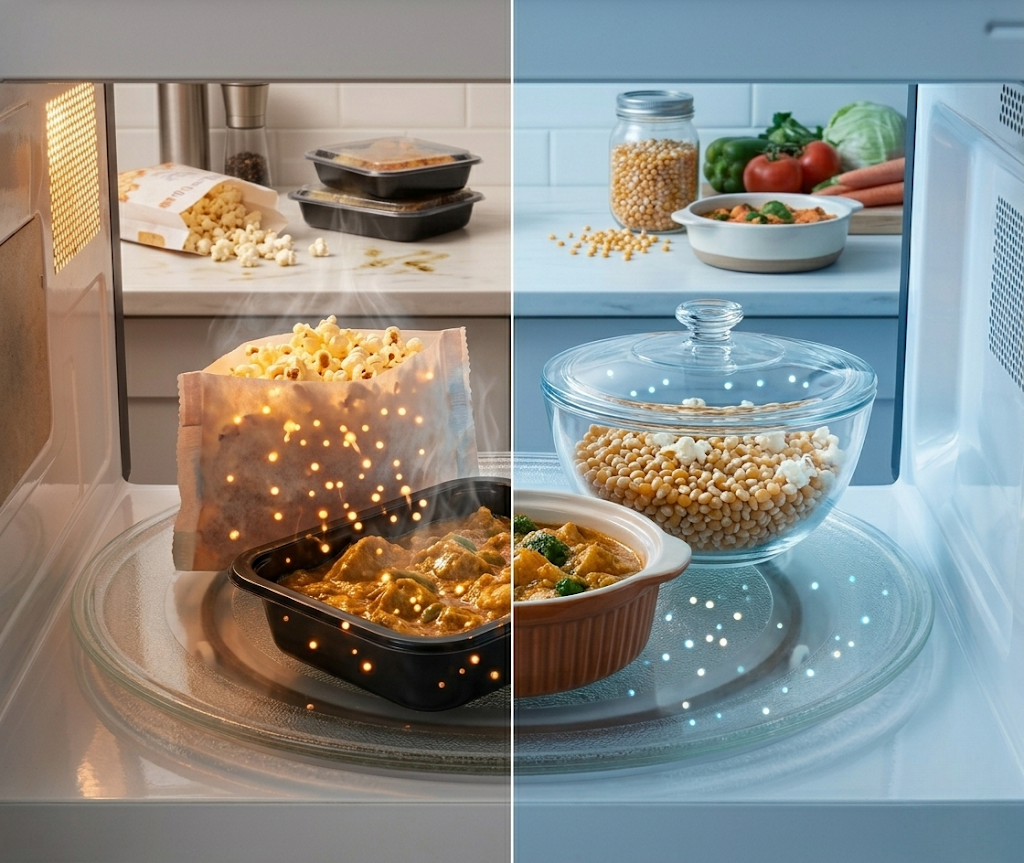
Microwave popcorn bags are a well-known source of PFAS in food. The inner coating that prevents the bag from burning often contains these chemicals. When the bag heats up, PFAS can move into the popcorn. Making popcorn on the stove or in a microwave-safe bowl with a loose lid avoids this problem completely.
Microwave meal trays and containers with grease-resistant coatings have a similar risk. Heating ready meals in their original packaging, especially if they are oily or fatty, makes it easier for PFAS to get into your food. Moving the food into a ceramic or glass dish before microwaving is an easy change that quickly becomes a habit.
3. Fish and Seafood From Contaminated Waters
Fish and shellfish take in PFAS from the water and from their prey. This process, called bioaccumulation, means PFAS levels in fish can be much higher than in the water itself.
Freshwater fish from lakes and rivers near factories, military bases, or heavily farmed land have the highest risk. Some places have health warnings about eating local freshwater fish. If you fish for fun or buy local fish, check for advisories in your area.
Farmed fish usually have less PFAS than wild fish from polluted waters, as long as their feed and water are clean. Ocean fish also tend to have lower PFAS than freshwater fish from risky areas, but this can change depending on where and what kind of fish you buy.
Shellfish, such as mussels and oysters, grown near industrial coastlines can have higher PFAS levels. Where they are farmed matters more than the type of shellfish. Choosing shellfish from certified clean-water sources is safer.
4. Crops Grown in Contaminated Soil
Using sewage sludge as fertilizer on farms is a less obvious route by which PFAS enters food. Sewage sludge, used for its nutrient content, can carry PFAS from industrial and household waste into the soil. Crops grown in this soil take up PFAS through their roots, and it ends up in the food.
Leafy and root vegetables absorb more PFAS from soil than fruit-bearing plants. Lettuce, spinach, and carrots grown on contaminated land can contain measurable levels of PFAS. The risk varies a lot depending on the farm’s soil and location.
Organic produce is not always free of PFAS. In some places, organic rules still allow sewage sludge, and some organic farms have contaminated soil. To lower your risk, buy produce from different sources, wash it well, and choose food from areas without known contamination when you can.
5. Drinking Water Used in Cooking
Water quality matters for more than just drinking. Water used to boil pasta, cook rice, make soup, or prepare any food that soaks up liquid can contain PFAS.
If your tap water has high PFAS levels, it’s a good idea to use filtered water for both cooking and drinking. A reverse osmosis system at your kitchen tap can handle both. If you already use a countertop or jug filter for drinking, try using it for cooking water too.
Building a Lower-Risk Eating Pattern
Reducing PFAS through diet doesn’t require a complete overhaul. A few consistent habits make the most difference.
Cooking at home with fresh, unpackaged foods almost completely avoids PFAS from packaging. If you use packaged food, pick items in plain paper, cardboard without special coatings, or glass or tin. Moving microwaved food into a ceramic or glass dish before heating is one of the best habits you can start.
For fish, choose different sources and opt for ocean fish or certified farmed fish instead of local freshwater fish from high-risk areas to lower PFAS intake. For produce, wash it well and buy from different farms and regions to reduce the risk of local contamination.
None of these steps eliminates PFAS from your diet entirely. But together, they meaningfully reduce the amount your body accumulates through food over time.
Small Choices That Add Up Over Time
Food is a major route for PFAS to enter the body, but it’s also an area where you can make practical changes. You don’t have to cut out whole food groups or follow a strict diet. The most important thing is to identify which habits pose the greatest risk and change them first.
Begin by looking at packaging. If you often eat fast food from the wrapper, microwave popcorn in the bag, or heat ready meals in their trays, try changing those habits first. Next, consider your water. If you eat fish often, checking local advisories only takes a few minutes and can help you make safer choices.
Small, consistent changes to how you eat and how your food is packaged are genuinely worth making. Over time, they reduce what accumulates. And if you have existing health concerns that haven’t been fully explained, it’s worth mentioning your dietary habits and PFAS exposure to your doctor.