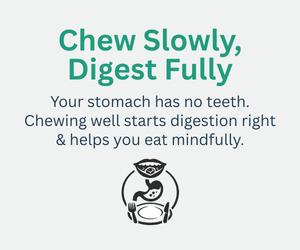

Most people eat while doing something else. Scrolling, watching, working, half-reading something on their phone. The meal disappears, and you barely tasted it. That pattern affects you in more ways than you might expect. Changing it doesn’t take a diet or a set of rules.
Mindful eating is just the practice of paying attention while you eat. That sounds simple. But what it does for your appetite and your food choices can genuinely surprise you. The difference in how satisfied you feel after meals is real.
Key InsightMindful eating is the practice of paying full attention to your food, without distractions. When you slow down, your brain gets the time it needs to register fullness, which means you feel satisfied sooner and naturally eat less. It also helps you tell the difference between real hunger and emotional eating, and shifts your food choices over time without restriction or rules. You don’t need a special programme or any equipment. You just need to decide to pay attention. |
What Mindful Eating Actually Means
Mindful eating isn’t a diet. There’s nothing for you to count, nothing to cut out, and no food that’s off your list. The idea is to slow down enough to notice what your body is telling you. Before you eat, during your meal, and after. Your body sends clear signals about hunger and fullness all the time. Most of us have just learned to tune them out.
When you eat fast or while distracted, your brain doesn’t fully register the meal. Your stomach may be satisfied, but because your brain hasn’t caught up, you keep eating. It takes about 20 minutes for your brain to receive fullness signals from your stomach. If your meal is done in 10, you’ve likely eaten past where your body needed you to stop.
Slowing down closes that gap for you. When you chew more slowly and actually taste your food, your brain has time to register the meal properly. You feel satisfied sooner, and that satisfaction lasts longer.
What Changes When You Start Paying Attention
Your relationship with food changes when you start paying close attention to it. Here’s what you’ll likely notice over time.
- Your meals become more satisfying even when your portions are smaller. When you actually taste your food instead of rushing through it, flavour comes through more clearly. Even a straightforward lunch can feel genuinely enjoyable when you’re fully there for it.
- Your food choices start to shift on their own. When you pay attention to how different foods affect you after eating, patterns start to emerge. Not just during the meal, but also an hour later. You naturally reach for things that make you feel good. Highly processed snacks often taste great for the first few bites, but they frequently leave you flat shortly after. Once you start noticing that, it changes what you reach for.
- Your hunger signals become easier for you to read. A lot of people eat out of habit or emotion rather than out of actual hunger. You eat because it’s noon, because you’re stressed, or because food is sitting right in front of you. Mindful eating teaches you to pause and ask whether you’re actually hungry before you reach for food. That pause is small, but it’s one of the most useful habits you can build into your day.
- Your blood sugar stays steadier. When you eat quickly, especially with high-carb meals, your blood sugar tends to spike sharply. Eating more slowly gives your body more time to process what you’re putting in. If you have diabetes or prediabetes, this matters quite a bit for you. If you’re on medication for blood sugar, check with your doctor before making significant changes to how you eat.
You end up eating less without restricting yourself. This is probably the part that surprises you most. Mindful eating doesn’t involve limiting what you eat. But when you stop because your body says it’s enough, not because your plate is empty, you naturally eat less.
How to Actually Do It
You don’t need any equipment, special food, or a long block of time to start. You just need to decide to pay attention to what’s in front of you.
Before you sit down to eat, take a moment to check in with yourself. Are you actually hungry, or are you reaching for food because you’re bored, tired, or stressed? If you’re hungry, eat. If you’re not sure, have a glass of water and wait a few minutes. Your body will tell you clearly.
When you start eating, put your phone somewhere else. Turn off whatever you have playing in the background. Sit at a table if you can. These aren’t complicated changes, but they tell your brain that your meal is happening, and that matters.
A few simple steps to try at each meal:
- Take smaller portions than you think you’ll need. You can always get more if you’re still hungry.
- Set your fork down between bites and eat slowly. It gives your body time to catch up.
- Notice what your food actually tastes like, its temperature, texture, and flavour.
- Halfway through, pause and check how you’re feeling. Are you still hungry, or are you eating because your food is still there?
- When you finish, notice how you feel. Comfortably full, or overfull? Energised, or sluggish?
Those observations help you understand what your body responds well to, and that knowledge builds gradually.
Making It Work in Real Life
Changing how you eat takes a little time, and some meals will go better than others. That’s completely normal.
If you slip back into old habits, don’t be hard on yourself. It’s not about doing every meal perfectly. It’s about gradually building your awareness. Even one mindful meal a day makes a difference. Breakfast is often a good place for you to start, because you’re usually less rushed than at lunchtime.
Try to keep healthy food easy to reach in your kitchen. When the better option is the convenient one, you’re more likely to choose it even on a tired evening. That’s not willpower on your part. It’s just a smart setup.
A Different Way of Thinking About Food
When you stick with mindful eating for a few weeks, most people describe the same kind of shift. Your meals feel more satisfying. Your cravings settle. The anxious relationship many people have with food tends to soften. The guilt and all-or-nothing thinking fade as your awareness grows.
Your body has been sending you signals about hunger and fullness your whole life. Mindful eating is just the practice of slowing down enough to hear them again.