
If you’re eating plenty of vegetables, grabbing wholegrain bread, and still feeling bloated or slow, you’re not alone. A lot of people do everything they’re supposed to do with fiber and still don’t feel the difference. The reason usually isn’t the amount. It’s the type.
Fiber is one of those nutrients that gets simplified down to a single number. Hit your daily target, and you’re done. But that’s a bit like saying all exercise counts the same, whether you walk to the shops or train for a marathon. The type matters. Once you understand what each type actually does, choosing foods that work for you becomes much easier.
Why Your Body Needs Fiber in the First Place
Unlike protein, fat, or carbohydrates, fiber isn’t broken down for energy in the usual way. Instead, it moves through your digestive system mostly intact, doing several jobs along the way.
It slows the rate at which food leaves your stomach. That steadies your blood sugar after meals and keeps you fuller for longer. Fiber also adds bulk to waste as it moves through your colon, which is why low fiber intake and constipation tend to go hand in hand. On top of that, certain types feed the bacteria living in your gut, and those bacteria have a much bigger influence on your health than most people realize.
Low fiber intake is associated with higher cholesterol, unstable blood sugar, digestive problems, and reduced gut bacterial diversity. Most adults eat around 15 to 18 grams a day. The recommended amount sits closer to 25 to 30 grams. But closing that gap with the right types of fiber makes far more of a difference than simply eating more of whatever is already on your plate.
Fiber Isn’t Just One Thing
Most people picture fiber as a single nutrient. It isn’t. There are two main types, soluble and insoluble, and they work in completely different ways.
Soluble fiber dissolves in water and forms a thick gel as it moves through your digestive tract. Think of it like a sponge. Insoluble fiber doesn’t dissolve. It stays largely intact and adds bulk to your stool, so think of that one as a broom. Both are useful, but for different reasons. Most whole foods contain some of each, just in different ratios. An apple, for example, has soluble fiber in the flesh and insoluble fiber in the skin.
The mistake most people make is eating plenty of one type, usually insoluble, because it’s in bread, cereal, and most common high-fiber foods, while getting very little of the other. That’s often where digestive health starts to stall.
What Soluble Fiber Actually Does
Soluble fiber’s main job is to slow down digestion. As it forms a gel in your digestive tract, it slows the absorption of sugar into your bloodstream. So instead of a sharp blood sugar spike after a meal, you get a steadier, more gradual rise. For anyone managing their energy levels or blood sugar, that difference is genuinely useful.
Soluble fiber also binds to cholesterol particles in the gut and helps carry them out of the body before they are absorbed. Beta-glucan, the specific type of soluble fiber found in oats and barley, can reduce LDL cholesterol by around 5 to 10 percent when you eat roughly 3 grams a day. That works out to about 1.5 cups of cooked oats.
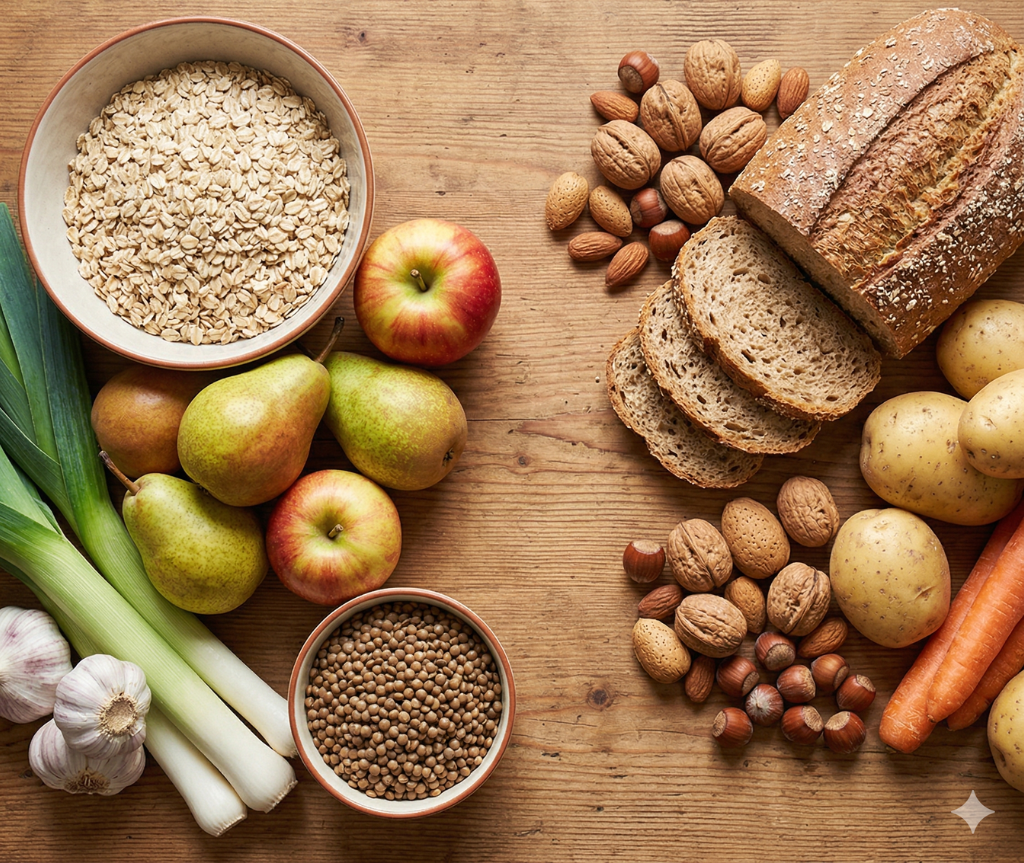
Good sources include oats, apples, pears, citrus fruits, beans, lentils, and psyllium husk. If you have IBS, introduce these gradually. Some people find soluble fiber, particularly psyllium, works well for them, but starting slowly gives your gut time to adjust.
Why Fermentable Fiber Is the One Most People Miss
Some soluble fiber goes a step further. Certain types get fermented by the bacteria living in your large intestine, and this group, often called prebiotic fiber, is probably the most important type most people aren’t eating enough of.
When gut bacteria ferment this fiber, they produce compounds called short-chain fatty acids. These work as a fuel source for the cells lining your gut wall, helping keep that lining strong. A healthy gut lining matters because it controls what gets absorbed into your bloodstream and what doesn’t. When it weakens, that balance breaks down.
Not eating enough fermentable fiber means less bacterial diversity in your gut. Over time, that connects to weaker immunity, more inflammation, and even effects on mood. Gut bacteria produce a significant share of the body’s serotonin, so when people talk about gut health, fermentable fiber is often the piece that’s missing.
The best sources are garlic, onions, leeks, Jerusalem artichokes, chicory root, slightly underripe bananas, and legumes. Worth knowing: when you first increase your intake of these foods, you might notice more gas or bloating. That’s completely normal and usually settles within a week or two as your gut bacteria adapt.
What Insoluble Fiber Does (And What It Can’t)
Insoluble fiber keeps things moving. It adds bulk and weight to stool, speeds up transit through the colon, and helps prevent constipation. For that reason, most people associate it with the idea of “eating more fiber.”
But insoluble fiber doesn’t feed gut bacteria the way fermentable fiber does. It also doesn’t slow digestion or bind to cholesterol. A good way to think about it: insoluble fiber keeps traffic moving, but fermentable fiber builds the road. Common sources include wheat bran, whole grain bread, brown rice, vegetable skins, and nuts.
So if you’re eating plenty of wholegrain bread and cereal but still feel like your gut health isn’t where it should be, this is often why. Insoluble fiber is doing its job. The other types just aren’t showing up enough.
How to Get the Right Balance Without Counting Grams
You don’t need to track grams or read nutrition labels every meal. A simpler approach is thinking about variety across the week rather than hitting a daily number.
Aim for at least one source of soluble fiber and one source of fermentable fiber each day, alongside your usual insoluble sources. In practice, that might look like swapping refined breakfast cereals for porridge, adding lentils or beans to soups and salads a few times a week, using garlic and onions in cooking most days, and leaving the skin on apples, pears, and potatoes where you can. Choosing whole fruits over juice is another easy swap that adds up over time.
One more thing that helps: drink more water. Fiber draws fluid into the digestive tract to do its job properly. Without enough water, increasing fiber can make things worse rather than better.
If you have a digestive condition like IBD or IBS, talk to your doctor or a dietitian before significantly increasing fermentable fiber. For most people, it’s beneficial, but under certain conditions, it requires a more careful approach.
Small Shifts, Bigger Difference Than You’d Expect
If you’ve been eating what feels like enough fiber but still not feeling great, the type is probably the missing piece. Variety matters more than volume. A diet with a good mix of soluble, fermentable, and insoluble fiber does something that simply eating more bran never will.
Start with one change this week. Add oats to your breakfast, throw some lentils into your dinner, or make sure garlic and onions go into your cooking most days. Those small additions shift the balance more than you’d expect, and your gut will notice the difference before long.