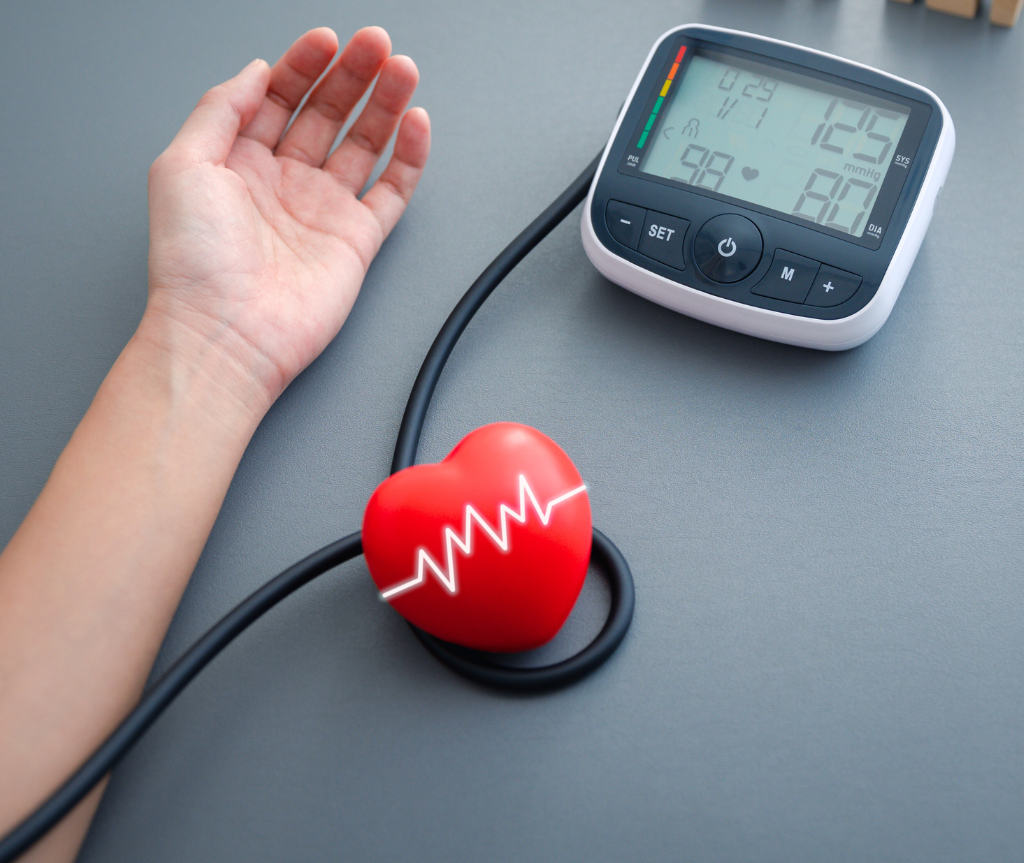

Getting told your blood pressure is “a bit high” is one of those moments that feels vague and worrying at the same time. No pain. Nothing warns you. Just a number on a screen that your doctor takes seriously. So should you. High blood pressure quietly strains your arteries, heart, and kidneys over the years, raising your risk of heart attack, stroke, and kidney disease. The reassuring part is that most of the factors that push your numbers up are ones you can actually change.
Before deciding what to do, it helps to understand exactly what your numbers are telling you.
What the Numbers Actually Mean
Blood pressure is recorded as two numbers, written like a fraction. The top number, systolic, measures the pressure in your arteries when your heart beats. The bottom number, the diastolic pressure, measures the pressure when your heart rests between beats.
A reading below 120/80 mmHg is considered healthy. Between 120–129 systolic and below 80 diastolic sits in the “elevated” zone. Once you reach 130/80 or above, that’s classified as high blood pressure, or hypertension. Stage 2 hypertension starts at 140/90 and above, which typically calls for medication alongside lifestyle changes.
Here’s why that matters for making decisions: a 10 mmHg drop in systolic pressure is linked to roughly a 20% lower risk of major cardiovascular events. That’s a meaningful reduction, and lifestyle changes can get you there without side effects.
1. Cut Sodium, But Know Where It’s Actually Hiding
Salt makes your body hold onto water, which increases blood volume. More volume means more pressure on your artery walls. Reducing sodium consistently lowers systolic pressure by around 5–6 mmHg on average, and sometimes more if your starting intake is high.
The recommended daily limit is 2,300 mg or less of sodium. For people with existing hypertension, the target is closer to 1,500 mg. To put that in perspective, one teaspoon of table salt contains about 2,300 mg.
The challenge is that most of the sodium you consume doesn’t come from your salt shaker. Around 70–75% of the sodium in the average diet comes from processed and restaurant foods. Bread, canned soups, deli meats, sauces, and condiments are among the biggest contributors. Checking labels is the fastest way to find where yours is coming from.
Practical swaps that work: choose ‘no added salt’ canned goods, use herbs, garlic, lemon juice, or spice blends in cooking, and rinse canned beans or vegetables before eating them. Your palate adjusts to less salt within 2 to 4 weeks, so foods that once tasted bland become more flavourful over time.
2. The DASH Diet: Why It Works and What It Looks Like
The DASH diet, which stands for Dietary Approaches to Stop Hypertension, is one of the most thoroughly tested eating plans for managing blood pressure. Following it consistently can lower systolic pressure by 8–11 mmHg, comparable to taking a single blood pressure medication.
The reason it works comes down to three nutrients: potassium, magnesium, and calcium. These minerals help your blood vessels stay relaxed and flexible. Most people eating a typical Western diet are low on all three.
What a DASH day actually looks like:
- 6–8 servings of whole grains (oats, brown rice, wholemeal bread)
- 4–5 servings of vegetables (aim for color variety)
- 4–5 servings of fruit
- 2–3 servings of low-fat dairy
- 6 or fewer servings of lean meat, poultry, or fish
- Nuts, seeds, or legumes 4–5 times a week
You don’t have to follow it perfectly from day one. Even partial adoption, adding more vegetables and cutting back on processed foods, produces measurable improvements.
3. How Exercise Lowers Blood Pressure
Regular aerobic exercise strengthens your heart and makes it more efficient. A stronger heart pumps the same amount of blood with less effort, which means less pressure on your artery walls. Over time, regular physical activity can lower systolic pressure by 5–8 mmHg.
The most well-studied recommendation is 150 minutes of moderate-intensity aerobic exercise per week. That breaks down to about 30 minutes on five days. Brisk walking, cycling, swimming, and dancing all count. “Moderate intensity” means you can still hold a conversation, but you’re slightly breathless.
If 30 minutes in one go feels like too much, split it. Three 10-minute sessions spread throughout the day produce blood pressure benefits similar to one continuous 30-minute session. The key is consistency, not duration.
Resistance training, such as bodyweight exercises or weight lifting, provides additional benefits. Doing it two to three times a week, in addition to aerobic exercise, can lower systolic pressure by an additional 2–4 mmHg. If you have existing heart disease or very high blood pressure, check with your doctor before starting a resistance program.
4. Weight and Blood Pressure: What the Numbers Show
Carrying extra weight increases your heart’s workload and contributes to insulin resistance, both of which raise blood pressure. For every kilogram of weight lost, systolic pressure typically drops by about 1 mmHg. So losing 5 kg could translate to a 5 mmHg reduction.
Waist circumference matters too, not just overall weight. Fat stored around the abdomen is more metabolically active and more closely linked to cardiovascular risk. A waist measurement above 94 cm in men or 80 cm in women is generally considered a risk factor warranting attention.
Modest, sustained weight loss is more effective than rapid weight loss followed by weight regain. Combining the DASH diet with regular physical activity has the strongest evidence. You don’t need to reach an ideal weight to see improvements in your blood pressure. Even a 5–10% reduction in body weight produces meaningful changes in most people.
5. Managing Stress: More Than Just ‘Relaxing.’
When you’re under stress, your body releases adrenaline and cortisol. These hormones narrow your blood vessels and increase your heart rate, which temporarily spikes blood pressure. For most people, it returns to normal once the stressor passes.
The problem is chronic stress. When your nervous system stays in high-alert mode for weeks or months, blood pressure can remain elevated even at rest. Stress also drives habits that further raise pressure: poor sleep, more alcohol, less exercise, and more processed food.
Techniques with consistent evidence include slow diaphragmatic breathing (inhale for 4 counts, hold for 4, exhale for 6–8 counts), mindfulness meditation practiced for 10–15 minutes daily, and progressive muscle relaxation. These approaches activate the parasympathetic nervous system, which is the body’s “rest and recover” mode, helping vessels relax and heart rate slow.
Sleep is also part of the stress picture. Consistently getting fewer than 6 hours per night is independently associated with higher blood pressure. Prioritizing 7–9 hours is not just good for energy. It actively supports cardiovascular health.
6. Alcohol and Blood Pressure: Where the Line Is
Alcohol in small amounts has a modest relaxing effect on blood vessels. In larger amounts, it has the opposite effect, significantly raising blood pressure. Heavy or regular drinking is one of the more common reversible causes of high blood pressure in otherwise healthy adults.
The general threshold where blood pressure benefits flip to harm is around two drinks a day for men and one for women. Above that, systolic pressure tends to rise in a dose-dependent way, meaning the more you drink, the higher the reading.
Cutting back produces results fairly quickly. Reducing intake from heavy to moderate levels can lower systolic pressure by around 4 mmHg within a few weeks. Having two or three alcohol-free days each week is a practical way to reduce overall intake without feeling like you’re making a drastic change.
If you find it hard to cut back even though you want to, that’s worth mentioning to your doctor. There are effective, low-burden support options available.
7. Smoking and Your Arteries
Each cigarette causes an immediate and temporary spike in blood pressure as nicotine narrows your blood vessels and speeds up your heart rate. Over the years, smoking causes lasting damage to artery walls, making them stiffer and more prone to the buildup of fatty deposits.
Quitting smoking doesn’t immediately lower resting blood pressure in the way that reducing sodium does. But it stops the ongoing damage and dramatically reduces cardiovascular risk. Within one year of quitting, your risk of heart disease drops by about half. Within five years, your stroke risk approaches that of someone who has never smoked.
Nicotine replacement therapy, prescription medications, and structured support programs all significantly improve quitting rates. Trying to quit without support is considerably harder, so reaching out to your doctor or another healthcare provider for guidance is worth doing early on.
8. Potassium: The Counterbalance to Sodium
Potassium and sodium work against each other in your body. Potassium helps your kidneys excrete sodium and also relaxes the walls of your blood vessels. Getting enough potassium from food is one of the simplest ways to support healthy blood pressure.
The recommended intake is 3,500–4,700 mg per day from food. Good sources include:
- Bananas: ~420 mg per medium banana
- Cooked spinach: ~840 mg per cup
- Lentils: ~730 mg per half-cup, cooked
- Sweet potato: ~940 mg per medium potato, baked with skin
- Avocado: ~690 mg per half avocado
An important caution: if you have kidney disease or take medications that affect potassium levels (such as ACE inhibitors or certain diuretics), high potassium intake can cause problems. Check with your doctor before significantly increasing your intake.
9. Caffeine: Temporary Spike or Long-Term Problem?
Caffeine can cause a short-term rise in blood pressure, typically within 30 minutes of drinking it. The spike usually lasts 3–4 hours. For most regular coffee drinkers, the body becomes tolerant to this effect over time, so moderate daily coffee intake is not strongly linked to chronic hypertension.
That said, some people are more caffeine-sensitive than others. If your blood pressure readings are consistently elevated, it’s worth checking whether caffeine plays a role. Measure your blood pressure before your morning coffee and again 30–60 minutes after. If you see a consistent rise of 5–10 mmHg or more, reducing your intake is a sensible step.
Energy drinks are a separate concern. Many contain very high caffeine levels combined with other stimulants, and their effect on blood pressure is more pronounced. Limiting or avoiding them is a reasonable precaution if you’re managing hypertension.
10. Monitoring at Home: What to Measure and When
Home monitoring gives you a more accurate picture of your actual blood pressure than a single clinic reading. One-off readings at a clinic can be artificially high due to nerves, often called “white coat hypertension.” Tracking at home over days and weeks reveals your real pattern.
Use a validated upper-arm digital monitor. Wrist monitors are less accurate. Sit quietly for 5 minutes before measuring. Keep your feet flat on the floor, your arm supported at heart level, and your back supported. Take two readings 1 minute apart and record the average.
The best times to measure are first thing in the morning before medication or food, and again in the evening. This captures the natural variation in your readings and helps you and your doctor see whether your lifestyle changes are working.
Share your log with your doctor at appointments. Patterns, not individual readings, are what matter most for guiding decisions.
Small Changes, Clear Reasons
What helps here is that the causes are mostly things you can work on. Less sodium, more potassium, regular exercise, modest weight loss, less alcohol, no smoking, and better stress management all produce changes you can track and measure. You don’t have to do everything at once.
Picking one or two areas to focus on first, tracking your readings, and watching your numbers shift over weeks is a genuinely effective strategy. Most people see meaningful improvement within four to eight weeks of consistent change.
If you were recently told your numbers are “a bit high,” that’s actually a good moment to be in. Early enough that a few straightforward changes can make a real difference. If your readings are at Stage 2 or higher, or if lifestyle changes aren’t improving them after two to three months, talk to your doctor. Combining lifestyle changes with medication tends to work better than either approach on its own, and your doctor can help you find the right balance.