
Around 40% of adults have tried reducing their carbohydrate intake at some point. Yet the low-carb diet remains widely misunderstood. Some people see it as a quick weight-loss fix, while others worry it’s too restrictive or potentially harmful.
The truth is more nuanced. A low-carb diet isn’t magic, and it’s not right for everyone. But when done thoughtfully with whole foods, it can support certain health goals for certain people.
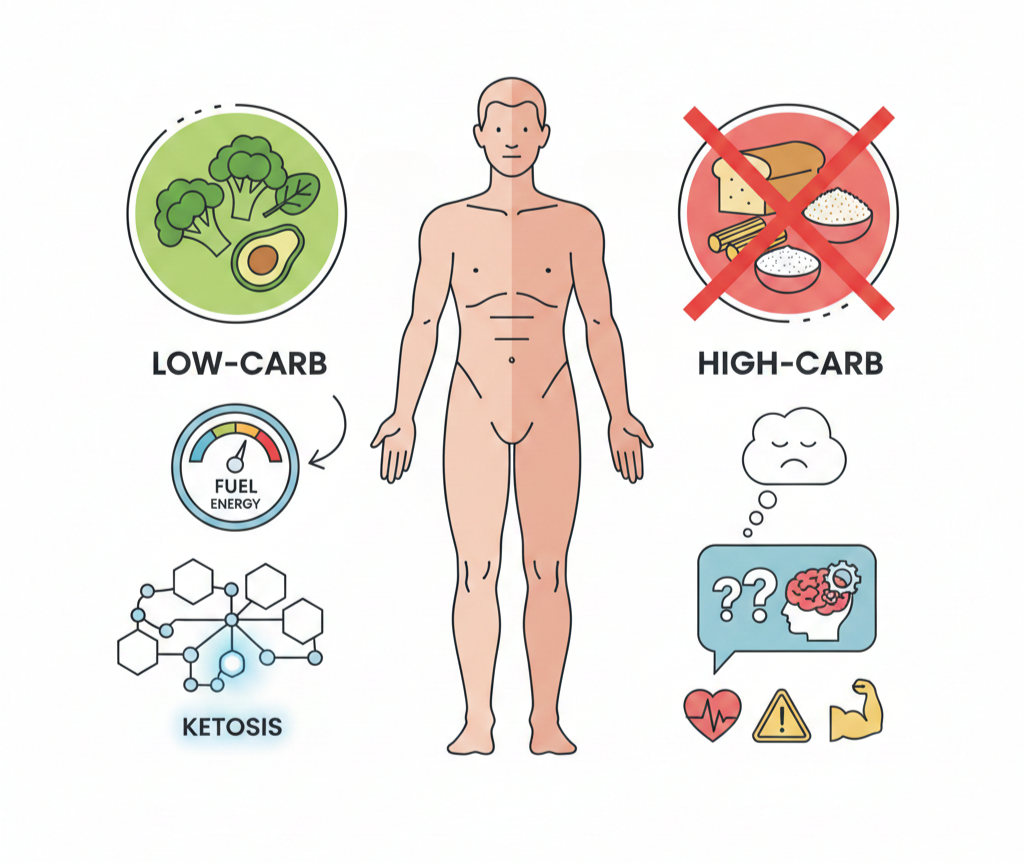
Your body responds to what you feed it. When you cut back on carbs, especially refined ones, several things change. Your insulin levels drop, your hunger patterns shift, and your body starts relying more on fat for fuel instead of glucose.
These changes can be helpful. They can also be challenging, especially in the first few weeks. Understanding how the low-carb diet works and what to consider before starting helps you decide whether it suits your health goals, lifestyle, and body.
Here’s what actually happens when you reduce carbs, who it works best for, and how to approach it safely.
Key InsightA low-carb diet reduces sugar and starch intake while emphasizing protein, healthy fats, and non-starchy vegetables. This shift can improve blood sugar control within 2-4 weeks, reduce appetite, and support weight management for some people. The approach works by lowering insulin levels and helping your body rely more on fat for fuel. Individual responses vary widely based on genetics, activity level, and food quality. Some people feel energized and satisfied, while others experience fatigue or digestive changes. Success depends on choosing whole foods over processed low-carb products and finding a version you can sustain long-term. |
What a Low-Carb Diet Actually Is
When you follow a low-carb diet, you limit foods high in carbohydrates, especially refined or quickly digested sources. This includes sugary foods, sweetened drinks, white bread, pastries, and many ultra-processed snacks.
Instead, build your meals around protein sources such as eggs, fish, poultry, meat, tofu, or legumes. You add healthy fats from olive oil, nuts, seeds, and avocado. And you fill your plate with non-starchy vegetables like leafy greens, broccoli, peppers, and zucchini.
There’s no single definition of “low-carb.” Some approaches reduce carbs moderately to around 100-150 grams daily. Others go much lower, sometimes under 50 grams. What matters is the overall pattern and food quality, not hitting an exact number.
The low-carb diet isn’t the same as keto, though they’re related. Keto is a very strict version that pushes your body into ketosis, a metabolic state where you burn ketones for fuel. Most low-carb approaches are less extreme and more flexible.
How Your Body Responds When You Cut Carbs
Carbohydrates are your body’s primary source of quick energy. When you significantly reduce carb intake, your body adapts by relying more on stored and dietary fat for fuel.
Lower carb intake reduces insulin levels. Insulin is the hormone that controls blood sugar and influences fat storage. When insulin stays lower throughout the day, your body finds it easier to access stored fat for energy.
Protein and fat tend to be more filling than refined carbs. So many people naturally eat fewer calories without consciously restricting portions. You feel satisfied longer after meals.
However, these effects vary widely. Your genetics, activity level, metabolic health, and food choices all influence how your body responds. What works for your friend might not work for you.
Potential Benefits for Some People
Research shows that reducing carbs may help certain individuals, especially in the short- to medium-term. Here’s what the evidence suggests.
1. Better Blood Sugar Control
Cutting refined carbs can help stabilize your blood sugar levels, especially if you have insulin resistance or prediabetes. This may lower post-meal spikes and reduce those mid-afternoon energy crashes.
Your pancreas doesn’t need to pump out as much insulin after each meal. Over time, your cells may respond better to the insulin you do produce. This improved insulin sensitivity can lower your risk of developing type 2 diabetes.
2. Less Constant Hunger
Meals higher in protein and fiber-rich vegetables often increase fullness. Many people report feeling satisfied for hours after eating, rather than hungry again within 90 minutes.
This can reduce frequent snacking and the feeling of never being quite full. When you’re not constantly thinking about your next meal, eating becomes less of a mental battle.
3. Weight Loss in Many Cases
Many people lose weight on a low-carb diet, particularly in the early stages. Some of this is water loss because your body stores less glycogen when carb intake drops. But longer-term changes may reflect reduced calorie intake and better metabolic function.
The weight loss isn’t automatic or guaranteed. It depends on overall calorie intake, food quality, and individual metabolism. But for some people, the appetite reduction makes it easier to eat less without feeling deprived.
Benefits aren’t universal. Some people feel energized and clear-headed on a low-carb diet. Others experience fatigue, irritability, or digestive changes during the adjustment period.
What You Actually Eat
A balanced low-carb diet focuses on food quality, not just carb reduction. Here’s what your plate looks like.
Foods you eat more:
- Eggs, fish, poultry, lean meats, and plant proteins like tofu
- Non-starchy vegetables—leafy greens, broccoli, cauliflower, peppers, zucchini, tomatoes, cucumbers
- Full-fat or reduced-fat dairy, depending on your tolerance and preferences
- Nuts, seeds, olive oil, avocado, and other healthy fat sources
Foods you reduce or limit:
- Sugar, honey, syrups, and sweetened products
- White bread, pasta, rice, pastries, and baked goods
- Sugary drinks and fruit juices
- Highly processed snack foods and packaged meals
Foods that depend on your approach:
Whole-food carbs like fruit, legumes, and whole grains may still fit depending on how strict your version is. Some people include berries and beans in their low-carb diet. Others avoid even these higher-carb whole foods.
The key is choosing real food over processed low-carb products. A chicken breast with roasted vegetables and olive oil is a low-carb meal. So is a packaged low-carb protein bar, but the nutritional quality differs dramatically.
Issues when starting
The early phase of a low-carb diet can be uncomfortable. Many people experience what’s sometimes called “low-carb flu” during the first week or two.
You might experience headaches, fatigue, light-headedness, brain fog, or constipation as your body adapts to using fat for fuel rather than glucose. Some people feel irritable or have trouble concentrating. These effects are usually temporary but can be reduced. Drink enough water throughout the day. Get adequate fiber from vegetables. Include sources of potassium and magnesium in your meals. Salt intake may need to increase slightly because you lose more sodium when insulin levels drop.
Social situations, cultural food habits, and meal planning can also feel more challenging at first. Bread, rice, and pasta are central to many cuisines and social events. Finding alternatives takes adjustment.
Sustainability matters more than following strict rules. If you’re miserable after three weeks, the low-carb diet might not be right for you, regardless of what happened on the scale.
Who Should Be Cautious
A low-carb diet isn’t suitable for everyone in the same way. Some people need to approach it carefully or avoid it entirely.
If you have diabetes and use insulin or blood sugar-lowering medications, you need to work with your doctor when reducing carbs. Your medication doses may need to be adjusted as your blood sugar drops. Cutting carbs without adjusting medications can cause dangerous low blood sugar episodes.
People with kidney disease should be cautious because some low-carb diets are high in protein, which can stress already-compromised kidneys. Those with a history of eating disorders may find the restrictive nature triggering.
If you’re pregnant or breastfeeding, you need adequate carbs for your baby’s development and milk production. Major dietary changes during this time should be undertaken only under medical guidance.
If you feel persistently tired, dizzy, or have ongoing digestive issues after several weeks, reassessing your approach is important. Your body is giving you feedback worth listening to.
Low-Carb Doesn’t Mean No-Carb
Many people think a low-carb diet eliminates carbohydrates entirely. In reality, most low-carb patterns still include vegetables, berries, and small portions of whole-food carb sources.
A cup of broccoli has carbs. So does a handful of strawberries. These aren’t the carbs you’re avoiding. You’re reducing refined and processed carbs, not eliminating all plant foods.
Quality matters as much as quantity. Replacing refined carbs with vegetables, healthy fats, and adequate protein is very different from simply cutting carbs and relying on processed meats or packaged low-carb products high in sodium and additives.
Some low-carb products marketed as healthy alternatives are actually ultra-processed foods with long ingredient lists. Read labels carefully before assuming something is a good choice.
How to Start Without Overwhelming Yourself
A gradual approach is usually easier and more sustainable than making drastic changes overnight. Here’s how to ease into the low-carb diet.
Start by replacing sugary drinks with water or unsweetened alternatives. This single change can cut 200-400 calories daily for many people.
Build your meals around protein and vegetables first, then add smaller portions of carbs if needed. Instead of pasta with a little chicken, have chicken with lots of vegetables and a small side of pasta.
Reduce refined grains rather than cutting all carbs at once. Swap white rice for cauliflower rice. Try zucchini noodles instead of regular pasta. Replace sandwich bread with lettuce wraps.
This allows your body and your daily routines to adjust without feeling overwhelmed or deprived. You learn what works through experience, not by following someone else’s strict plan.
Finding What Works for Your Body
The low-carb diet can be a useful tool, but it’s not a universal solution. Some people thrive on lower carb intake. Others feel and perform better with moderate amounts included.
Your energy levels, digestion, mood, and overall health provide better guidance than following strict labels or rigid rules. If you feel great and your health markers improve, you’re on the right track. If you feel terrible after a fair trial period, this approach might not suit your body.
The most effective eating pattern is one you can maintain, enjoy, and adapt over time. A low-carb diet that makes you miserable won’t work long-term, no matter how much weight you lose initially.
When approached thoughtfully, emphasizing whole foods, the low-carb diet can support your health goals. But it works best as part of a flexible, sustainable approach rather than as a temporary fix you push through for a few weeks, then abandon.