
KEY INSIGHT About half the world’s population carries a bacterium called H. pylori in their stomach, and most people have no idea. For the majority, it causes no harm at all. But in some cases, it quietly damages your stomach lining over the years and is the single biggest known cause of stomach cancer worldwide. The good news is that H. pylori is easy to test for, straightforward to treat, and tackling it early can meaningfully lower your risk. |
About half the world’s population is carrying a bacterium called H. pylori in their stomach right now. Most of them have no idea. If you’re in that group, you likely picked it up as a child. If you carry it, there’s a good chance it will cause you no problems at all. But in some cases, it quietly triggers changes in your stomach lining. Those changes can lead to stomach cancer over many years.
None of this should alarm you. It’s a reason for you to pay attention. Knowing about H. pylori puts you in a much stronger position to protect your health, and there is a lot you can do.
The Bacterium That Lives Quietly in Your Stomach
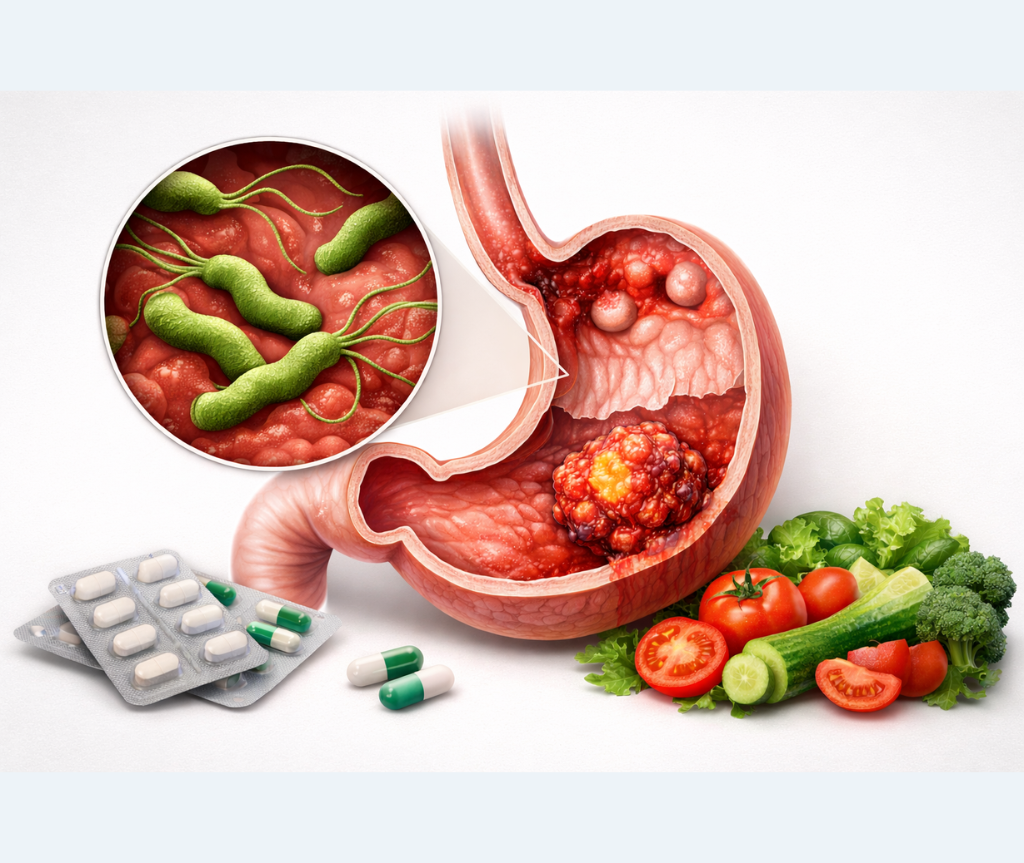
H. pylori is a spiral-shaped bacterium that lives in your stomach lining. You most likely came into contact with it in childhood through contaminated food, water, or an infected person nearby. Once it settles into your stomach, it can stay there for decades without giving you any symptoms at all.
Your stomach acid is hostile enough to kill most microbes. But H. pylori survives in your stomach by producing a chemical that neutralises the acid immediately around it. That’s what makes it so persistent and so hard for your body to clear on its own.
If you carry H. pylori, there’s a good chance you’ll never know. If you do carry it, your infection usually stays quiet for your whole life. But in some cases, it causes ongoing inflammation of your stomach lining, called gastritis. Left unchecked, that persistent low-level irritation in your stomach is where your real risk begins.
How H. Pylori Can Lead to Stomach Cancer
Think of it like a small wound in your stomach that never quite heals. Your stomach lining keeps trying to repair itself. Certain strains of H. pylori produce a protein called CagA, which interferes with how your cells fix damage. When your cell repair goes wrong repeatedly over the years, DNA errors start to build up in your cells. If those errors accumulate, they can eventually turn into cancer.
This whole process is slow for your body. It takes decades to develop, which is why your risk of stomach cancer rises as you get older. If you have H. pylori, you’re far more likely to never develop cancer than to develop it. But the infection is still the single biggest known cause of stomach cancer worldwide. The World Health Organisation classifies it as a definite cause. Around 90% of the most common type is linked to H. pylori infection.
What Raises Your Risk
Having H. pylori doesn’t automatically put you at serious risk. Several other factors shape whether the bacteria cause real harm to your health. Your diet, your daily habits, and your family history all play a part.
A high-salt diet is one of the biggest contributors to your risk. Salt irritates your stomach lining, making it more vulnerable to damage from H. pylori. If your meals often include heavily salted or pickled foods, your stomach is under extra strain. That puts your lining at greater risk. Processed meats like bacon, sausages, and deli meats also contain compounds that can turn into cancer-causing chemicals inside your stomach.
Smoking roughly doubles your risk of stomach cancer. Tobacco chemicals damage your stomach cells directly and weaken your immune system’s ability to control the infection. If you smoke and also carry H. pylori, your combined risk is higher than either factor on its own.
Your family history matters too. If a close relative has had stomach cancer, your own risk may be higher. That comes partly through shared genes, and partly through the eating habits you grew up with. Where your family comes from also plays a role. Your risk is higher if you have roots in East Asia, Eastern Europe, or parts of Latin America, where H. pylori is more common and traditional diets tend to be high in salt.
How to Test, Treat, and Protect Your Stomach
Here is the most important thing for you to know: H. pylori is treatable, and treating it can meaningfully lower your risk. Your treatment usually involves a short course of antibiotics. These are combined with a proton pump inhibitor, which reduces stomach acid secretion. Your full course typically lasts 10 to 14 days. After you finish, your doctor can run a simple follow-up test to confirm your infection is gone.
Getting yourself tested is straightforward. Your doctor can arrange a breath test, a stool test, or a blood test, depending on your situation. If you have ongoing symptoms such as persistent stomach pain, bloating, or heartburn, bring them up at your next appointment. If stomach cancer runs in your family, testing is especially worth your time.
In some countries, testing programmes are being set up to find H. pylori in populations where stomach cancer rates are higher. Early results look encouraging for your long-term outcomes. Treating your infection before any pre-cancerous changes develop appears to cut your cancer risk significantly. This kind of early action is the most powerful step you can take for your stomach health.
You don’t need to overhaul your entire lifestyle overnight. A few steady changes to your diet and habits can make a real difference to your stomach health over time. Here’s where to start:
- Eat more fresh food. Fruits, vegetables, and whole grains contain antioxidants and fibre that support your stomach lining and help reduce inflammation.
- Cut back on salt and pickled foods. Try fresh herbs and spices to add flavour to your meals without the extra salt.
- Choose fresh proteins over processed meats. Chicken, fish, eggs, and plant-based proteins are all better long-term choices for your health.
- Stop smoking if you do. Stopping is one of the most impactful things you can do for your stomach and for your overall health. Your GP can point you towards cessation support.
- Ask about testing if you have lingering symptoms or a family history of stomach cancer. Getting your infection treated early gives you the best possible protection.
What This Means for You
When you first learn that a common bacterium is behind most stomach cancers, it might feel unsettling. But this knowledge puts you in a useful position. You can get tested and treated. You can make changes to your diet and habits that lower your risk over time.
If you have H. pylori, you’re still far more likely to never develop stomach cancer than to develop it. Stay aware of your risk. Speak to your GP if something doesn’t feel right. A few consistent changes to how you eat and live can genuinely protect your health over the long run.
Your gut health matters more than most people realise. Taking care of it isn’t complicated for you. It’s just a series of small, steady choices you make over time.