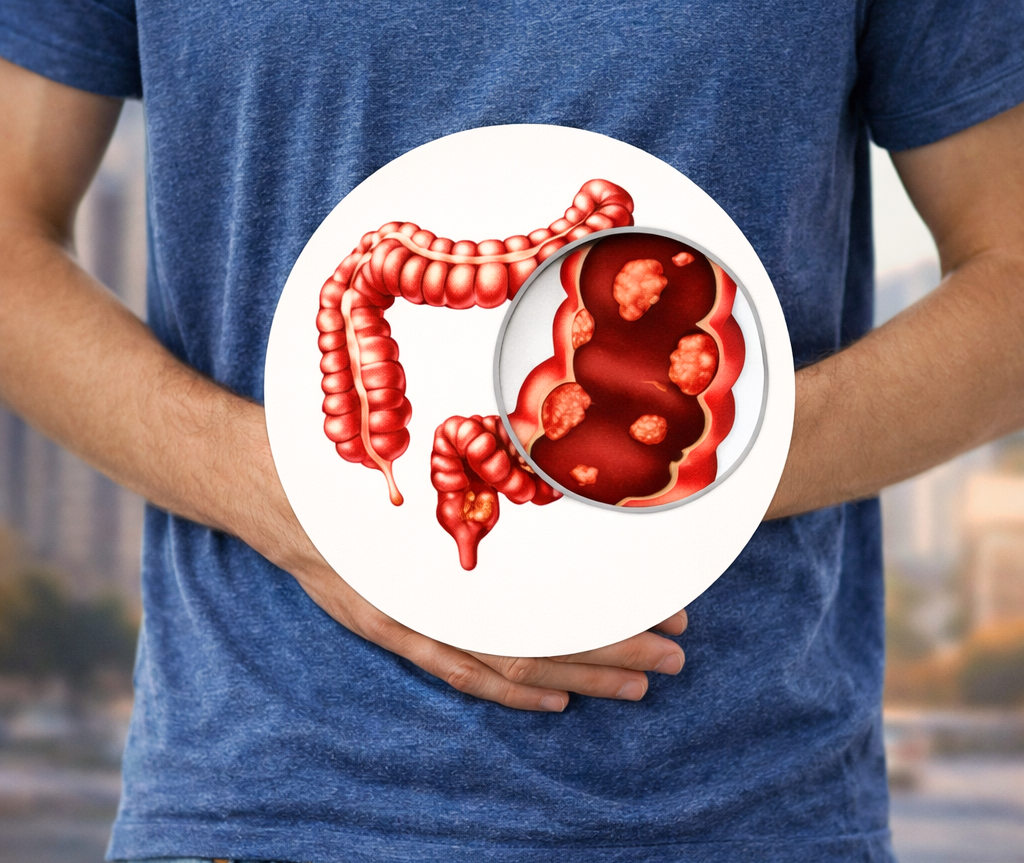

You might see blood in your stool and quickly assume it’s just hemorrhoids. If your bowel habits change, you may blame stress at work. Feeling tired all the time can be a sign of a lack of sleep. These explanations make sense, but they’re also why early colon cancer symptoms often go unnoticed for months.
Colon cancer rates are rising sharply in people under 50, yet most younger adults don’t think cancer could happen to them. Even doctors sometimes miss the signs, assuming digestive issues in a 35-year-old are more likely to be irritable bowel syndrome or hemorrhoids. This combination of patient denial and medical bias creates dangerous delays [1].
The problem is that early colon cancer symptoms often seem like everyday, harmless issues. Usually, they are nothing serious. But if these symptoms last more than a few weeks, they should be checked, because finding colon cancer early makes treatment much more successful.
This article covers the warning signs that younger adults often ignore and explains when you should see a doctor about them.
Key InsightMany younger adults ignore early colon cancer symptoms because they don’t expect to get cancer in their 30s or 40s. Warning signs include lasting changes in bowel habits, blood in your stool, ongoing belly pain, unexplained weight loss, and unusual tiredness. It’s easy to blame these on stress, hemorrhoids, or other digestive issues. The most important thing is persistence—if any symptom lasts more than a few weeks, see a doctor. Most causes are not serious, but catching colon cancer early makes a big difference, so ongoing symptoms should be checked. |
The Warning Signs That Appear First
Early colon cancer symptoms usually develop slowly and may seem minor at first.
They are also common in many other digestive problems, so people often ignore them. The key difference is that these symptoms continue for a long period. If your symptoms last for weeks or keep getting worse, it’s important to take them seriously.
1. Changes in Your Bowel Habits
One of the first signs is a change in your usual bowel habits.
You might have diarrhea lasting more than a few days, constipation that doesn’t respond to usual treatments, or alternating between the two. Your stool might look narrower than normal, almost pencil-thin. You might feel like you can’t fully empty your bowels.
These changes can happen if a tumor narrows the part of your gut (colon) where stool passes. Most people think diet or stress is to blame when their bowel habits change. But changes from stress usually get better when life calms down. Changes from cancer tend to last or get worse.
If your bowel habits have stayed different for more than three weeks, especially if the changes are progressing, talk to your doctor.
2. Blood in or on Your Stool
Rectal bleeding is a common early sign of colon cancer in younger adults [2], but it’s also one of the symptoms people most often ignore.
The blood might be bright red, dark and tarry, or mixed into your stool so you barely notice it. Sometimes the bleeding is microscopic and only shows up on a stool test.
Most people who notice rectal bleeding think it’s just hemorrhoids. Hemorrhoids are common and can cause bleeding, but you shouldn’t always assume that’s the cause.
Bleeding from hemorrhoids usually happens during or right after a bowel movement and is bright red. Bleeding from colon cancer can happen at any time and may look darker or be mixed in with the stool [3].
Tell your doctor about any rectal bleeding, even if you think it’s just hemorrhoids. If the bleeding lasts more than a week or keeps returning, have it checked out.
3. Ongoing Belly Discomfort
Ongoing belly discomfort can be a sign of a problem, especially if it doesn’t get better with your usual treatments.
This might feel like cramping, gas, or bloating that won’t go away. You might have pain in one specific spot that keeps bothering you. You might feel unusually full after eating only a small amount.
Many people try to treat this discomfort with antacids or gas medicine. If those don’t help, they often just put up with the pain. The important thing to notice is whether the discomfort doesn’t improve with over-the-counter medicine and keeps coming back in the same way.
If you have belly pain that lasts for several weeks or keeps coming back in the same spot, see your doctor.
4. Weight Loss You Can’t Explain
If you lose weight without trying, you should always see your doctor.
In colon cancer, weight loss can happen because it affects your appetite or changes how your body processes food. You might eat less because you feel full quickly.
You might lose interest in eating altogether. Your body might not absorb nutrients properly.
If you lose 10 pounds or more without trying, especially over a few months, talk to your doctor.
Many people think weight loss is due to stress or a busy schedule, but losing a lot of weight without trying often means there’s a medical reason.
5. Fatigue That Won’t Improve
Feeling tired all the time, even after getting enough rest, can be an early warning sign.
This kind of fatigue often results from anemia caused by slow, chronic bleeding in the colon. Even if you don’t see blood in your stool, small amounts of bleeding over time can lower your iron levels and red blood cell count.
You might feel constantly tired, weak, or short of breath while doing everyday activities. Some people feel lightheaded or notice their heart racing more easily than usual.
Everyone feels tired sometimes, especially when balancing work, family, and other responsibilities. Fatigue from cancer is different because it lasts and doesn’t match how active you’ve been. It doesn’t go away after a good night’s sleep or a relaxing weekend.
If you have constant tiredness along with any of the other symptoms listed here, make an appointment with your doctor.
When Symptoms Need Medical Attention
It can be hard to know which symptoms mean you should see a doctor. Here’s a simple guide to help.
See your doctor within a few weeks if:
- Changes in bowel habits last more than two to three weeks
- You notice blood in your stool, even once
- Belly pain or discomfort persists or keeps returning
- You’re losing weight without trying
- Fatigue is ongoing and unexplained
Seek urgent care if:
- You have heavy rectal bleeding
- You’re experiencing severe abdominal pain
- You have signs of bowel obstruction (can’t pass stool or gas, severe bloating, vomiting)
Don’t ignore symptoms just because you think you’re too young for cancer. Colon cancer is affecting more people in their 30s and 40s. Younger patients are often diagnosed later because their symptoms were overlooked for too long.
Finding colon cancer early makes a big difference. If it’s caught at stage I or II, more than 90% of people survive, and many are cured completely.
How to Talk to Your Doctor
Be clear and specific when describing your symptoms. Write down when they began, how often they occur, and if they’re getting worse. Don’t minimize what you’re feeling or feel embarrassed to talk about it.
Mention any family history of colon cancer, especially if a close relative was diagnosed before age 50. Also mention inflammatory bowel disease, like Crohn’s or ulcerative colitis, as these conditions increase your risk.
If your doctor thinks your symptoms are probably not serious, that’s often the case. Most digestive symptoms are caused by harmless conditions. But if your symptoms don’t go away with treatment, ask about tests to rule out more serious problems. These might include blood tests for anemia, stool tests for hidden blood, or procedures to look at your colon directly.
If you still feel something isn’t right and your symptoms continue, it’s okay to follow up or ask for a second opinion. You deserve to have your concerns taken seriously.
Why Younger People Wait Too Long
Knowing why people ignore symptoms can help you avoid making the same mistake.
You might think you’re too young for cancer. Most patients and even doctors don’t expect colon cancer in people under 50. If you’re in your 30s or 40s, cancer may not seem like a real risk. This belief can cause months of delay, with symptoms blamed on stress, diet, or minor digestive problems.
You might tell yourself it’s nothing serious. It’s easy to think your symptoms are just from work stress or poor eating habits. Over time, you may get used to these symptoms and change your routine instead of getting help.
You might feel awkward talking about bowel or rectal symptoms. These topics can be uncomfortable, but doctors talk about them all the time. They need this information to help you.
You may get used to feeling unwell after having symptoms for weeks or months. You might change your habits—avoiding certain foods, planning outings around bathroom access, or using over-the-counter medicine. These slow changes can hide how much your health has really changed.
Waiting too long can have serious effects. For younger adults, it often takes three to six months or more to get diagnosed after symptoms begin. In that time, cancer can move from an early, treatable stage to a later stage that needs more aggressive treatment.
Something that seems minor can become serious if you ignore it. You know your body best. If something feels off and doesn’t go away, trust your instincts and see a doctor.
Listen to Your Body
Most people with these symptoms do not have colon cancer, which is good news. But the only way to be sure is to have your symptoms checked by a doctor.
Finding colon cancer early leads to excellent survival rates. If it’s found at stage I or II, over 90% of people live at least five years, and many are cured. These symptoms are common in many conditions, but if they last, they need medical attention.
Trust what your body is telling you. Don’t ignore ongoing changes just because you’re young or because you think it’s minor. Don’t avoid your doctor because the symptoms feel embarrassing.
Talking to your doctor now about blood in your stool or changes in your bowel habits is much better than facing a late-stage diagnosis later. Acting on ongoing symptoms isn’t overreacting; it’s taking care of your health.
If you have any of the symptoms described here, especially if they’ve lasted more than a few weeks or are getting worse, make an appointment with your doctor. Most of the time, you’ll get reassurance and treatment for a harmless condition.
But if it is something more serious, finding it early gives you the best chance for a good outcome.