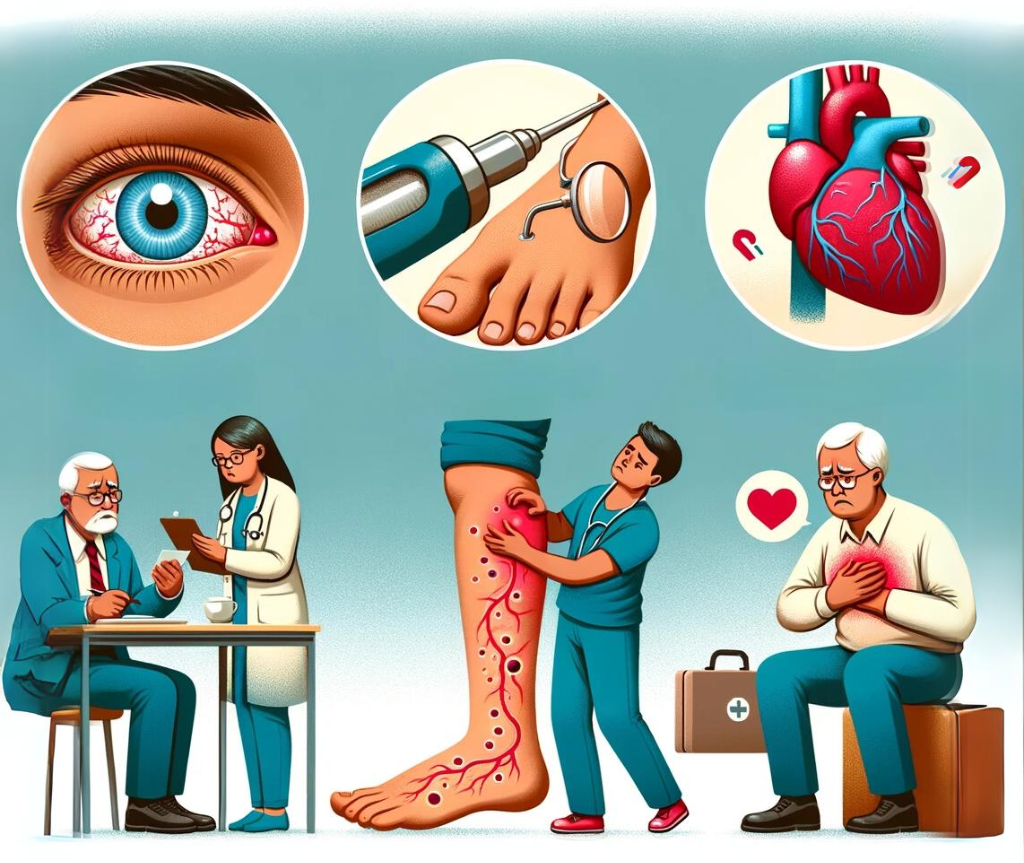

Managing your diabetes isn’t only about how you feel day to day. It’s also about protecting your body from damage that builds quietly over months and years.
Your blood sugar is hard on your blood vessels when it stays high. Your eyes, kidneys, heart, nerves, and feet all depend on those vessels. When they’re consistently under strain, the organs they supply start to suffer.
Knowing what’s happening gives you something more useful than worry. It gives you a clear reason to act, and a real sense of what you’re protecting.
Key InsightWhen your blood sugar stays high over time, it slowly damages the blood vessels running through your body. Your eyes, kidneys, nerves, heart, and feet all depend on those vessels to function. Diabetes complications usually build without any symptoms, which is why they often catch people off guard. The good news is that consistent management genuinely lowers your risk. Keeping your blood sugar steady, attending regular check-ups, and making steady lifestyle changes can protect you from the most serious outcomes. |
How Diabetes Damages Your Blood Vessels
Think of your blood vessels as the supply network your body depends on every minute. They carry oxygen and nutrients to every tissue you have. When your blood sugar stays elevated for too long, those vessels slowly deteriorate.
Your smaller vessels, feeding your eyes, kidneys, and nerves, tend to show damage first. When they weaken, the tissues they supply start to suffer. Your larger vessels, which serve your heart and legs, become stiffer and more prone to blockages. That’s what raises your risk of heart attack and stroke.
Neither type of damage announces itself early. You won’t feel it happening. That’s what makes your regular monitoring so important, especially when you feel fine.
Why Your Heart Is Under Greater Pressure
If you have diabetes, your risk of heart disease is two to four times higher than average. That’s not meant to alarm you. It explains why managing your blood pressure and cholesterol matters just as much as managing your blood sugar.
Sustained high blood sugar irritates your vessel walls and triggers ongoing inflammation. Over time, your arteries become stiffer. If your cholesterol is also elevated, fatty deposits narrow your arteries further. A blockage in the vessels supplying your heart or brain means a heart attack or stroke.
Your heart, your blood pressure, and your blood sugar are all connected. Managing one in isolation isn’t enough.
What’s Happening to Your Kidneys
Your kidneys filter around 180 litres of blood every day. They’re built for hard work, but they’re not designed to handle persistently high blood sugar indefinitely.
The tiny filtering units inside your kidneys are especially vulnerable to diabetes-related damage. When they deteriorate, your kidneys gradually lose the ability to clear waste from your blood. You won’t feel this happening. Early kidney problems rarely cause symptoms, which is why your regular urine and blood tests are so valuable.
If your blood pressure is also high, the damage accelerates. Left unchecked, diabetic kidney disease can progress to kidney failure. Caught early, it can often be slowed significantly.
Nerve Damage: What You Might Feel First
Your nerves need a steady supply of oxygen from tiny blood vessels. When those vessels are damaged by high blood sugar, your nerve signals start to break down. Your feet and hands are usually the first to show signs.
You might notice tingling, a burning sensation, or a numbness that comes and goes. Over time, that feeling can fade entirely. This creates a serious problem: you can injure your foot without realising it. A blister or cut you don’t notice can escalate into a significant infection.
Nerves controlling your internal organs can also be affected, disrupting your digestion, bladder function, or heart rate. Mild tingling in your toes is easy to dismiss. Mentioning it to your doctor early is one of the most useful things you can do.
How Your Vision Is at Risk
The retina at the back of your eye is fed by tiny, delicate blood vessels. When your blood sugar is persistently high, those vessels can leak or bleed. Your vision can blur, and your body may grow new fragile vessels to compensate. Those new vessels bleed easily and can threaten your sight.
In the early stage, called non-proliferative retinopathy, you may not notice any changes. In the advanced stage, called proliferative retinopathy, the risk to your vision is urgent. Diabetes also raises your risk of cataracts and glaucoma.
Your regular eye examination is the most important protective tool you have. Once vision loss has occurred, it often can’t be reversed. The window for effective treatment is before symptoms appear.
Your Feet and Diabetes: A Daily Concern
Your feet are often where diabetes complications first become visible. Poor circulation slows your healing. Nerve damage means you may not feel cuts or blisters forming. A wound that would normally heal in days can become infected, and your body may struggle to fight that infection effectively.
Your skin can change, too. Your feet may become drier, crack along the heels, or develop calluses. Each creates a potential entry point for infection.
Check your feet every single day. Look for anything new: redness, swelling, a cut you don’t remember getting. Contact your doctor or podiatrist without delay if something looks wrong.
Two More Things Worth Knowing
Your immune system is weakened by high blood sugar. Your immune cells depend on the same vessel network as everything else. When those vessels are compromised, your white blood cells become less effective. You may pick up infections more easily, heal more slowly, or get recurring urinary tract or skin infections.
Sexual health is also affected by diabetes, though rarely discussed. In men, nerve damage and reduced circulation commonly cause erectile dysfunction. In women, reduced blood flow can lower arousal, cause vaginal dryness, and make sex uncomfortable. These are medical issues, not reasons for embarrassment. Your doctor can help.
What You Can Do Starting Now
Diabetes complications aren’t inevitable. Most of the risk factors are things you can genuinely influence. Your single most important step is keeping your blood sugar as steady as possible, not perfectly, but consistently.
Your regular check-ups for eyes, kidneys, feet, blood pressure, and cholesterol give you early warning when something is changing. Finding a problem early almost always means more options and better outcomes.
Staying active, eating well, not smoking, and managing your weight all directly protect your blood vessels. If you take diabetes medication, take it as directed, even on days you feel completely well. It’s protecting your long-term health, not just today’s symptoms.
Every consistent choice you make is working in your favour. Your heart, your sight, your kidneys, and your independence are all worth protecting, and you have more influence over them than you might think.