
The Atkins Diet has been around since the 1970s. It’s one of the most-studied low-carb diets. Some people still think it means eating only bacon and butter. But the Atkins diet is actually a step-by-step plan that teaches your body to burn fat instead of carbs for energy.
The diet works by drastically cutting carbs at first, then slowly adding them back. You learn which carbs your body handles well and which ones cause cravings or weight gain. This personalized approach is what makes Atkins different from randomly cutting carbs.
Here’s how the plan works, what to expect in each phase, and whether this approach aligns with your health goals.
Key InsightThe Atkins Diet is a low-carb plan that helps your body shift from burning glucose to burning fat for energy. It has four phases, starting with a very low-carb intake of about 20 grams daily and gradually increasing to find what works for you. Many people notice less hunger, steadier energy, and better blood sugar control after a few weeks. You may lose weight, see better cholesterol numbers, and have fewer cravings. Some people feel tired at first as their bodies adjust. The key is to follow the phases and find a routine you can stick with long-term. |
What the Atkins Diet Actually Is
The Atkins Diet is a low-carb, high-fat, moderate-protein way of eating. Dr. Robert C. Atkins developed it in the 1970s after observing that reducing carbohydrate intake improved certain health markers in his patients.
When you cut back on carbohydrates, your body has to find another energy source. Usually, your body uses glucose from carbs first because it’s readily available. When you eat fewer carbs, your glucose levels drop. Your body starts burning stored fat instead.
This process creates ketones, which your body can use for energy instead of glucose. Many people on Atkins notice fewer cravings and steadier energy throughout the day. Their blood sugar stays more stable as their bodies adjust to this new fuel source.
The Four Phases of Atkins
Atkins takes you through four phases. Each one helps your body adjust gradually while you discover which foods work best for you.
Phase 1: Induction (Kickstart Fat Burning)
In this phase, you limit carbohydrates to about 20 grams per day. You eat mostly protein, healthy fats, and low-carb vegetables like leafy greens, courgettes, and broccoli.
During induction, most people lose weight quickly at first. Much of it is water weight. As your body changes how it gets energy, you might feel tired or get headaches for a few days. This short adjustment period is often called “keto flu.”
What you eat: Eggs, poultry, beef, fish, olive oil, avocados, leafy greens, courgettes, broccoli, bell peppers
Duration: Typically 2 weeks, though some people stay longer
Tip: Drinking more water and adding a little extra salt can help with adjustment symptoms.
Phase 2: Balancing (Reintroducing Carbs Slowly)
Once your body is used to burning fat, you slowly add back small amounts of carbohydrates. This phase helps you identify which carb foods you tolerate well and which cause cravings or hunger.
You can start eating nuts, seeds, berries, and more vegetables. Weight loss usually continues, but at a slower, steadier pace.
What you add: Blueberries, strawberries, almonds, walnuts, sunflower seeds, bell peppers, asparagus
How it works: You add 5 grams of carbs each week and pay attention to how you feel.
Tip: Writing down your energy and hunger levels helps you see which foods work best.
Phase 3: Pre-Maintenance (Testing Your Limits)
As you get closer to your goal weight, this phase is about making your eating habits sustainable. Can you keep eating this way long-term?
You keep adding a wider range of carbohydrates. Things like lentils, quinoa, carrots, and small amounts of sweet potato. Progress may slow down, but you learn how many carbs your body can handle.
What you add: Whole grains in small amounts, starchy vegetables, legumes
Focus: Find the most carbs you can eat while keeping your weight steady and feeling good.
Duration: Continue until you reach your goal weight and maintain it for one month
Phase 4: Lifetime Maintenance (Your Sustainable Pattern)
This last phase becomes your new normal. You keep up the habits that support your health, but you have more flexibility in what you eat.
Most people find they can sometimes eat higher-carb foods without losing progress. The key is knowing your own limits and noticing how different foods affect your energy, hunger, and weight.
Goal: Sustainable low-carb eating that fits into your real life
Flexibility: You have greater freedom to adapt to social events, travel, and daily life while maintaining your results.
What You Eat on Atkins
Atkins is based on eating whole foods instead of packaged “low-carb” products.
Foods you emphasize:
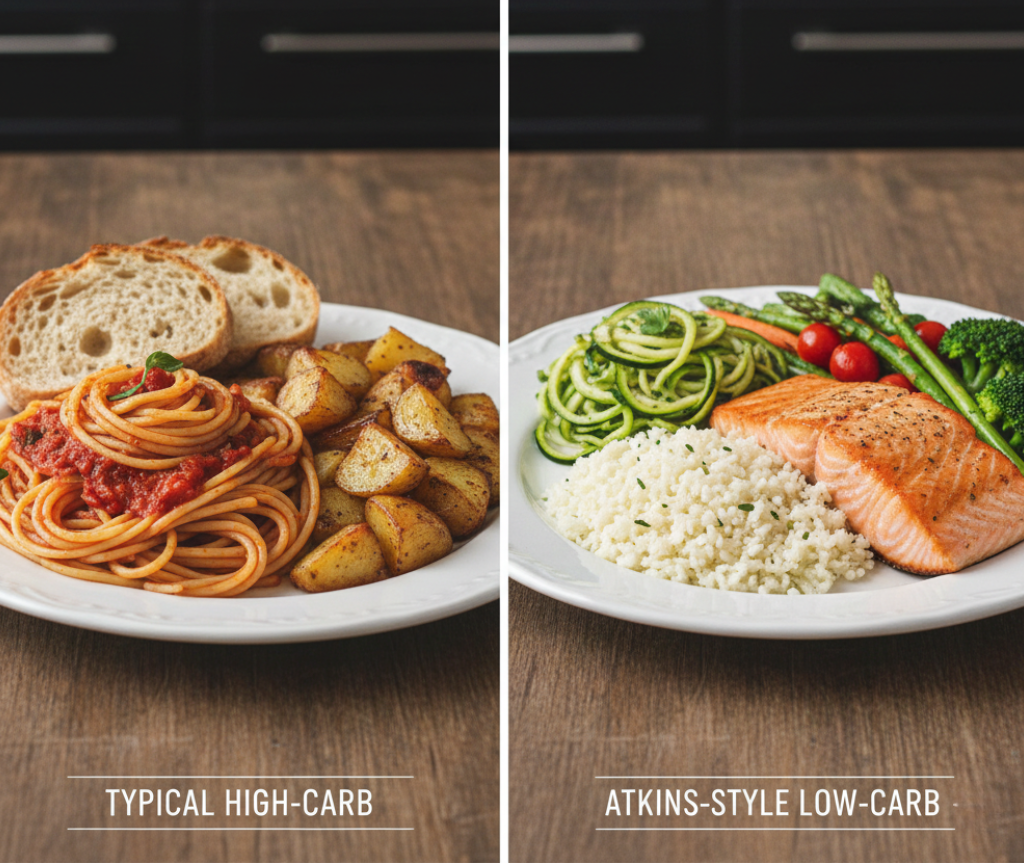
- Non-starchy vegetables (spinach, kale, courgette, broccoli, cabbage)
- Healthy fats (avocado, olive oil, nuts, seeds, butter)
- Quality proteins (eggs, poultry, fish, tofu, lean beef)
- Low-sugar fruits in later phases (berries, tomatoes)
Foods you limit, especially early on:
- Refined carbohydrates (white bread, pastries, cereals)
- Sugary foods and drinks
- Starchy vegetables (potatoes, corn) until later phases
- High-sugar fruits (bananas, grapes) until later phases
- Legumes (reintroduced gradually in Phases 2-3)
Planning just a few meals ahead makes it much easier to decide what to eat each day.
Health Benefits Beyond Weight Loss
Many people start Atkins to lose weight. But other benefits often emerge as your body adjusts to eating fewer carbs.
Your blood sugar stays steadier. Eating fewer carbs can help keep your blood sugar stable, especially if you have insulin resistance or prediabetes. This often leads to fewer energy crashes and better focus during the day.
Your cholesterol may improve. Low-carb diets can raise HDL (good cholesterol) and lower triglycerides. Some people also see better LDL cholesterol numbers. The relationship between dietary fat and blood cholesterol is more complex than previously thought.
Your appetite often decreases. When your body uses fat and ketones for energy instead of glucose, many people feel less hungry. You have fewer strong cravings between meals.
Your energy becomes more stable. Without the blood sugar spikes and crashes from carbs, your energy tends to stay more consistent throughout the day.
These benefits don’t happen overnight. They develop as your body adapts to burning fat for fuel.
Potential Challenges to Consider
Every way of eating has practical considerations. Here’s what you might face with Atkins.
Nutrient balance needs attention. In the early phases, you limit fruits, whole grains, and legumes. Make sure you get enough fiber and nutrients from vegetables. Leafy greens, broccoli, and other low-carb vegetables become especially important.
The adjustment period can be rough. In the first few days or weeks, you might feel tired. You could get headaches or experience constipation as your body adjusts to burning fat for energy. These symptoms usually pass within a week or two.
Planning takes effort. This approach works best if you plan your meals ahead and keep track of your carbs, at least at the start. You can’t just grab whatever’s convenient without checking carb counts.
Medical considerations matter. If you have diabetes and take insulin or blood sugar medications, work closely with your doctor. Your medication needs may change as your blood sugar improves. Those with kidney disease should also get personalized guidance before starting.
Social situations can be tricky. Eating out or attending events where high-carb foods dominate can be challenging, especially in the early phases.
Is the Atkins Diet Right for You?
Atkins can help with certain health goals. But it’s not the right fit for everyone.
The step-by-step phases work well for people who like clear rules. It helps those who want to learn how many carbs they can handle. This approach often helps people who struggle with blood sugar swings, constant hunger, or cravings caused by carbs.
However, the strict early phase can be tough if you usually eat lots of carbs. Some people like this structure. Others find it too restrictive to stick with over time.
If you’re pregnant, breastfeeding, have a history of eating disorders, or have certain medical conditions, talk with your healthcare provider before making significant dietary changes.
You might thrive on Atkins if you:
- Struggle with constant hunger or cravings
- Have blood sugar issues or prediabetes
- Like structured plans with clear guidelines
- Want to learn your carb tolerance
- Feel better eating more protein and fat
You might struggle with Atkins if you:
- Prefer a more balanced approach to eating
- Find very restrictive diets hard to maintain
- Have kidney disease or certain other conditions
- Are you pregnant or breastfeeding
- Have a history of disordered eating
Making It Work Long-Term
The Atkins Diet teaches your body to burn fat and shows you which carbs you can handle. The four-phase plan isn’t just a short-term fix. It’s meant to help you find a way of eating you can maintain.
Many people find the early phases challenging but helpful. By cutting carbs drastically at first, you see how your body reacts to different fuels. As you slowly add carbs back, you learn which foods support your energy and which ones cause cravings or weight gain.
The goal isn’t to be perfect or to cut carbs forever. It’s about learning how your body responds. You’re finding balance between low-carb eating and your daily life.
Start by following the phases as designed. Don’t rush through them. Pay attention to how you feel at each stage. Notice which foods make you feel energized and which ones make you sluggish or hungry again quickly.
Once you reach Phase 4, you’ll have a clear sense of your carb tolerance. You’ll know which foods work for your body and which ones don’t. This knowledge helps you make better choices even when strict adherence isn’t possible.
If you approach it with care and attention, Atkins can provide you with a clear framework for managing your weight, blood sugar, and energy in the long term.