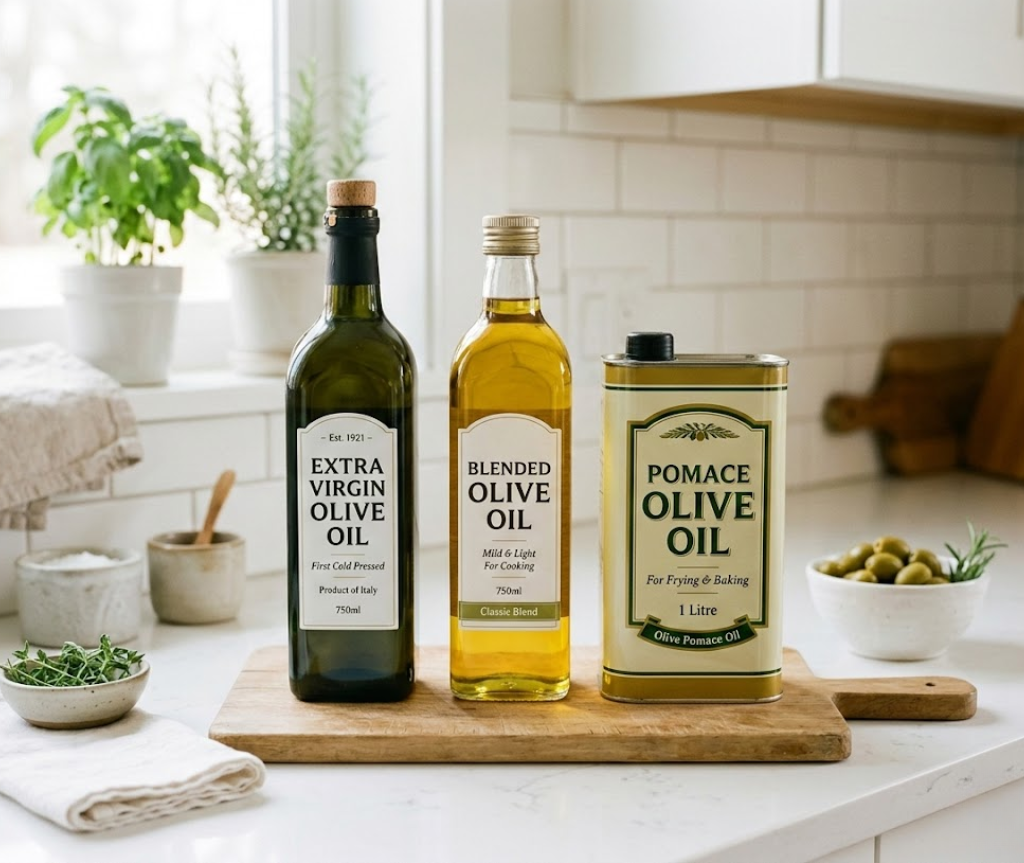

The types of olive oil on your supermarket shelf look similar. But they’re not the same product at all.
Some bottles cost $7. Others cost $20. The labels say “extra virgin,” “pure,” “refined,” and “cold-pressed.” And unless you know what those words mean, you’re just guessing.
Here’s why it matters to you. Some of these oils are rich in antioxidants that support your heart health. Others have been processed so heavily that they’re basically just cooking fat. Some handle high heat without breaking down. Others lose their nutritional value the moment you turn up the heat.
Knowing the difference means you stop wasting money and start getting the health benefits you’re actually paying for.
What Happens to Your Olive Oil Before It Reaches the Bottle
All olive oils start with olives. But what happens next is what separates nutritional values from a bottle of cooking fat.
The pressing method matters to what you get. Whether heat or chemicals are used during extraction matters. How much processing your oil goes through afterward matters. Whether different oils get blended into your bottle matters.
Each of these steps changes what ends up in your hands. They affect the nutrient content, flavour, how well your oil handles heat, price, and shelf life.
Once you understand those differences, you can match the right oil to how you actually cook and eat. No more guessing at the shelf.
Types of Olive Oil at a Glance
Here’s a quick comparison before you read through each type in detail. Use it as a reference any time you’re unsure what you’re looking at.
| Type | How It’s Made | Nutritional Value | Heat Stability | Best Use | Price |
| Extra Virgin (EVOO) | Cold-pressed, no heat or chemicals | Highest | Medium | Dressings, drizzling, light cooking | $$$ |
| Virgin | Cold-pressed, slightly lower standard | Moderate | Medium | Everyday cooking | $$ |
| Refined | Heat-treated to remove defects | Low | High | High-heat cooking, frying | $ |
| Blended (“Olive Oil”) | Mostly refined, some virgin added | Low to moderate | High | General cooking, baking | $ |
| Cold-Pressed | Pressed without heat, usually EVOO | Same as EVOO | Medium | Same as EVOO | $$$ |
| Unfiltered | Minimal filtration after pressing | High but less stable | Medium | Drizzling, finishing | $$$ |
| Pomace | Solvent-extracted from olive waste | Very low | Very high | Commercial frying only | $ |
If you know which row your bottle belongs to, you’re already ahead of most people in the olive oil aisle.
1. Extra Virgin Olive Oil
Extra-virgin olive oil is the highest-quality type you can buy. It’s also the most nutritionally valuable, which is why your bottle costs more.
Your extra virgin olive oil is made by mechanically pressing fresh olives without chemical treatment or excessive heat. The temperature stays below 27°C during extraction. To earn the label, the oil must meet strict standards. Free fatty acid content must be below 0.8%. There can be no flavour defects. Specific chemical markers must confirm it’s pure and minimally processed.
What you’re getting nutritionally
Your extra virgin olive oil contains the highest concentration of beneficial compounds of any olive oil type. These include polyphenols, vitamin E, oleic acid, and squalene.
Polyphenols are plant compounds that act as antioxidants in your body. Your high-quality extra virgin olive oil can contain 100 to over 500 mg of polyphenols per kilogram. The exact amount depends on the olive variety and harvest timing. Regular polyphenol intake may help reduce inflammation and support your heart health.
Your extra-virgin olive oil provides about 14 mg of vitamin E per 100 ml. That supports your immune function and helps protect your cells from oxidative damage.
Oleic acid makes up roughly 70 to 80% of the fatty acid profile. It’s a monounsaturated fat that may help maintain your cholesterol levels when you use it in place of saturated fats.
How to use it
Your extra virgin olive oil works best in situations where you’ll actually taste it. Salad dressings, drizzling over roasted vegetables or grilled fish, dipping with bread, or light sauteing over medium heat.
You can cook with extra virgin olive oil. Its smoke point is around 190-210°C, which is fine for most of your everyday cooking. But your expensive bottle is best saved for situations where the flavour and nutrients will actually come through.
Using a premium bottle for deep frying wastes both your money and the quality of what you bought.
2. Virgin Olive Oil
Virgin olive oil is also mechanically extracted without chemicals or excessive heat. But it falls slightly short of extra-virgin in quality standards.
The difference usually comes down to small flavour defects picked up during professional tasting. Or it might be slightly higher free fatty acid content, between 0.8% and 2%. These differences are subtle. You probably wouldn’t notice them in everyday cooking. But they’re enough to drop the oil out of the extra virgin category.
Your virgin olive oil still contains beneficial polyphenols and vitamin E, but usually at lower levels than extra-virgin olive oil. You might see polyphenol content around 50 to 200 mg per kilogram. The fatty acid profile remains similar, with a predominance of heart-healthy oleic acid. Because it’s unrefined, it keeps more nutritional value than processed oils.
Use it for everyday sauteing, roasting vegetables, or making simple pasta sauces. If you find some extra-virgin oils too strong or peppery, the virgin oil’s milder taste may suit you better.
3. Refined Olive Oil
Refined olive oil starts as lower-quality virgin oil with defects in smell, colour, or taste. To correct those defects, your refined oil is heated to high temperatures, often above 200°C. Chemical solvents are sometimes used as well.
This strips away most of the beneficial compounds. What you’re left with is primarily oleic acid. That’s still a monounsaturated fat, which puts it ahead of saturated or trans fats. But you lose the antioxidants and anti-inflammatory compounds that make extra virgin special.
Your refined olive oil has a smoke point of around 230°C, making it more stable for high-heat cooking. The oil becomes almost flavourless and odourless. Free fatty acid content drops to below 0.3%.
Think of your refined olive oil as a cooking tool rather than a health food. It works well for high-heat tasks such as stir-frying, deep-frying, or roasting. Just don’t expect health benefits beyond basic monounsaturated fat content.
4. The Blended Olive Oil
Walk into any supermarket and pick up a bottle labelled “olive oil” or “pure olive oil.” You’re almost certainly buying a blend.
What you’re getting is mostly refined olive oil, with a small percentage of virgin or extra-virgin oil added back for flavour. Often around 5 to 15%. This lets manufacturers produce a consistent, affordable product that tastes vaguely like olives.
Because your blended oil is mostly refined, the nutritional content sits somewhere between refined and virgin, depending on the blend ratio. You’ll get some polyphenols and vitamin E from whatever virgin oil is included, but not much. The fatty acid profile is still predominantly oleic acid, which puts it ahead of oils high in saturated or omega-6 fats.
Your blended olive oil is a reasonable choice for everyday cooking. You get mild olive flavour, reasonable heat stability, and a moderate price. Just recognize it for what it is: a practical compromise, not a nutritional powerhouse.
5. Cold-Pressed Olive Oil
“Cold-pressed” is not actually a type of olive oil. It’s a description of how your oil was extracted, specifically that the olives were pressed without significant heat applied during processing. Temperatures typically stay below 27°C, which helps preserve more heat-sensitive polyphenols and flavour compounds.
Here’s what that means for you: Extra virgin olive oil is almost always cold-pressed by definition. The EVOO standards require mechanical extraction with minimal heat. So when you buy extra virgin, you’re already getting a cold-pressed product.
Refined oils, by contrast, are never cold-pressed. They’re processed with heat regardless of what your label says.
When you see “cold-pressed” on a bottle, check whether it’s also labelled extra virgin or virgin. If it is, the cold-pressed claim is accurate but redundant. If it’s on a refined or blended oil, something is misleading.
6. Unfiltered Olive Oil
Most olive oils are filtered after pressing to remove tiny olive particles, sediment, and moisture. Unfiltered olive oil skips that step. What you get is an oil that looks cloudy, often with visible sediment at the bottom of your bottle, and usually tastes stronger and more intensely olive-y than filtered versions.
Your unfiltered oil often has slightly higher polyphenol content because the filtering process can remove some of these compounds along with the sediment. But those same particles also make it less stable over time. Your oil may develop off-flavours more quickly and have a shorter shelf life, usually a few months rather than a year or more.
Treat your unfiltered olive oil like a fresh ingredient rather than a pantry staple. Buy it in small bottles, use it within a few months, and save it for drizzling over finished dishes where you’ll really taste its bold, fresh flavour. It’s wonderful on grilled vegetables, fresh bread, or white beans.
7. Olive Pomace Oil
After olives are pressed to make virgin olive oil, what’s left behind is a mixture of skins, pits, pulp, and a small amount of residual oil. This leftover material is called pomace.
To get your pomace oil, the waste material is treated with chemical solvents, usually hexane, and high heat. The resulting oil is then refined. Often a small amount of virgin olive oil gets blended in to add some colour and flavour.
What you end up with has very little nutritional value beyond basic calories and monounsaturated fat. The chemical extraction and refining remove virtually all polyphenols, vitamin E, and other beneficial compounds. You’re left with a neutral-tasting fat with a very high smoke point of around 240°C. It’s the cheapest olive oil product available, which is why you’ll find it in commercial kitchens.
Pomace oil is not dangerous. It’s just nutritionally empty compared to real olive oil. If you’re buying for health benefits or flavour, skip pomace entirely. Rapeseed oil costs about the same and doesn’t try to pass itself off as something it’s not.
How to Choose the Right Type for How You Cook
You don’t need perfect knowledge. You just need to match the oil to what you’re actually doing.
For health and flavour, your best choice is extra virgin olive oil. Use it for dressings, drizzling, dipping, and light to medium-heat cooking. This is where you get the polyphenols, antioxidants, and taste that make olive oil genuinely worth buying.
For everyday cooking, your virgin olive oil or a good-quality blended olive oil works well. You’ll get some nutritional benefit and mild olive flavour without paying premium prices.
For high-heat cooking, your refined olive oil withstands the heat without smoking. Just don’t expect health benefits beyond the basic monounsaturated fat content.
Given budget constraints, a blended olive oil is better than pomace oil. If cost is tight, consider keeping your extra virgin for raw applications and using a cheaper neutral oil when you’re cooking at high heat.
How You Store Your Olive Oil Matters as Much as Which Type You Buy
Even the best extra-virgin olive oil degrades quickly if stored improperly. Light, heat, and air are its three enemies, and yours to manage.
Choose bottles in dark glass or tins rather than clear containers. Store yours in a cool, dark cupboard, not next to the stove, where heat speeds up oxidation. Close the lid tightly after each use to minimize your oil’s exposure to air.
Once you open your bottle, use it within three to four months for the best flavour and nutritional value. Your extra-virgin olive oil loses polyphenols over time, even when stored properly. Buying huge bottles you won’t finish quickly means you’re paying a premium for nutrients that degrade before you use them.
Your fresh extra virgin olive oil should smell fruity or grassy. If yours smells musty or tastes flat and greasy instead of vibrant, it’s gone rancid. Toss it and start fresh.
What Knowing Your Types of Olive Oil Actually Changes
Olive oil is not one thing. The types of olive oil you find on the shelf range from a nutrient-dense food with real cardiovascular benefits to an industrially processed cooking fat with almost nothing nutritional left in it.
Your extra-virgin olive oil gives you the polyphenols, antioxidants, and flavour that make it worth buying in the first place. Your refined and blended oils are practical cooking fats with less nutritional value but better heat stability. Pomace oil is a cost-driven product with almost no health benefits beyond basic fat content.
When you understand the difference, you stop guessing and start buying with intention. You’ll know when it’s worth spending more and when a cheaper oil genuinely makes sense. Those small, informed choices add up to better cooking and better health over time.