
Pilates has been around for over a century, and it’s still growing. Most people, though, still aren’t entirely sure what it actually is. That doesn’t happen with fitness fads.
From the outside, it can look calm, even easy. Slow movements, quiet studios, people lying on mats. It’s easy to assume it’s just stretching, or something only dancers and athletes bother with.
Those impressions miss what’s actually happening underneath. Your muscles are working hard, your nervous system is being trained, and your posture, balance, and movement patterns are all being shaped at the same time. This article explains what Pilates really is, how it works, and why so many people keep coming back to it for decades.
What Pilates Actually Is
Pilates is a method of exercise built around controlled movement, core stability, breath, and body alignment. The goal isn’t to tire you out. It’s to teach your body how to move well.
Joseph Pilates developed it in the early 20th century. He originally called it Contrology, a name that captures exactly what the method is about: conscious control of your body’s movement. He believed that physical health depends on your mind and body working together, not one pushing the other to its limit.
Today you’ll find Pilates in fitness studios, rehab clinics, sports performance programmes, and living rooms. Athletes use it for injury prevention. Office workers use it to undo the damage of long hours at a desk. People managing chronic pain use it because it strengthens without overloading. At its core, Pilates is less about performance and more about function. That’s what sets it apart.
The Three Core Ideas Behind Every Pilates Session
Pilates is built around the idea that your body works best when your movements are intentional and well-supported. Instead of rushing through repetitions, you move slowly and deliberately. Your nervous system and muscles learn to work together, which builds coordination and stability over time.
Three ideas run through almost every Pilates exercise.
- Control keeps your movements deliberate rather than rushed.
- Alignment positions your joints and muscles to work efficiently, without unnecessary strain.
- Breathing supports your movement and keeps your muscles engaged at the right moments.
Together, these help your body move with less effort and more balance. You start to feel that stability carries into your everyday life too, not just during class.
Why Pilates Feels Different From Other Workouts
Most workouts focus on burning calories, lifting heavier weights, or pushing your heart rate up. Pilates takes a different route entirely.
Rather than working your biggest muscle groups in isolation, you’re training the smaller stabilising muscles that support your joints and keep your posture upright. These muscles matter enormously for how you feel and move long-term. But most forms of exercise skip past them completely.
Pilates also puts quality well ahead of quantity. How you perform a movement matters more than how many times you do it. That’s why even a short session can feel surprisingly demanding. You’re not moving fast, but you’re asking your body to be precise and controlled throughout. Over time, this builds strength that feels useful and supportive rather than exhausting.
What Pilates Really Means by “Core”
In Pilates, your core isn’t just your abs. It’s a group of muscles that work together to stabilise your spine and pelvis. This includes your deep abdominals, lower back muscles, pelvic floor, and the muscles around your hips.
When these muscles are doing their job well, your whole body feels more stable and coordinated. Everyday actions like standing up from a chair, bending to pick something up, or carrying shopping bags require less effort. Your spine takes less strain in the process.
This is why Pilates often feels practical in a way other workouts don’t. You’re building strength that shows up in your daily life first, long before it shows up in how you look.
What Pilates Does for Your Posture and Back
Sitting for long periods, staring at screens, and limited daily movement all put constant stress on your spine. Your posture suffers quietly over months and years, often without you noticing until something starts to hurt.
Pilates addresses this directly. You’re strengthening the muscles that hold you upright and building your awareness of how you hold your body. Rather than forcing yourself into rigid positions, you’re learning to create support from the inside. The changes tend to come gradually. Standing feels less tiring. Tension in your neck and shoulders starts to ease. Your movements feel more organised and less effortful.
For people dealing with ongoing back discomfort, Pilates is often recommended because it builds strength without putting excessive load on the spine. If your pain is persistent or getting worse, get it assessed by a professional first. Your exercises may need to be adjusted to suit your specific situation.
Is Pilates Actually a Strength Workout?
Yes, it is. But it builds strength in a quieter way than most people expect.
You’re focused on endurance and control, particularly in the muscles that support your joints and posture. Instead of lifting heavy loads, you work against your body weight or controlled resistance for sustained periods. This builds balance, coordination, and joint stability.
Pilates won’t maximise muscle size the way weightlifting does. But it creates a stable, functional base that makes nearly every other physical activity feel better and safer. Many people find that their other training improves once they start doing Pilates regularly.
Mat Pilates vs Reformer Pilates: What’s the Difference?
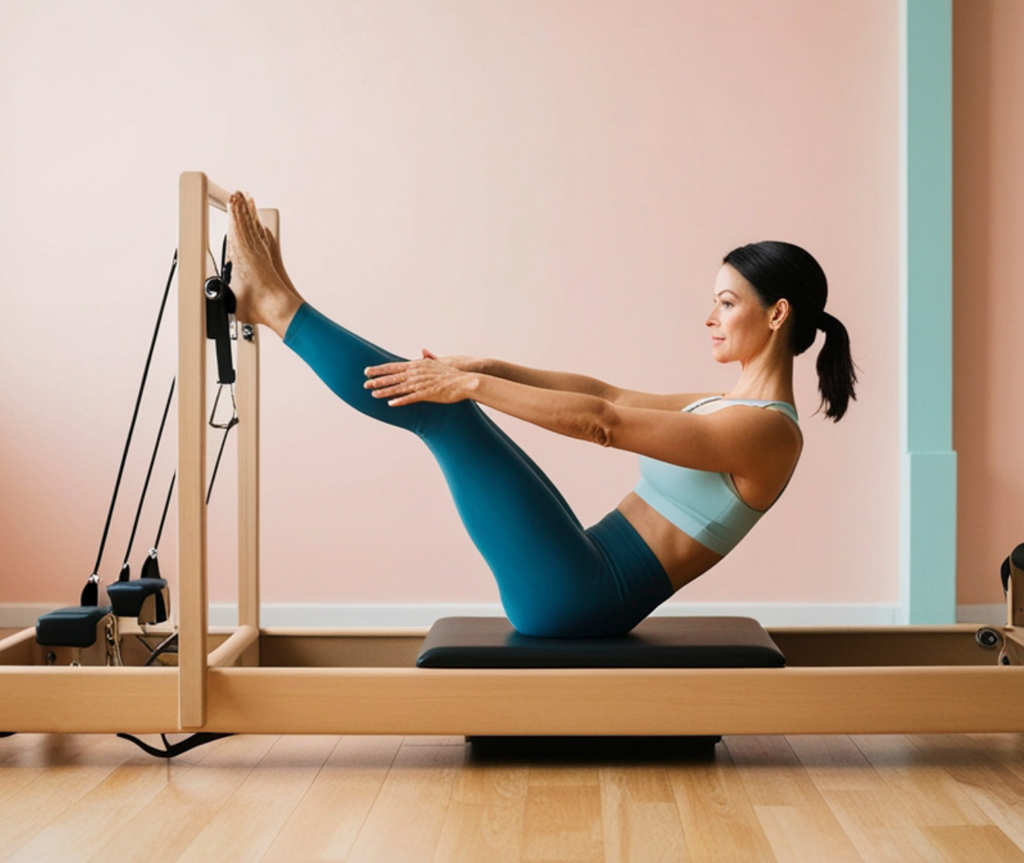
You can practise Pilates on a mat or using specialised equipment, most commonly a machine called the reformer. Both are effective. The difference is mostly in how resistance and support are applied.
Mat Pilates uses your body weight and gravity. It’s accessible anywhere, costs very little to start, and is excellent for learning the core principles of breath, control, and alignment.
Reformer Pilates uses springs and a sliding carriage to provide adjustable resistance and support. This can make certain movements more challenging or more assisted, depending on how the machine is set up. Some people find the reformer feels more intuitive. Others prefer the simplicity of the mat. The best option is usually whichever one you’ll actually do consistently. For a full comparison, see our article on mat vs reformer Pilates.
Who Is Pilates For?
One of Pilates’ strengths is its adaptability. It suits beginners, people returning to exercise after a break, athletes seeking better movement control, and older adults seeking joint-friendly strength training.
Most exercises can be modified to match your current ability level. That means you can progress at your own pace without feeling pressured to keep up with anyone else. If you have a specific health condition, it’s worth getting guidance before you start.
A qualified instructor can help you identify which movements suit your body and which ones need adjusting. That conversation is especially useful early on. For a step-by-step introduction, see our guide to Pilates for beginners.
What a Pilates Session Actually Feels Like
A typical Pilates session lasts 45 to 60 minutes and maintains a steady, deliberate pace throughout.
You’ll usually move from gentle warm-up exercises into more demanding ones that test your stability and coordination. Your attention stays inward, on your breath, your alignment, and how your body is moving, rather than on speed or intensity. Many people find Pilates both mentally calming and physically engaging.
If you’re used to high-intensity workouts, the slower pace can feel unusual at first. But most people adjust quickly and start to appreciate how it feels to move with that level of focus.
How Your Body Changes Over Time With Pilates
Pilates tends to work quietly in the background. The changes are gradual, but they compound.
Movement starts to feel easier. Your balance improves in ways you notice during ordinary tasks. Your posture becomes more natural without you having to think about it. Tension in your neck and shoulders reduces. Your core feels more solid and reliable.
These shifts usually show up in daily life before they become visible. That’s actually part of what makes Pilates so valuable. You’re not just changing how you look. You’re changing how you function. Pilates also respects your body’s need for recovery. Building strength gradually and evenly reduces wear on your joints and creates movement patterns you can keep going for decades.
Getting Started With Pilates Without Overthinking It
Starting is simpler than most people expect. A mat, comfortable clothing, and a beginner-level class or video are all you need. Focus on learning the technique rather than pushing yourself hard. Feeling gently challenged without feeling lost is usually a good sign you’re in the right place.
Pilates works because it gives your body something that’s increasingly rare in modern fitness: strength without excess strain, structure without pressure, and movement you can actually sustain long-term.
Consistent practice has been shown to build core stability, reduce lower back pain, and improve balance, particularly in older adults. Most people who try it find themselves still doing it years later. That says a lot.