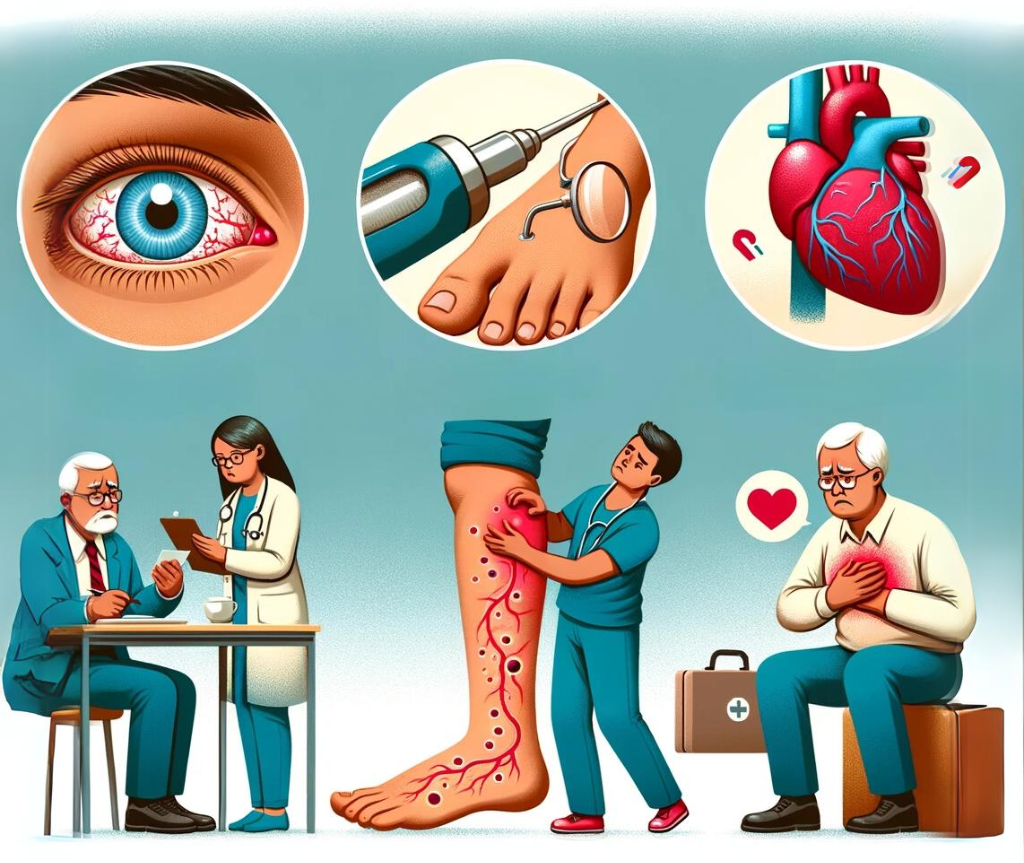

Managing your blood sugar with diabetes isn’t just about feeling good right now. It’s also about preventing damage that can build up in your body over time.
High blood sugar usually doesn’t cause obvious symptoms at first. Instead, it slowly changes your blood vessels, which can later affect your eyes, nerves, heart, kidneys, and other organs. You may not feel anything right away, but your body is still being affected.
Knowing what’s happening in your body helps you take control. Diabetes is serious, but you can avoid many complications. When you understand what to look out for and how to protect yourself, you can take real steps to stay healthy.
Key InsightWhen diabetes isn’t well controlled, it can slowly damage blood vessels all over your body. This can lead to problems with your eyes, nerves, heart, kidneys, and feet. High blood sugar is rough on your blood vessels, wearing them down and making it harder for oxygen to reach important organs. These changes usually happen slowly, and without obvious symptoms, so it’s important to check your blood sugar regularly and keep it steady. The good news is that you can lower your risk. Managing your blood sugar, seeing your doctor regularly, and making healthy choices can help protect your health in the long run. |
How High Blood Sugar Damages Your Blood Vessels
Your blood vessels bring oxygen and nutrients to all parts of your body. If your blood sugar stays high for a long time, these vessels can get damaged. It’s like pipes under too much pressure—eventually, they start to show signs of wear.
Damage to small vessels can affect delicate tissues such as your eyes, kidneys, and nerves. Doctors call these microvascular complications. When the tiny blood vessels feeding these areas become damaged, you may develop diabetic retinopathy (eye damage), diabetic nephropathy (kidney damage), or diabetic neuropathy (nerve damage).
Damage to larger vessels raises your risk of heart attack, stroke, and peripheral arterial disease, where blood flow to your legs becomes restricted. These are called macrovascular complications.
Both types of complications develop slowly. Most people don’t notice symptoms until the damage is already serious. That’s why it’s so important to keep your blood sugar steady.
Why Your Heart Is at Higher Risk
Your heart beats over 100,000 times a day. If diabetes isn’t well-managed, it makes things much harder for your heart.
- High blood sugar can irritate your blood vessel walls and cause oxidative stress, which speeds up aging in your blood vessels. Over time, this makes them stiffer and less flexible.
- Long-term inflammation slowly weakens your blood vessels over the years. You won’t feel it happening, but it makes your heart and blood vessels more at risk.
- People with diabetes often have high cholesterol. High LDL cholesterol and triglycerides can form plaques that narrow or block blood vessels. If these plaques build up in the arteries to your heart or brain, your risk of heart attack or stroke goes up.
- High blood pressure adds even more strain. It pushes hard against blood vessel walls that are already stressed, making things even tougher for your heart and blood vessels.
According to Diabetes UK, people with diabetes are two to four times more likely to get heart disease than those without diabetes. That’s why it’s important to manage your blood pressure and cholesterol, not just your blood sugar.
How Diabetes Affects Your Kidneys
Your kidneys filter about 180 liters of blood each day. They remove waste, balance fluids, and help control blood pressure. When your blood sugar is high, your kidneys have to work harder, and they can’t handle that extra strain for long.
- The first damage happens to the glomeruli, which are tiny filters in your kidneys. If they get scarred, waste starts to build up in your blood instead of being filtered out.
- High blood pressure makes kidney damage worse. It causes the blood vessels in your kidneys to become inflamed and thickened, making it even harder for your kidneys to filter your blood.
- When your kidneys are overworked and inflamed from high blood sugar, they can become scarred. This slowly reduces how well they work. In serious cases, it can lead to kidney failure, which may require dialysis or a transplant.
Early kidney disease usually doesn’t cause symptoms. That’s why it’s important to get regular urine and blood tests. Finding kidney problems early gives you the best chance to slow or stop the damage.
Nerve Damage and What It Feels Like
Your nerves send signals all over your body, controlling things like feeling in your feet and digestion. If damaged blood vessels don’t bring enough oxygen and nutrients, these signals can get disrupted.
High blood sugar damages the tiny blood vessels that supply your nerves. High blood pressure makes this worse. Inflammation also affects how nerves work. These problems can cause numbness, tingling, burning pain, or digestive issues, depending on which nerves are involved.
Nerve damage from diabetes shows up in different ways:
- Damage to nerves in your hands and feet (called peripheral neuropathy) is the most common type. It often starts in your feet. Many people say it feels like tingling, burning, or walking on cotton. Some people lose feeling completely, which makes it easy to hurt their feet without noticing.
- Damage to nerves that control your internal organs (called autonomic neuropathy) can affect digestion, bladder function, heart rate, or how your blood pressure adjusts when you stand up.
- Damage to specific muscles or body regions (called proximal or focal neuropathy) is less common but can cause sudden weakness or pain in one area.
For most people, the first signs are mild—like a little numbness in their toes or tingling that comes and goes. Noticing these changes early can help you stop more serious nerve damage.
What Diabetes Does to Your Eyes
The retina is a thin layer at the back of your eye that lets you see colors and shapes. It’s very delicate and needs a network of tiny blood vessels to work well.
If your blood sugar stays high, these tiny vessels can get damaged. They might leak fluid or blood, causing swelling and spots that blur your vision. High blood pressure makes this worse by lowering oxygen to the retina.
Diabetic retinopathy has two stages.
- In the early stage (NPDR), there are small leaks and swelling, but most people don’t notice any changes in their vision yet.
- The advanced stage (PDR) is more serious. Your body tries to grow new blood vessels, but they are weak and bleed easily. If not treated, this can cause serious vision loss.
Diabetes also increases your risk of cataracts and glaucoma.
The best thing you can do is get regular eye exams. Diabetic retinopathy can be treated if found early, but vision loss is often permanent once it happens.
Why Your Feet Need Extra Attention
Your feet often show signs of diabetes problems before other parts of your body. You might see drier skin, less feeling, or cuts and blisters that heal slowly.
- Poor circulation means less blood gets to your feet. Even small injuries may heal slowly, and infections are more likely.
- Nerve damage can make it hard to feel pain. This means you might miss small wounds. A blister or cut you don’t notice can quickly turn into a serious infection.
- When your blood sugar stays high, your skin can change. It may get drier, crack more easily, and develop calluses. These changes raise your risk of ulcers.
- Charcot foot is a serious problem where weak bones in your foot shift or collapse, changing its shape. This usually happens when nerve damage is advanced and often isn’t noticed until it’s severe.
Check your feet every day. Look for cuts, blisters, redness, or swelling. If you see anything unusual, contact your doctor or podiatrist right away.
How Diabetes Weakens Your Immune System
High blood sugar doesn’t turn off your immune system, but it does make it easier for infections to develop.
When blood vessels that feed your immune cells are damaged, those cells can’t work as well. Ongoing inflammation also disrupts how immune cells communicate. White blood cells become less effective at fighting infections.
That’s why people with diabetes get more urinary tract, skin, and yeast infections. It’s also why wounds may heal more slowly. Your immune system is still working, but it’s not as strong as it should be.
If you take medicine to lower your blood sugar, especially insulin or sulfonylureas, talk to your doctor if you keep getting infections. Changing your diabetes plan may help.
Effects on Sexual Health
Sexual health depends on good blood flow, healthy nerves, and balanced hormones. Diabetes can affect all of these, but it’s not often discussed openly.
For men, nerve damage and poor blood flow can cause erectile dysfunction. This is a common problem, affecting about half of men with diabetes at some point.
For women, less blood flow and nerve damage can lower arousal, cause vaginal dryness, and make sex uncomfortable. Yeast infections are also more common when blood sugar isn’t well controlled.
These concerns are real. If you have sexual health problems, talk to your doctor. There are treatments available, and getting help early makes a difference.
How to Protect Yourself from Diabetes Complications
You don’t have to be perfect. What matters is being consistent. Small steps you take regularly make a bigger difference than big changes you make only once in a while.
- Check your blood sugar often and stick to your treatment plan. This is the most important step.
- Find ways to stay active that you enjoy. Exercise helps your body use insulin better and keeps your heart healthy. Even a 20-minute walk most days can help.
- Eat a balanced diet with mostly whole foods. Focus on vegetables, good proteins, healthy fats, and foods that don’t raise your blood sugar too much.
- Have regular check-ups for your eyes, feet, blood pressure, and kidneys. Finding problems early gives you the best chance to prevent serious complications.
- Don’t smoke and be careful with alcohol. Smoking harms your blood vessels and greatly raises your risk of heart disease and stroke.
- Take your medications regularly, even if you feel okay. Diabetes medicines help protect your long-term health, not just your symptoms.
- Try to keep a healthy weight if you can. Even losing 5-10% of your weight can help control your blood sugar and take pressure off your heart and kidneys.
- Get regular screenings for heart, nerve, and kidney problems. Finding issues early makes them much easier to manage.
All these steps are ways to take care of yourself. They help you support your future and protect the life you want.
Moving Forward with Clarity
Diabetes complications can sound scary, and the risks are real. But they aren’t guaranteed. When you know what’s happening in your body, you can make choices that protect your heart, eyes, nerves, kidneys, and overall health.
By checking your health regularly, making healthy changes, and working with your healthcare team, you can lower your risk a lot. Many people with diabetes live full, active lives by following these steps.
Diabetes can be demanding, but every good choice you make is an investment in your health that will benefit you over time.