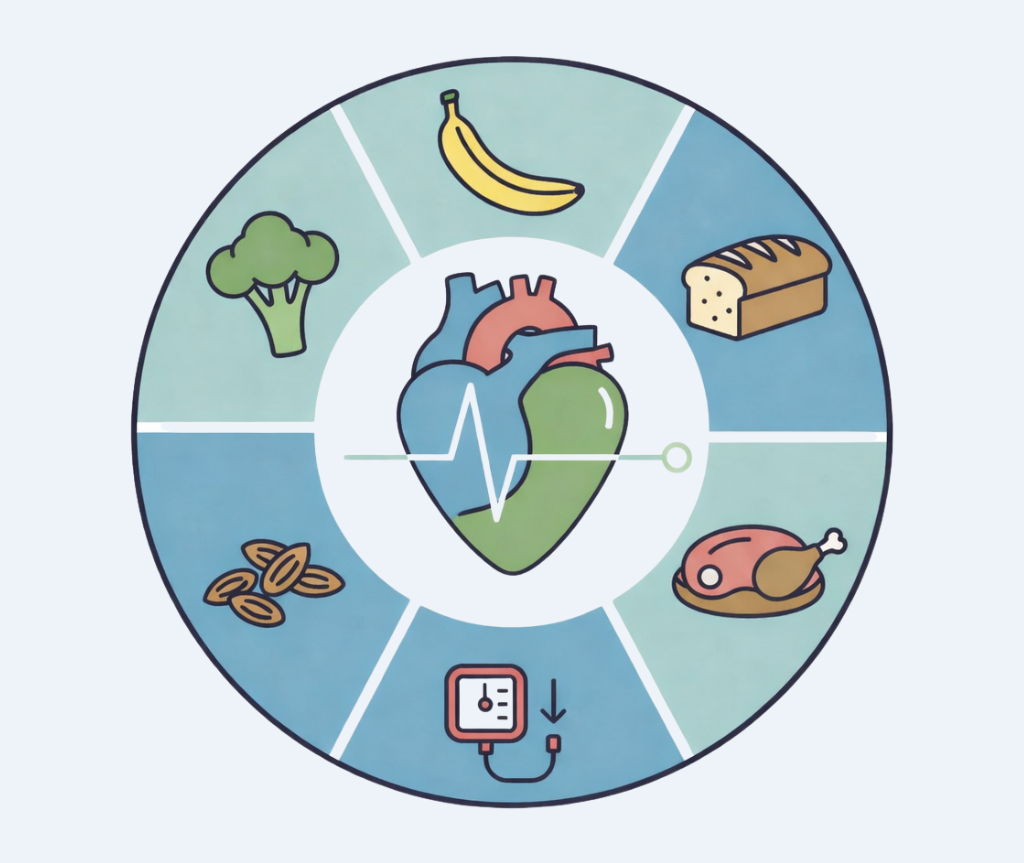

The DASH diet helps lower blood pressure by encouraging foods high in potassium, magnesium, calcium, and fiber, while cutting back on extra sodium. Studies show it can reduce systolic blood pressure by 8 to 14 points in just two weeks, even if you don’t lose weight. The diet focuses on fruits, vegetables, whole grains, lean proteins, and low-fat dairy, rather than removing whole food groups.
It’s flexible for everyday life, backed by years of research, and can be used with medication if needed. Most people notice better blood pressure within the first month.
Almost half of UK adults have high blood pressure, according to the NHS, and many only find out during a check at their doctor’s office. While medication is important when needed, your diet also directly affects your blood pressure.
The DASH eating plan, which stands for Dietary Approaches to Stop Hypertension, was created to lower blood pressure through healthy eating. Research shows it works for most people within weeks. It avoids strict rules or extreme restrictions, making it one of the easiest heart-healthy diets to stick with.
This guide covers how the DASH diet works, what foods to choose, what to limit, and how to make it fit your daily routine.
What Is the DASH Diet
Following the DASH diet for blood pressure means eating in a way that was shaped by major clinical studies. Rather than focusing on individual “superfoods,” it looks at your whole eating pattern.
The diet highlights foods naturally high in potassium, magnesium, calcium, and fiber. These nutrients help your blood vessels relax and contract, maintain fluid balance, and reduce stress on your heart and blood vessels.
You also cut back on excess sodium, which can make your body retain fluid and raise blood pressure. Rather than cutting out food groups, DASH changes the balance on your plate. You eat more plants and less salt, saturated fat, and refined carbs.
Blood pressure usually gets better within a few weeks, even if you don’t lose any weight.
How DASH Lowers Your Blood Pressure
Your blood pressure is affected by both the nutrients in your food and how those foods are put together. The DASH diet works in several ways at once.
First, eating foods rich in potassium, such as vegetables, fruit, and beans, helps your body balance out sodium. Potassium helps your kidneys remove excess sodium from your urine, which lowers pressure on your blood vessels.
Second, magnesium and calcium help your muscles contract and relax, including the muscles in your arteries. If you don’t get enough of these minerals, your blood vessels can stay tighter than they should.
Third, eating more fiber helps your body better manage insulin and reduces ongoing inflammation, both of which are linked to high blood pressure.
Finally, eating fewer ultra-processed foods helps you avoid hidden sources of sodium. Most people eat much more salt than they think, even if they don’t add it at the table.
What to Eat More Of
DASH doesn’t require perfection. It simply encourages you to focus on these food groups regularly.
Vegetables and fruits should make up most of your meals. Leafy greens, tomatoes, carrots, berries, citrus fruits, and bananas are especially good for their potassium and antioxidants. Frozen and canned options are fine too, as long as they’re unsalted or low-sodium.
Whole grains give you fiber and minerals that refined grains don’t have. Oats, brown rice, whole wheat pasta, barley, and quinoa help keep your blood sugar steady and support healthy blood vessels.
Choose lean proteins for heart health. Fish, skinless chicken, beans, lentils, tofu, and small amounts of nuts or seeds are key. Red meat is allowed, but in smaller portions and less often.
Low-fat or fat-free dairy products, such as milk, yogurt, and cheese, provide calcium and protein. Choosing lower-fat options helps limit saturated fat while still supporting your bones and blood vessels.
What to Limit (Not Eliminate)
DASH is most effective when you cut back on certain foods instead of banning them completely. This flexibility makes it easier to stick with it over time.
Foods high in sodium, such as processed meats, ready meals, takeaway foods, instant noodles, and many packaged snacks, are big sources of salt. Even bread and sauces can add more salt than you might think. It’s better to reduce sodium gradually than to cut it all at once. Your taste buds will adjust, and you’ll start to enjoy lower-sodium foods in just a few weeks.
Saturated and trans fats found in butter, fatty meats, pastries, and fried foods can harm your blood vessels. Instead, choose healthier fats from olive oil, nuts, seeds, and fish.
Sugary foods and drinks can lead to weight gain, insulin resistance, and higher blood pressure over time. It’s best to have sweetened drinks, desserts, and refined snacks only occasionally.
How Much Sodium Should You Aim For
DASH guidelines suggest keeping sodium under 2,300 mg per day, and you may see even better results if you aim for 1,500 mg or lower. But dropping your sodium too fast can feel limiting.
A simple way to start is to stop adding salt at the table, pick low-sodium versions of your usual foods, and cook more at home using herbs, spices, garlic, lemon, and vinegar for flavor.
If you’re taking blood pressure medications or diuretics, or managing kidney conditions, you should adjust your sodium intake under your doctor’s guidance.
What a Day on DASH Can Look Like
DASH is flexible and can fit many cultures and personal tastes.
- For breakfast, you might have oats with berries and yogurt, or wholegrain toast with avocado and a boiled egg.
- Lunch could be lentil and vegetable soup with a salad and olive oil dressing.
- Dinner might be grilled fish or beans, lots of vegetables, and brown rice or potatoes. Snacks can be fruit, unsalted nuts, or yogurt.
It’s important to pay attention to portion sizes, but your meals should still be filling. The goal is balance, not going hungry.
DASH and Weight Loss
The DASH diet wasn’t designed for weight loss, but many people naturally lose weight when they follow it. That’s because foods high in fiber help you feel full, and the diet is lower in calories overall.
If you do lose weight, it can help lower your blood pressure even more. But your blood pressure often gets better even if your weight stays the same, which is why DASH works for people of all sizes.
Who Should Be Cautious
DASH is generally safe, but some people may need to make changes.
If you have advanced kidney disease, you might need to limit foods high in potassium. People taking medicines that affect fluid or electrolyte balance should make changes slowly. If your blood pressure stays high even after changing your diet, see your doctor to check for other causes.
Making DASH Sustainable Long Term
Being flexible is what makes DASH sustainable. The best results come from sticking with healthy habits over time, not from being perfect.
Start your meals with vegetables. Plan easy, repeatable breakfasts and lunches. Enjoy treats now and then without feeling guilty. Aim for progress, not perfection.
When this way of eating feels normal instead of like a special plan, it’s much easier to keep up.
A Steady Path to Better Blood Pressure
You don’t need strict diets or complicated rules to lower your blood pressure. The DASH diet helps because it aligns with your daily food choices and supports what your heart and blood vessels need.
Over time, these small, steady changes help keep your arteries healthy, your blood pressure stable, and your heart strong. Eating this way isn’t about fixing everything overnight. It’s about making food choices that support your body every day.