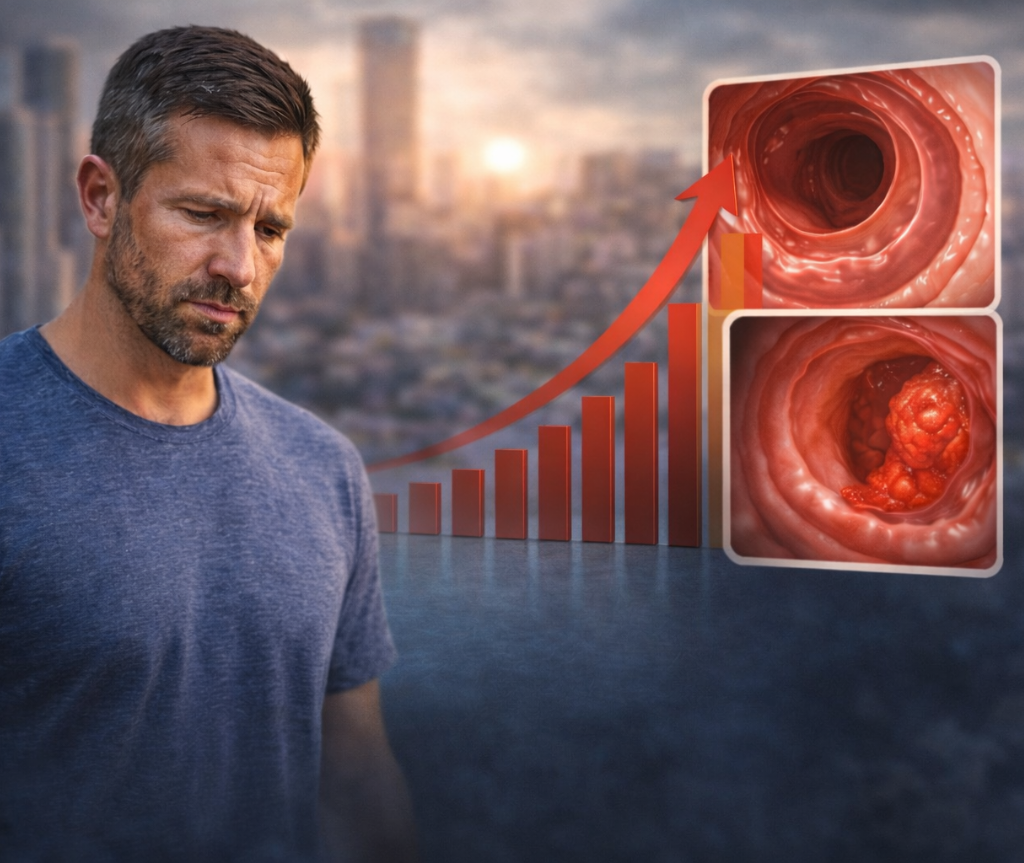
Colon cancer is rising among younger adults in many developed countries, including the United States, the United Kingdom, Australia, Canada, and across Europe. Since the mid-1990s, rates have steadily increased in people under 50, while
rates in older adults have dropped due to several reasons. Researchers are trying to figure out why people in this generation have a higher risk than their parents did at the same age.
There are several
reasons for this trend. Changes in diet, higher obesity rates, more sedentary lifestyles, overuse of antibiotics, and changes in gut bacteria all play a part. These factors probably combine in ways we do not yet fully understand.
If you are in your 30s or 40s, this trend might seem worrying. But learning what is happening and what you can do helps you take control. Early detection is very important. When colon cancer is found in the early stages, survival rates are over 90% over the 5-year period, a measure used by experts to communicate cancer death severity.
Key InsightColon cancer in younger adults is increasing quickly in developed countries, undoing years of progress seen in older adults. People born in 1990 have about twice the risk of colon cancer compared to those born in 1950. Experts believe this is due to diets high in processed foods and low in fiber, more obesity, less physical activity, antibiotic use, and changes in gut bacteria. Younger people are often diagnosed later because they and their doctors do not expect cancer at their age. Learning the warning signs and getting screened at the right time can help catch cancer early, when survival rates are over 90%. |
How Dramatic the Shift Has Been
Colon cancer cases in people under 50 have roughly doubled since the 1990s, while cases in older adults have declined. Rates in younger adults have been rising steadily for nearly three decades.
People born in 1990 face about twice the colon cancer risk of those born in 1950. Cases of early-onset colon cancer are now appearing in people in their 30s and early 40s, not just those approaching 50.
This pattern is showing up across Western countries. In the United States, colon cancer is now the leading cause of cancer death for men under 50 and the second leading cause for women under 50. The UK, Australia, and several European countries are seeing comparable increases.
When you find out you have cancer matters enormously. When caught early, more than 90% of people survive at least five years, and many are cured completely. But when cancer has spread further before it’s found, survival rates drop significantly.
This issue predominantly affects developed countries with Western lifestyles. Rates remain much lower in parts of Asia and Africa, and in rural areas, where people follow more traditional diets and ways of life.
It seems that modern, industrialized life is a major factor driving the increase in colon cancer in younger adults.
What’s Driving the Increase in Colon Cancer in Younger Adults
There is no single cause for the rise in colon cancer among younger adults. Experts think it is likely due to
several factors working together. Many of these factors affect gut health and inflammation, both of which play a role in how cancer develops.
These are risk factors that affect large groups of people. Having one or more does not mean you will definitely get colon cancer. But knowing about them helps explain why so many people are affected.
1. Due to Changes in the Diet
Colon cancer rates have gone up at the same time as big changes in Western diets. Since the 1980s and 1990s,
ultra-processed foods have become common. For many people, these foods now make up more than half of what they eat each day.
Research consistently links high consumption of
red meat and processed meats to increased colon cancer risk.
Low fiber intake is another factor—most people eat less than half the recommended 25-30 grams daily. Diets high in sugar and refined carbohydrates also increase risk.
Many people now getting early onset colon cancer in their 40s grew up eating more convenience foods and processed snacks than earlier generations. Eating habits formed in childhood and young adulthood may have started changes in the body that only appear as cancer many years later.
The
World Health Organization classifies processed meats as carcinogenic and red meat as probably carcinogenic to humans, specifically noting the link to colorectal cancer.
2. Rising Obesity Rates
Extra weight, especially around your belly, can raise your chances of developing colon cancer. Since the 1980s, obesity rates have climbed sharply, particularly among younger adults, and this shift lines up closely with the rise in early-onset colon cancer cases.
Here’s why it matters: carrying extra weight increases inflammation in your body and affects how your hormones work. Both of these changes can create conditions that make it easier for cancer to develop.
Research shows that if you’re living with obesity, your risk of colon cancer may be 30-50% higher compared to someone at a healthy weight. What’s particularly concerning is that being overweight during your teens and twenties might have the biggest impact on your cancer risk later in life.
The timing isn’t a coincidence. The sharp increase in obesity rates matches almost exactly with the increase in colon cancer diagnoses among younger adults, which strongly suggests the two are connected.
3. Sedentary Lifestyles
Inactivity is another clear risk factor. People today spend much more time sitting than past generations did. Office jobs, long commutes, and more screen time all mean less movement each day.
Research shows that regular physical activity reduces the risk of colon cancer by approximately 20-25%. Exercise helps by reducing inflammation, supporting immune function, and promoting more efficient movement of waste through the colon.
People started living more sedentary lives during the same decades that colon cancer rates in younger adults began to rise.
4. Changes in Gut Bacteria
Your
gut has trillions of bacteria that affect your health in many ways. Some bacteria produce compounds that protect against cancer, while others may promote its growth. Studies show that people with colon cancer often have different gut bacteria than those without cancer.
Using antibiotics, especially in childhood, can change gut bacteria for years. Diets low in fiber do not support good bacteria. Diets high in sugar may help bacteria that cause inflammation.
Younger people may have very different gut bacteria than older generations because of changes in diet, antibiotic use, and other factors. This change in gut bacteria might be part of why colon cancer is rising in younger adults.
Long-term gut inflammation can lead to cancer, and gut bacteria play a crucial role in controlling this inflammation.
5. How These Factors Add Up
The most likely reason is that several factors combine. Eating lots of processed foods and not enough fiber can change your gut bacteria and increase inflammation.
If you are overweight and not very active, inflammation increases even more. These changes together make it easier for cancer to develop.
What This Means If You’re Under 50
Knowing about this trend can help you protect your health. Here are the most important things to keep in mind.
1. Know the Warning Signs of Colon Cancer in Younger Adults
Being aware is your first defense. Knowing that colon cancer can affect younger adults makes it more likely that you will notice symptoms and take them seriously.
Watch for these warning signs:
- Ongoing changes in bowel habits (diarrhea, constipation, or alternating between the two)
- Blood in your stool or rectal bleeding
- Persistent abdominal pain or discomfort
- Unexplained weight loss
- Constant fatigue that doesn’t improve with rest
If you have any of these symptoms for more than a few weeks, see your doctor. Do not assume you are too young for cancer. Do not ignore rectal bleeding or think it is only hemorrhoids without having it checked.
Most of the time, these symptoms are caused by something not serious. But the only way to be sure is to have them checked by a doctor.
2. Understand Your Personal Risk
Family history significantly affects your risk. If a close relative (parent, sibling, or child) had colon cancer, especially before age 50, your risk is higher. People with a family history often need to start screening earlier than standard guidelines recommend.
If you have inflammatory bowel disease such as
Crohn’s disease or
ulcerative colitis, your risk is also elevated. Certain genetic conditions, such as Lynch syndrome, dramatically increase the risk and require earlier, more frequent screening.
Talk with your doctor about your family history and any health conditions that could affect your risk. This will help you decide when to start screening and how often you need it.
3. Know When to Get Screened
Screening guidelines have changed in response to rising rates of colon cancer in younger adults. In the United States, routine screening now begins at age 45 instead of 50. In the UK, screening starts at 50 through the NHS Bowel Cancer Screening Programme. Other countries may have similar programs, typically starting between the ages of 45 and 50. Check it with your family doctor.
If you have symptoms, a family history, or other risk factors, you might need to start screening earlier. Sometimes this could mean starting in your 30s. Your doctor can help you figure out the best screening plan for you.
Screening works. It can detect precancerous polyps before they become cancer, or catch cancer at an early stage when it’s most treatable. If you’re approaching screening age or have risk factors, completing screening is one of the most effective actions you can take.
Several screening methods exist, including colonoscopy, flexible sigmoidoscopy, and stool-based tests. Colonoscopy remains the gold standard because it allows doctors to both detect and remove polyps during the same procedure.
4. Consider Lifestyle Changes
You cannot control every risk factor, such as risk due to a family member having colon cancer, but you can change some important ones.
- Eating a diet high in fiber from vegetables, fruits, and whole grains can help protect you.
- Limiting red meat and avoiding processed meats may lower your risk.
- Keeping a healthy weight by eating well and staying active also helps.
You do not need intense exercise—even moderate activity, such as brisk walking for 30 minutes most days, is helpful. Drinking less alcohol and not smoking also lowers your risk.
These changes will not eliminate all risk, but they reduce the likelihood that you will develop colon cancer.
The Bottom Line
The increase in colon cancer among younger adults is serious and still happening. It can be unsettling to find out that a disease once linked to older people is now showing up in people in their 30s and 40s. But finding it early makes a big difference.
When colon cancer is found early, survival rates are very high—over 90% if caught at stages. The key is to catch it early, which means getting screened and paying attention to symptoms.
Learn the warning signs and do not ignore ongoing changes, even if you are young. Ask about your family history and talk to your doctor about it. Get screened when you reach the recommended age in your country, or sooner if you have risk factors. Think about whether changes in your diet, activity, or weight could help your health.
This trend is worrying, but knowing about it and taking action can really help. The more people understand, the better chance we have to find early-onset colon cancer when it is easiest to treat. You are not too young to notice changes in your body, ask questions, and speak up for your health.