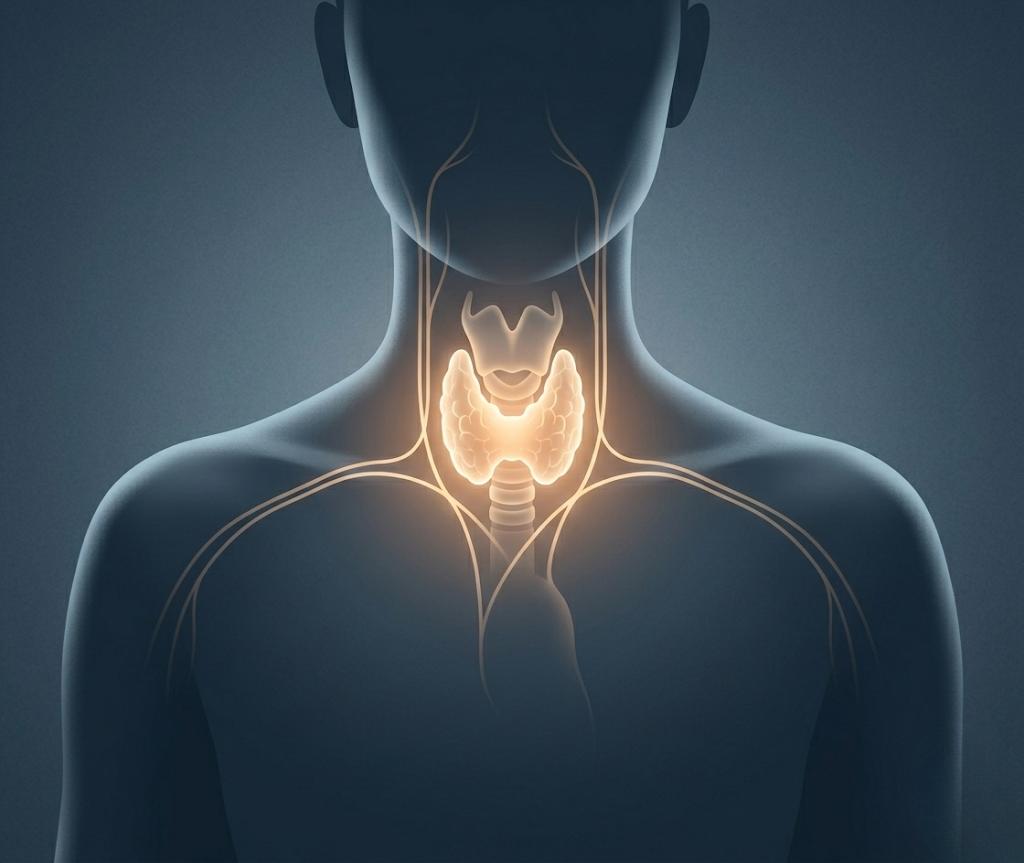

Hormonal symptoms are frustrating precisely because they’re so hard to pin down. Feeling tired all the time, gaining weight without an obvious reason. Struggling with mood or concentration. These things get blamed on stress, poor sleep, or just getting older. Sometimes that’s accurate. But there’s often something else in the picture that isn’t getting considered.
PFAS hormonal disruption is one of those missing pieces. These chemicals interfere with the signals your body uses to regulate almost everything: energy, mood, metabolism, fertility, and immune response. The disruption isn’t dramatic or sudden. It builds slowly, which is part of why it’s so easy to miss.
Knowing how PFAS interact with your hormones doesn’t replace a conversation with your doctor. But it does give you a more complete picture of what might be worth investigating.

How PFAS Hormonal Disruption Actually Works
Your endocrine system is the network of glands and hormones that keeps your body running steadily. The thyroid regulates your metabolism and energy. The adrenal glands manage your stress response. The reproductive system depends on carefully balanced levels of estrogen, progesterone, and testosterone. All of these systems communicate via chemical signals that travel through the bloodstream, telling organs what to do.
Endocrine disruptors are chemicals that interfere with that signaling. Some mimic hormones and bind to receptors they shouldn’t. Others block natural hormones from doing their job. PFAS do both, depending on the compound and the tissue involved.
The effect isn’t like flipping a switch. It’s more like static on a radio signal. The message still gets through, but not quite as clearly or as reliably. Over time, that interference adds up. The body compensates where it can, but compensation has limits.
How PFAS Affect Thyroid Function
The thyroid is one of the organs most consistently affected by PFAS exposure. It produces hormones that regulate metabolism, body temperature, energy levels, heart rate, and mood. Even small disruptions to thyroid function can affect the whole body.
PFAS interfere with thyroid function in two main ways. First, they compete with thyroid hormones for binding sites on blood transport proteins. This affects how thyroid hormones are distributed and used throughout the body. Second, they disrupt thyroid hormone production at the gland itself, affecting levels of T3 and T4, the two main thyroid hormones your body relies on.
The result can look a lot like subclinical hypothyroidism. That’s the kind of low-level thyroid underfunction that often doesn’t show up clearly on standard blood tests but produces real symptoms. Persistent fatigue, feeling cold, unexplained weight gain, brain fog, low mood, and sluggish digestion are all consistent with thyroid disruption.
If these symptoms feel familiar and thyroid tests have come back normal, it’s worth asking your doctor whether PFAS exposure warrants further investigation.
Reproductive Hormones and Fertility
PFAS exposure has been linked to disruptions in both male and female reproductive hormones, and the effects show up across different life stages.
In women, higher PFAS levels in the blood are associated with earlier onset of menopause, irregular menstrual cycles, and reduced fertility. PFAS appear to affect estrogen and progesterone balance, which can, over time, influence mood, bone density, and cardiovascular health. For women going through unexplained fertility challenges or noticing significant hormonal shifts earlier than expected, PFAS exposure is a factor worth raising with a specialist.
In men, PFAS have been linked to lower testosterone levels and reduced sperm quality, including both count and motility. Testosterone affects far more than reproductive function. Low levels contribute to fatigue, reduced muscle mass, low mood, and poor concentration. These symptoms are often attributed to age or lifestyle without a deeper cause being investigated.
For both sexes, the concern is amplified during certain life stages. Adolescence, pregnancy, and the years around menopause are periods when hormonal balance is already in flux, and disruption from external sources may have a stronger effect.
Metabolic Hormones and Weight
One of the less obvious ways PFAS affect hormones is through metabolic signaling. Insulin, leptin, and adiponectin, the hormones involved in blood sugar regulation, appetite, and fat storage, are all affected by PFAS exposure.
Insulin resistance is the most clinically significant of these effects. When cells become less responsive to insulin, blood sugar regulation becomes harder, energy fluctuates, and the risk of type 2 diabetes increases over time. PFAS appear to contribute to this process by disrupting signaling pathways that maintain cells’ sensitivity to insulin.
Leptin resistance is also associated with PFAS exposure. Leptin is the hormone that tells your brain you’ve eaten enough. When leptin signaling is disrupted, hunger regulation goes wrong. You may feel hungry even after a full meal, or find it unusually hard to feel satisfied. This contributes to weight gain that doesn’t respond well to typical dietary changes.
For anyone dealing with unexplained weight gain, blood sugar irregularities, or persistent hunger that seems disproportionate to what they’re eating, PFAS-related metabolic disruption is a possibility that deserves consideration.
Who Needs to Pay the Most Attention
Hormonal systems are particularly sensitive during specific life stages and in specific groups of people. PFAS exposure matters for everyone, but it matters more at certain times.
Pregnant people face the highest stakes. PFAS cross the placenta and are present in cord blood, exposing the developing baby directly. Fetal development is exquisitely sensitive to hormonal signals, and disruptions during key developmental windows can have effects that persist into childhood and beyond. Thyroid hormone levels during pregnancy are especially critical. Even mild disruption affects fetal brain development.
Young children are also at higher risk, both because of ongoing developmental sensitivity and because they tend to have higher relative exposure through dust ingestion and hand-to-mouth behavior.
Women approaching or going through perimenopause are another group for whom PFAS-related hormonal disruption may amplify existing changes. The hormonal shifts during this life stage are significant in their own right. Additional interference from endocrine disruptors can make symptoms harder to manage and harder to attribute correctly.
What This Means in Practice
Understanding PFAS as a hormonal disruptor doesn’t mean attributing every hormonal symptom to chemical exposure. Most hormonal imbalances have multiple contributing factors, and PFAS are rarely the only thing in the picture.
But they are a factor that often gets left out of the conversation entirely. If you’ve been dealing with thyroid symptoms, fertility challenges, unexplained weight changes, or hormonal shifts that haven’t responded to standard approaches, it’s worth asking your doctor whether PFAS exposure testing is appropriate for your situation.
Reducing your exposure through practical steps outlined in this series, including filtering your water, swapping non-stick cookware, and checking the ingredients in your personal care products, is also relevant here. Lowering your ongoing body burden won’t quickly reverse past accumulation. But it does reduce ongoing interference with hormonal signaling.
Symptoms Worth Taking Seriously
If several of the following have been present for a while without a clear explanation, PFAS-related hormonal disruption is worth raising with your doctor:
- Persistent fatigue that doesn’t improve with rest
- Unexplained weight gain or difficulty losing weight despite dietary changes
- Irregular periods or significant changes in menstrual pattern
- Fertility challenges without an identified cause
- Low testosterone symptoms in men: fatigue, low mood, reduced muscle mass
- Brain fog, poor concentration, or memory issues
- Feeling persistently cold or having a lower-than-normal body temperature
- Blood sugar irregularities or signs of insulin resistance
None of these symptoms confirms PFAS exposure. But several together, without another explanation, make it a conversation worth having.
Taking Your Hormonal Health Seriously
Hormonal health is one of the areas where PFAS research is most consistent and most relevant to everyday life. The effects aren’t theoretical. They show up in real people’s blood work, real fertility outcomes, and real symptoms that often go unexplained for years.
You don’t need to be alarmed. But you do deserve to know that PFAS are part of the hormonal picture. Reducing your exposure is a practical, achievable step you can take right now. Start with what you drink and cook with. Check the personal care products you use every day. And if symptoms have been nagging without resolution, bring PFAS into the conversation with your doctor. Sometimes the missing piece is simply the right question.