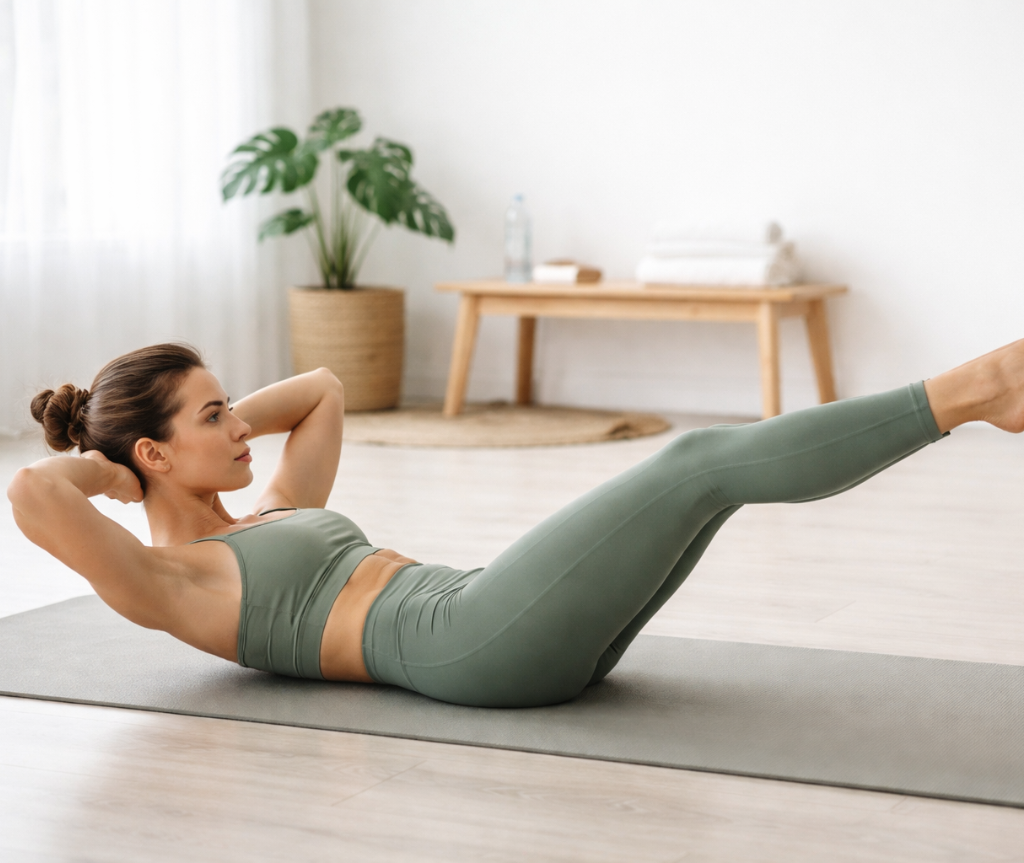

Your first Pilates session will probably feel harder than you expected. Not because you’re lifting heavy or moving fast, but because you’re using muscles you haven’t paid much attention to before.
Many beginners wonder whether Pilates will feel challenging enough. Or whether they’re even doing it correctly. Both are completely normal questions. Pilates is different from most forms of exercise, and your early weeks are as much about learning as they are about training.
Here’s what actually tends to happen during your first month, week by week, so you go in knowing what to look for.
Before You Start: A Quick Reality Check
Pilates isn’t designed to overwhelm you on day one. You’re learning how your body moves well first, then building strength on top of that foundation.
Early exercises can look simple but feel surprisingly demanding. That’s because you’re working smaller supporting muscles that rarely get much attention, especially if you spend a lot of time sitting or doing repetitive movements.
Your early progress builds quietly. You might not notice dramatic changes straight away, but that doesn’t mean nothing is happening. It very much is.
Week 1: Learning the Language of Pilates
Your first week is mostly about getting familiar with the basics. You’re introduced to posture, alignment, and breathing. You’ll get reminders to slow down and release unnecessary tension. Precision matters more than intensity here, which can feel odd if you’re used to high-energy workouts.
You’ll notice genuine mental effort as you try to coordinate your breath with your movement. You’ll feel muscles working that you haven’t felt before. You’ll also get a lot of cues to adjust your alignment. That’s all normal.
It’s also common to wonder whether the workout is “enough.” Pilates rarely leaves you breathless, but it demands real focus and control. At this stage, familiarity is the goal, not mastery.
Week 2: Building Awareness and Control
By your second week, movements start to feel more familiar. You might still need reminders, but the structure of a class feels less overwhelming.
This is when your body awareness really starts to develop. You’ll catch yourself holding your breath, or tensing your shoulders, and then figure out how to let go. Noticing those habits and learning to release them is genuine progress, even if it doesn’t look dramatic from the outside.
You might feel mild soreness around your core or hips. Your posture awareness often improves during everyday moments, not just in class. You’ll feel effort without exhaustion. These shifts are signs your nervous system is adapting to new movement patterns, and that’s exactly what should be happening.
Week 3: Strength Starts to Feel More Accessible
Around week three, you’ll likely feel more stable and coordinated. Exercises flow more smoothly. Transitions feel less awkward. This is usually when the strength-building side of Pilates becomes clearer.
You might notice:
- Better stability during challenging movements
- Improved balance and coordination
- More confidence during sessions
Strength in Pilates feels supportive rather than forceful. Your movements feel steadier, not strained. These quiet shifts are laying the groundwork for week four.
Week 4: When Subtle Changes Start Adding Up
By your fourth week, Pilates starts to feel familiar rather than new. Exercises may still challenge you, but the learning curve has softened.
Early benefits often start showing up in everyday life. You might notice yourself sitting or standing with less effort. Tension in your neck and shoulders may ease. Your core feels more connected and reliable during ordinary movements.
Your flexibility may improve, too, though Pilates focuses on active mobility rather than passive stretching. These changes tend to be subtle, but they’re meaningful. And they compound over the months ahead.
How Often Should You Practice?
Two to three sessions a week work well for most beginners. That gives you enough practice to reinforce what you’re learning while giving your body time to recover.
More sessions aren’t always better early on. Precision matters, and fatigue affects your technique. Consistency matters far more than volume at this stage.
What Pilates Should and Shouldn’t Feel Like
Pilates should feel challenging but manageable. You should feel clear muscle engagement through your core, focused effort without joint pain, and a calm, steady pace. That’s the normal experience.
It should not feel like sharp or worsening pain, rushed or chaotic movement, or like you’re forcing your body into positions. If something hurts beyond mild muscle soreness, modify the movement. Don’t push through it.
If you have any existing injuries or health conditions, speak to a qualified instructor before starting. They can adjust sessions to suit your needs from the beginning.
Common Beginner Concerns (And Why They’re Normal)
1. Shaking during exercises: Shaking usually means your supporting muscles are working hard. It’s not a sign of weakness. It typically settles as your strength builds over the coming weeks.
2. Feeling like you’re not flexible enough: You don’t need to be flexible to start. Pilates builds your mobility gradually through controlled movement. You develop flexibility as part of the practice, not as a requirement for it.
3. Wondering if the pace is slow enough to count: The slowness is intentional. Control builds strength more effectively than speed, even if that doesn’t feel true at first. The effort is real, even when the pace is calm.
Mat or Reformer: Does It Matter at the Start?
Both work well for beginners. Mat Pilates teaches body control using your own weight and gravity. Reformer Pilates adds spring resistance, which can make some movements easier and others more challenging.
Neither option is better than the other. What matters more than equipment is clear instruction and the right progression for your body. Start with whichever feels accessible and available to you.
How Your First Month Fits the Bigger Picture
Joseph Pilates designed this as a lifelong movement practice, not a short-term programme. Your first four weeks are about learning and adapting. You’re building the foundation that everything else rests on.
Your strength, mobility, and endurance continue to build over months. The changes get clearer as they accumulate. That gradual progression is part of what makes Pilates effective over the long run.
Pay attention to how your body feels between sessions. Notice whether movement feels more supported. Watch for small shifts in your posture or breathing during the day. These are the real markers of progress early on, and they tend to show up before any visible results do.
What to Hold On to as You Start
Your early weeks are about learning, not proving anything. Consistent practice and attention to technique will take you further than effort alone.
Your strength builds quietly. Your confidence grows steadily. Movement becomes more efficient in ways you start to notice in your daily life, not just during class.
Stick with it, give your body the time it needs, and trust that the small changes are adding up. That’s exactly how Pilates is meant to work.