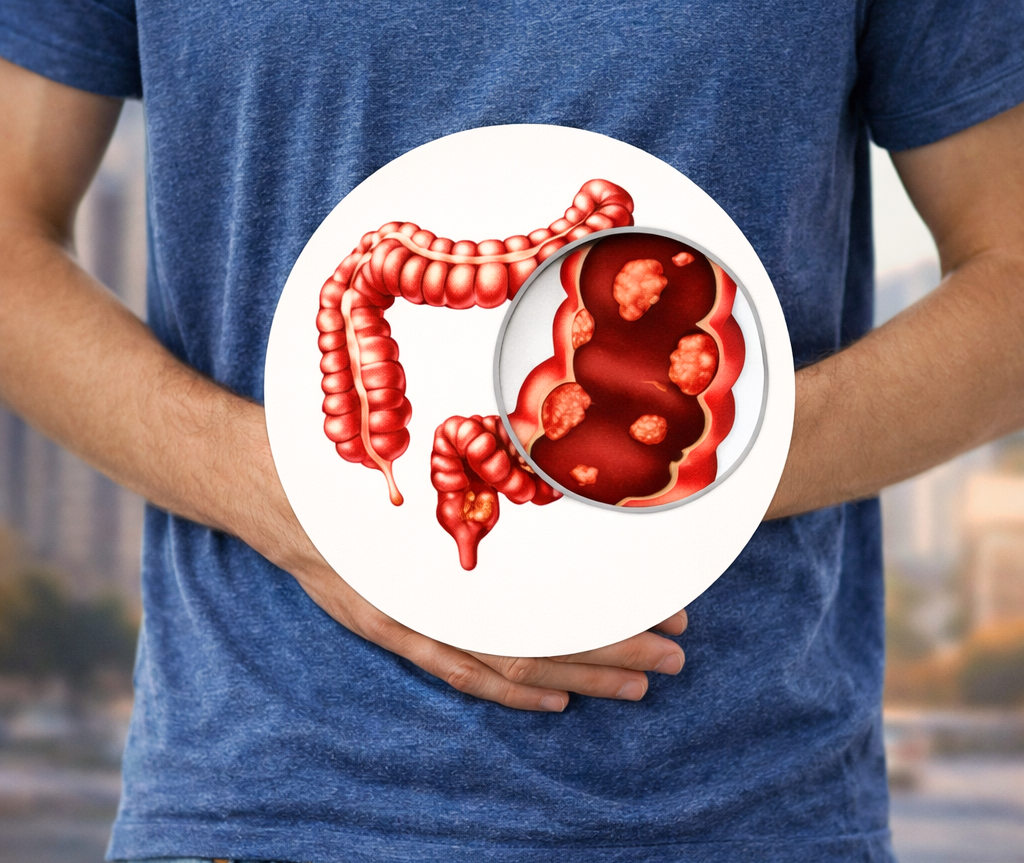

If you see blood in your stool, you might assume it’s just hemorrhoids. When your bowel habits change, you may blame it on work stress. If you feel tired, you might think you’re not sleeping enough. These are common reactions, but they can also lead to early colon cancer symptoms being overlooked for months.
Younger adults are particularly prone to ignoring these warning signs. When you’re in your 30s or 40s, cancer doesn’t feel like a real possibility. Even many doctors don’t immediately consider colon cancer in younger patients, which can lead to delays in diagnosis.
With colon cancer rates increasing in people under 50, it’s more important than ever to notice symptoms early. The problem is that colon cancer symptoms are vague and can look like common issues such as irritable bowel syndrome, hemorrhoids, or simple digestive upset. Usually, these symptoms are harmless, but checking on symptoms that don’t go away can help catch cancer when it’s easiest to treat.
This article covers the warning signs most commonly missed by younger adults and explains when you should seek medical attention.
Key InsightMany younger adults ignore or misread early colon cancer symptoms because they don’t expect to face cancer at their age. Warning signs include ongoing changes in bowel habits, blood in your stool, lasting belly pain, unexplained weight loss, and unusual tiredness. It’s easy to blame these symptoms on stress, hemorrhoids, or digestive problems. What matters most is if the symptoms last—anything that sticks around for more than a few weeks should be checked by a doctor. Most of the time, the cause is not serious, but finding colon cancer early greatly improves your chances, so it’s important to take ongoing symptoms seriously and talk to your doctor. |
The Symptoms That Show Up First
Colon cancer symptoms often appear slowly and can be hard to notice at first. They are also common in many other digestive problems, so they’re easy to miss. What matters most is if the symptoms last. If they continue for weeks or get worse, you should pay attention.
1. Changes in Bowel Habits
A common early sign is a change in your bowel habits.
This could mean diarrhea lasting more than a few days, constipation that doesn’t improve with usual treatments, or alternating between the two. Your stool might look thinner than normal, or you might feel like you can’t fully empty your bowels, even after using the bathroom.
These changes occur because a tumor can narrow the passage through which stool moves. People often blame these symptoms on diet or stress. What makes them concerning is when they last more than three weeks or get worse.
If your bowel habits have shifted and stayed different for several weeks, especially if the changes are progressing, talk to your doctor.
2. Blood in or on Your Stool
Rectal bleeding is a common early symptom of colon cancer in younger adults, but it’s often ignored. The blood can be bright red, dark and sticky, or mixed into your stool. Sometimes the bleeding is so small you won’t notice it without a test.
Most people who see rectal bleeding think it’s just hemorrhoids. Hemorrhoids are common and can cause bleeding, but you shouldn’t always assume that’s the reason. Bleeding from hemorrhoids usually happens during or right after a bowel movement. Bleeding from colon cancer can happen at any time and may be mixed into the stool.
Any rectal bleeding should be mentioned to your doctor, even if you think it’s hemorrhoids. If bleeding persists for more than a week or recurs, seek medical attention.
3. Persistent Abdominal Discomfort
If you have ongoing belly discomfort, it could be a sign of a problem. This might feel like cramps, gas, or bloating that won’t go away. You might also have pain in one spot or feel unusually full after eating only a little.
Many people think this discomfort is just gas or indigestion. You might try antacids, but if they don’t help, you may just put up with the pain. The difference is that this pain doesn’t go away with usual treatments and keeps coming back. If you have belly pain that lasts for weeks or keeps returning in the same spot, you should get it checked.
4. Unexplained Weight Loss
Losing weight without trying should always be checked by a doctor. In colon cancer, weight loss can happen because the tumor changes your appetite or how your body uses food. You might eat less because you feel full quickly, or you may lose interest in eating.
If you lose 10 pounds or more without trying, especially over a few months, talk to your doctor. People often blame weight loss on stress or a busy schedule, but losing a lot of weight without trying usually means something medical is going on.
5. Unusual Fatigue and Weakness
Feeling tired all the time, even after resting, can be a warning sign. This kind of fatigue often comes from anemia caused by slow bleeding in the colon. Even if you don’t see blood in your stool, small amounts of bleeding over time can lower your iron and red blood cell levels.
You might feel constantly tired, weak, or short of breath while doing normal activities. Some people feel lightheaded or notice their heart racing more easily. Everyone feels tired sometimes, especially if you’re juggling work and family. The difference is that cancer-related fatigue is persistent and disproportionate to your level of activity. It doesn’t get better with a good night’s sleep.
If you have ongoing tiredness along with any of these other symptoms, talk to your doctor.
When Symptoms Mean You Should See a Doctor
It can be hard to know which symptoms need a doctor’s attention. Here is a simple guide.
See your doctor within a few weeks if:
- Changes in your bowel habits last more than two to three weeks.
- You notice blood in your stool, even once
- Belly pain or discomfort persists or keeps coming back.
- You’re losing weight without trying.
- Fatigue is ongoing and unexplained.
Seek urgent care if:
- You have heavy rectal bleeding.
- You’re experiencing severe belly pain.
- You have signs of bowel obstruction (can’t pass stool or gas, severe bloating, vomiting)
Don’t wait because you feel “too young.” Colon cancer is increasingly affecting people in their 30s and 40s. Younger patients are often diagnosed at later stages, specifically because symptoms were dismissed for too long. Early detection dramatically improves outcomes, with survival rates above 90% when cancer is caught at stage I or II.
How to approach the conversation with your doctor:
Be clear about your symptoms. Write down when they started, how often they happen, and if they’re getting worse. Don’t minimize what you’re feeling or feel bad about mentioning it.
Mention if you have a family history of colon cancer, particularly if a close relative was diagnosed before age 50. Also mention if you have inflammatory bowel disease like Crohn’s or ulcerative colitis, as these conditions increase your risk.
If your doctor suggests your symptoms are probably nothing serious, that’s often true. Most digestive symptoms are caused by benign conditions. But if symptoms persist despite treatment, ask about testing to rule out serious causes. This might include blood tests to check for anemia, stool tests to check for occult blood, or procedures to directly examine your colon.
You deserve thorough care. If something still feels wrong and your symptoms continue, it’s okay to follow up or get a second opinion.
Why Younger People Wait Too Long
Knowing why people ignore symptoms can help you avoid doing the same.
Age bias plays a major role. Neither patients nor doctors expect colon cancer in someone under 50. When you’re young, cancer doesn’t feel like a real possibility. This bias can lead to months of delay while symptoms get blamed on stress, diet, or minor digestive issues.
Symptom minimization is another factor. It’s easy to convince yourself that what you’re experiencing isn’t serious. You might tell yourself it’s just work stress, or that you’ve been eating poorly. Over time, you get used to the symptoms and adjust your life around them rather than seeking help.
Many people feel embarrassed talking about bowel or rectal symptoms. These topics can feel awkward, but doctors talk about them all the time. They need this information to help you.
Normalizing the discomfort is common. After living with symptoms for weeks or months, they start to feel normal. You adjust your routine around them—avoiding certain foods, planning trips around bathroom access, and taking over-the-counter remedies. This gradual adjustment can mask how much things have actually changed.
Waiting too long can have serious consequences. For younger adults, it often takes three to six months or more to get diagnosed after symptoms start. In that time, cancer can go from an early, treatable stage to a later stage that needs more aggressive treatment.
What seems like nothing can become serious if ignored. You know your body best. If something feels wrong and doesn’t go away, trust your instincts and get it checked.
Trust Your Body
Most people with these symptoms do not have colon cancer, which is good news. But the only way to be sure is to have your symptoms checked.
Early detection of colon cancer has excellent survival rates. When caught at stage I or II, more than 90% of people survive at least five years, and many are cured completely. The symptoms are common enough to indicate many different conditions, but persistent enough to warrant medical attention.
Listen to your body. Don’t ignore ongoing changes just because you’re young or think it’s something minor. Don’t avoid talking to your doctor because the symptoms feel embarrassing.
Talking to your doctor now about blood in your stool or changes in your bowel habits is much better than dealing with a late-stage diagnosis later. Taking action about ongoing symptoms is not overreacting—it’s good health care.
If you’re experiencing any of the symptoms described here, especially if they’ve lasted more than a few weeks or are getting worse, make an appointment with your doctor. In most cases, you’ll get reassurance and treatment for a benign condition. But if it turns out to be something more serious, catching it early gives you the best possible outcome.