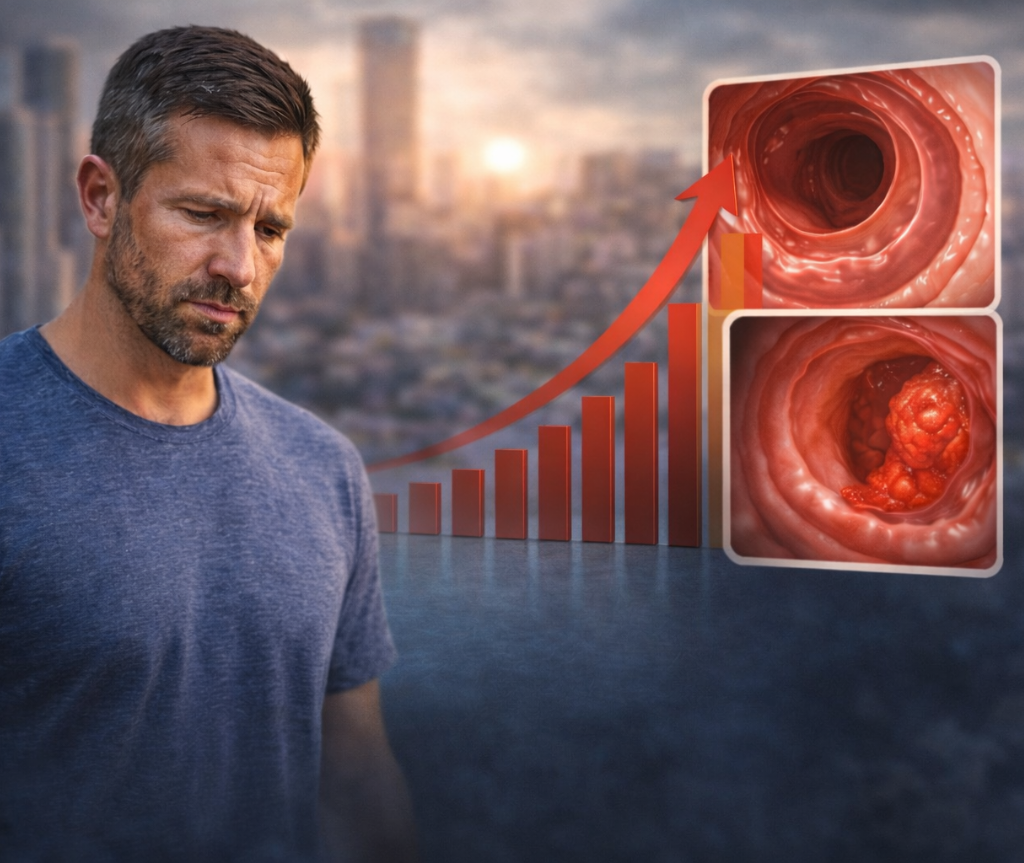

In the United States, colon cancer is now the main cause of cancer death for men under 50. For women under 50, it’s the second leading cause. This is a big change from when doctors mostly worried about colon cancer in people over 65.
Today, about 20% of colon cancer cases are found in people under 50, compared to about 10% in the 1990s. Rates in younger adults have been rising by 1-2% each year for almost 30 years. At the same time, cases in older adults have gone down because of more screening.
Something has changed, and researchers are working to understand what’s driving this trend. The answer appears to involve multiple factors—shifts in diet, lifestyle changes, environmental exposures, and changes in gut bacteria—all working together in ways we’re still piecing together.
This trend can feel worrying, especially if you’re in your 30s or 40s. But knowing what’s going on can help you make good choices for your health. Finding colon cancer early really matters. If it’s caught early, the survival rate is over 90%.
Key InsightColon cancer used to be seen mostly in older adults, but now it’s rising quickly in people under 50. In the United States, it’s the top cause of cancer death for men under 50. Since the mid-1990s, rates in this age group have risen about 2% each year, even as they’ve declined among older adults due to screening. Researchers are looking at several possible reasons, including changes in diet, increased obesity, reduced physical activity, antibiotic use, and shifts in gut bacteria. Although this trend is worrying, catching colon cancer early through screening and knowing the symptoms can make a big difference. Learning about the risks can help you make choices to protect your health. |
The Numbers Behind the Trend
The increase isn’t just happening in the United States. Similar patterns are showing up in the UK, Australia, Canada, and other developed countries. The shift began around the mid-1990s and has been steadily rising since.
According to the American Cancer Society, people born in 1990 have twice the risk of colon cancer as those born in 1950. Now, some cases are showing up in people in their 30s and early 40s, not just those close to 50.
Younger patients are often diagnosed at later stages because neither they nor their doctors expect colon cancer at that age. Symptoms get blamed on stress, hemorrhoids, or irritable bowel syndrome. Stage at diagnosis matters enormously. When caught at stage I or II, the five-year survival rate is over 90%. That drops to around 70% at stage III and below 15% at stage IV.
This issue mostly affects developed countries, especially those with Western lifestyles. Rates are much lower in parts of Asia, Africa, and rural areas where people follow more traditional diets and ways of living. This difference suggests that modern, industrialized life may be part of the problem.
Potential Factors Driving the Increase
No single cause has been identified. Researchers believe the increase likely results from multiple factors working together. Many of these factors affect gut health and inflammation, both of which play a role in how cancer develops.
These are risk factors that affect whole populations. Having one or more doesn’t mean you’ll get colon cancer. Researchers are trying to figure out why rates are going up for so many people.
Changes in Diet and Food Processing
The rise in colon cancer rates lines up with big changes in Western diets. Since the 1980s and 1990s, people have been eating a lot more ultra-processed foods. For many, these foods now make up over half of their daily calories.
High consumption of red meat and processed meats shows a consistent connection to higher colorectal cancer risk. Low fiber intake is another factor—most people eat less than half the recommended 30 grams daily. Diets high in sugar and refined carbohydrates also increase the risk.
Many people now being diagnosed in their 40s grew up eating more convenience foods and processed snacks. The way they ate as kids and young adults may have started changes in their bodies that are leading to cancer years later.
Rising Obesity Rates
Obesity is a known risk factor for colon cancer. Since the 1980s, obesity rates have gone up a lot, especially among younger people. Carrying extra weight, especially around the belly, raises inflammation and changes hormone levels. People with obesity have a 30-50% higher risk of colorectal cancer than those at a healthy weight.
Studies show that being overweight in your teens and 20s may be especially important for your cancer risk later on.
Sedentary Lifestyles
Not getting enough physical activity is another clear risk. People today spend much more time sitting than past generations did. Office work, long drives, and lots of screen time all mean less movement each day.
Studies show that regular exercise lowers colon cancer risk by about 20-25%. Being active helps reduce inflammation, boosts your immune system, and helps your body move waste through the colon faster.
The Gut Microbiome Connection
Your gut is home to trillions of bacteria. Some of these bacteria make compounds that protect against cancer, while others might help it develop. Scientists have found that people with colon cancer often have different gut bacteria than those without cancer.
Antibiotic use, particularly in childhood, can change bacterial populations in ways that may last for years. Low-fiber diets don’t feed beneficial bacteria. High-sugar diets may encourage bacterial types linked with inflammation. Younger generations may have fundamentally different microbiome makeup than older generations.
It’s well known that long-term gut inflammation can lead to cancer. The gut microbiome is key in controlling this inflammation.
How These Factors Work Together
The most likely reason is that several factors add up. Eating lots of processed foods and not enough fiber changes your gut bacteria, which can cause more inflammation. If you also have obesity and don’t move much, inflammation goes up even more, making it easier for cancer to develop.
No single factor explains the whole trend. But together, they show how modern life might be making it easier for cancer to develop.
What This Means for You
Awareness is key. Knowing that colon cancer can happen in younger adults makes you more likely to notice symptoms and take them seriously. If you have ongoing changes in bowel habits, blood in your stool, belly pain that won’t go away, unexplained weight loss, or constant tiredness, talk to your doctor—especially if these symptoms last more than a few weeks.
Don’t think you’re too young for cancer. If you see blood in your stool, even if you think it’s just hemorrhoids, talk to your doctor. It’s better to check and be sure than to miss something important.
Family history is important. If a close relative had colon cancer, especially before age 50, your risk is higher. People with a family history often need to start screening earlier than usual. Talk to your doctor about this.
If you have inflammatory bowel disease or genetic conditions like Lynch syndrome, you’ll need to start screening earlier and do it more often. Your specialist can help you make a screening plan that fits your needs.
Screening guidelines have changed because of rising rates. In the United States, regular screening now starts at age 45 instead of 50. In the UK, it still starts at 50, but this may change. If you have symptoms, a family history, or other risks, you might need to start screening sooner.
Screening works. It can catch precancerous polyps before they become cancer, or catch cancer at an early stage when it’s most treatable. If you’re approaching screening age, following through with screening is one of the most effective things you can do.
Moving Forward with Awareness
The increase in colon cancer among younger adults is a serious issue. It can be unsettling to find out that a disease you thought only affected older people is now showing up in people in their 30s and 40s. But finding it early really changes the outcome.
If colon cancer is found early, survival rates are very high—over 90% in the early stages. The key is to catch it early, which means getting screened and paying attention to symptoms.
Learn the symptoms and don’t ignore changes, even if you’re young. Find out your family history and talk about it with your doctor. Get screened when you reach the recommended age. Think about whether changes in your diet, activity, or weight could help your health.
This trend is worrying, but awareness and action can really help with prevention and early detection. The more people know about what’s happening, the better our chances of finding cancer when it’s easiest to treat.
SEO PACK
SEO Title: Colon Cancer Rising in Younger Adults: Why It Happens
Focus Keyword: colon cancer in younger adults
Supporting Keywords: colon cancer under 50, rising colon cancer rates, early onset colorectal cancer, why colon cancer increasing, colon cancer risk factors, colorectal cancer young people
Meta Description: Colon cancer rates are rising sharply in people under 50. Learn what researchers think is driving this trend and what it means for your health.
Slug: colon-cancer-rising-younger-adults
Main Category: Health Conditions
Subcategories: Cancer, Wellness
Tags: colon cancer, cancer prevention, early detection
Internal Links:
- Early Warning Signs of Colon Cancer That Younger People Often Dismiss (cluster article)
- The Lifestyle Factors That May Be Fueling Colon Cancer in Younger People (cluster article)
- Gut Health and Colon Cancer: What the Research Shows About Prevention (cluster article)
- Understanding Cancer Screening Guidelines (if available)
- Digestive Health and Wellness (if available)
External Sources:
- American Cancer Society statistics on colon cancer in younger adults
- British Journal of Cancer research on rising rates in under-50s
- Cancer Research UK data
- USPSTF 2021 screening guideline update (age 45)
- Research on diet, obesity, and physical activity as risk factors
- Gut microbiome and colorectal cancer research
Content Gaps and Suitability:
- Colon cancer screening options explained (colonoscopy, FIT test, etc.) – HIGH suitability (Health Conditions: educational, practical)
- How to talk to your doctor about colon cancer concerns – HIGH suitability (Health Conditions: empowering, communication-focused)
- Understanding your family history and cancer risk – MEDIUM-HIGH suitability (Health Conditions: educational)
- Living with inflammatory bowel disease and cancer risk – MEDIUM suitability (Health Conditions: specific condition overlap)
- What are colorectal polyps and why they matter – HIGH suitability (Health Conditions: educational bridge content)