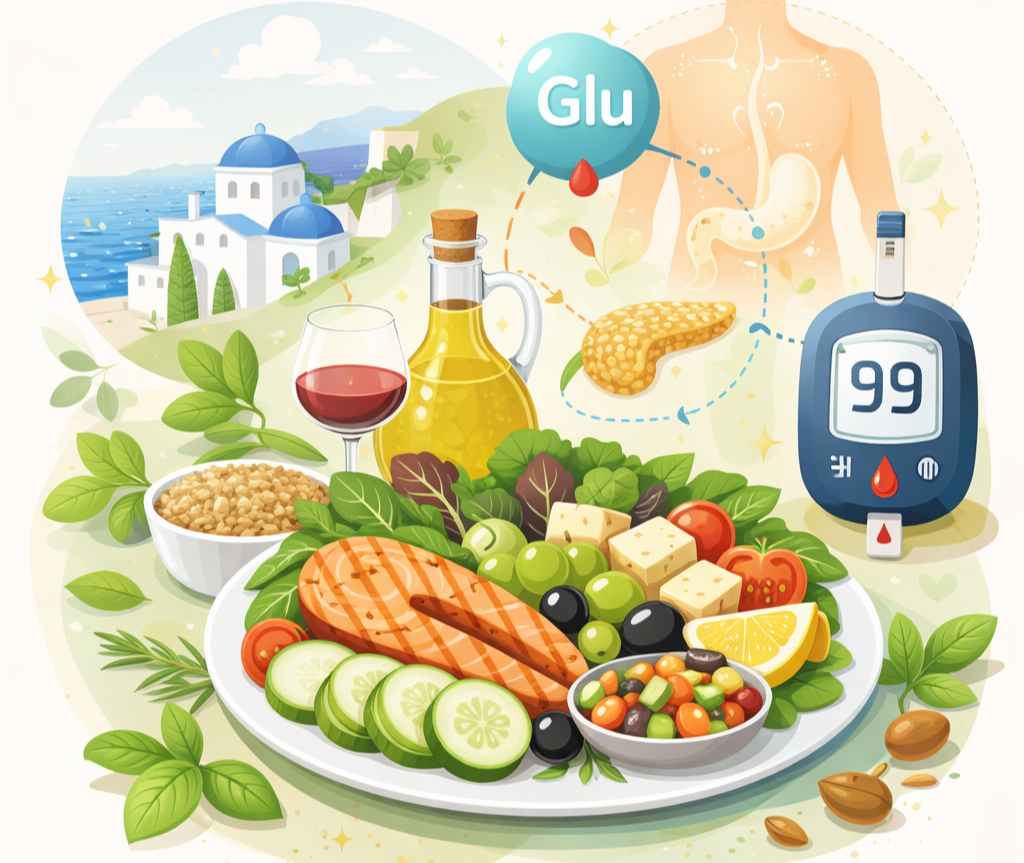

If you have diabetes or prediabetes, your food choices directly affect your blood sugar all day. Every meal counts because your body struggles to properly process glucose.
Many diabetes diets focus on what you can’t eat. They’re strict, restrictive, and hard to maintain for more than a few weeks. The Mediterranean diet and diabetes management work differently. Instead of cutting out most carbs or following complicated rules, this approach helps your body use insulin better and reduces inflammation naturally.
This isn’t just a quick fix. It’s a long-term way of eating that keeps your blood sugar steady and still tastes good. Research shows it can improve your HbA1c (your three-month average blood sugar), reduce your need for diabetes medications, and lower your risk of heart problems.
The main difference is simple. You’re not constantly fighting your body or feeling deprived. Instead, you’re choosing foods that help keep your blood sugar steady, without endless restrictions.
Here’s how the Mediterranean diet can help you manage diabetes, and what you should know to get started.
Key InsightThe Mediterranean Diet can help you manage type 2 diabetes and lower your risk by improving how your body handles blood sugar. It centers on fiber-rich vegetables, healthy fats from olive oil, whole grains, and fish, while reducing processed foods and added sugars. This approach can improve your HbA1c, lower the risk of diabetes complications, and protect your heart. Most importantly, it focuses on lasting changes rather than strict rules, making it easier to stick with over time. |
Why Your Diet Affects Blood Sugar So Directly
When you eat carbohydrates, they break down into glucose in the gut and then enter your bloodstream. Your pancreas releases insulin to help your cells absorb this glucose for energy production.
In type 2 diabetes, your cells no longer respond well to insulin. So, glucose stays in your blood rather than moving into your cells, where it’s needed. Doctors call this insulin resistance.
Over time, high blood sugar damages your blood vessels, nerves, kidneys, and eyes. It also raises your risk of heart disease and stroke significantly. This is why controlling blood sugar with food choices matters so much.
Unlike some diabetes diets, the Mediterranean diet doesn’t cut out most carbs. Instead, it helps your body use insulin more effectively by being rich in dietary fiber and by lowering inflammation. This makes it easier for your cells to respond to insulin and absorb glucose as they should.
How It Helps Your Body Handle Blood Sugar
The Mediterranean diet helps manage diabetes in several ways. Here’s what goes on inside your body.
1. Fiber Slows Down Glucose Absorption
Most meals include vegetables, beans, and whole grains, all of which are high in fiber. Fiber slows the rate at which carbs are converted to glucose in your blood and the rate of absorption. This helps prevent sudden spikes after you eat.
When glucose enters your bloodstream slowly instead of all at once, your pancreas doesn’t have to release as much insulin. This keeps your blood sugar more stable throughout the day.
People with type 2 diabetes who eat this way usually have better blood sugar control than those on a standard low-fat diet. This shows up in both daily blood sugar checks and long-term HbA1c results.
2. Healthy Fats Improve Insulin Response
Olive oil, nuts, and oily fish give you healthy monounsaturated fats and omega-3 fats. These fats help your cells respond better to insulin, so your body doesn’t need as much insulin to move glucose from your blood into your cells.
When you eat carbs along with healthy fats and protein, your blood sugar goes up more slowly and steadily. That’s why Mediterranean meals keep you full longer and don’t cause the energy crashes you get from high-carb, low-fat meals.
3. Lower Inflammation Helps Insulin Work
Chronic inflammation can worsen insulin resistance. The Mediterranean diet helps lower inflammation throughout your body.
Foods such as extra-virgin olive oil, fatty fish, nuts, and colorful vegetables contain compounds that help reduce inflammation. This makes it easier for insulin to work as it should.
The Carb Question Most People Ask
Many people with diabetes worry about eating carbs at all. The Mediterranean diet does include carbs, but what matters most is the type you eat and what you eat them with.
Whole grains like barley, oats, brown rice, and whole-grain bread digest more slowly than white bread, white rice, or regular pasta. You eat them in moderate amounts and always pair them with vegetables, protein, and healthy fats.
This combination helps slow down blood sugar spikes. For example, eating whole-grain pasta with chickpeas, vegetables, and olive oil causes a much slower rise in blood sugar than eating pasta alone with tomato sauce.
The Mediterranean diet doesn’t cut out carbs. Instead, it helps your body handle them better. For many people with diabetes, this feels more doable than avoiding carbs altogether. To eat bread, grains, and legumes. You just eat the right types in the right amounts with the right pairings.
Foods That Support Stable Blood Sugar
1. Legumes can become your main source of protein.
Beans, lentils, and chickpeas are great choices for diabetes. They offer slow-digesting carbs, lots of fiber, and plant protein. Eating legumes often can help lower your HbA1c over time.
You can add them to soups, salads, or serve them as a main dish. Even small amounts help keep your blood sugar steady between meals.
2. Non-starchy vegetables fill half your plate.
Leafy greens, tomatoes, peppers, zucchini, eggplant, broccoli, and cauliflower have little effect on blood sugar. You can eat large portions without worrying about spikes.
With the Mediterranean approach, vegetables should fill at least half your plate at most meals. This naturally means you’ll eat fewer high-carb foods.
Olive oil replaces problematic, unhealthy fats. It would be your main cooking fat. It helps your body use insulin more effectively and may lower the risk of heart disease associated with diabetes.
Use it for cooking, in salad dressings, and for drizzling over finished dishes. The shift from butter or vegetable oils to olive oil results in significant improvements in insulin sensitivity.
3. Fish protects your heart.
People with diabetes have a higher risk of heart disease. Oily fish like salmon, sardines, and mackerel provide omega-3 fatty acids that help protect your heart.
Try to eat fish twice a week. Canned fish is just as good as fresh and is often more affordable.
What You’ll Naturally Eat Less Of
The Mediterranean diet limits foods that can make diabetes worse, but it doesn’t have a strict list of foods you can’t eat.
Processed foods, sugary snacks, and sweet drinks aren’t part of regular meals. They cause quick blood sugar spikes and don’t offer much nutrition. Instead, you swap refined carbs for whole foods.
Red meat and processed meats are eaten only occasionally. Eating a lot of these is linked to a higher risk of diabetes and more complications.
Because no foods are completely off-limits, most people find this way of eating easier to stick with over time. Being consistent matters more than being perfect when it comes to managing diabetes.
What the Research Actually Shows
There’s strong evidence that the Mediterranean diet helps manage diabetes.
A major study found that people with type 2 diabetes who followed this eating pattern had better HbA1c levels and needed less diabetes medication compared to those on a low-fat diet. The improvements were significant enough that some people could reduce their medications.
The Mediterranean way of eating can lower your risk of developing type 2 diabetes by 20-30%. This is based on studies that followed hundreds of thousands of people for many years.
The American Diabetes Association now recommends the Mediterranean diet as one of the eating patterns for managing diabetes. They only suggest approaches with strong research behind them, so this is important.
- You could start your morning with Greek yogurt, berries, walnuts, and a little honey. Or try scrambled eggs with tomatoes and spinach, served with whole-grain toast and a drizzle of olive oil.
- For lunch, you might have a big salad with chickpeas, cucumbers, tomatoes, olives, feta, and olive oil dressing. Or try lentil soup with a slice of whole-grain bread.
- Dinner often includes fish or legumes with lots of vegetables. Baked salmon with roasted vegetables and quinoa is a good option. White bean and vegetable stew with a small whole-grain roll also works well.
For snacks, try a handful of almonds, carrot sticks with hummus, or a piece of fruit.
How to Start Without Overwhelming Yourself
If you have diabetes and want to try this way of eating, start with small, manageable changes.
Add an extra serving of non-starchy vegetables to your dinner this week. Switch to extra virgin olive oil for cooking. Replace one or two servings of red meat each week with fish or legumes.
These small changes add up without feeling overwhelming. Check your blood sugar regularly to see how different meals affect you. Everyone’s body reacts a little differently to the same foods.
If you take diabetes medication or insulin, dietary changes can affect how much you need. Your blood sugar might drop as your insulin sensitivity improves. Work with your doctor or diabetes nurse to adjust medications safely. Never change insulin doses on your own.
Check your blood sugar more often when you first change your eating habits. This helps you find out which foods work best for you.
Portions Still Matter
The Mediterranean diet emphasizes food quality, but portion sizes remain important if you have diabetes.
Olive oil, nuts, and whole grains are healthy but calorie-dense. Large amounts can affect your weight and blood sugar. Most people do well with 2-3 tablespoons of olive oil daily.
You don’t have to weigh every single piece of food. Just keep in mind that even healthy foods can raise your blood sugar if you eat too mucIf you’re not sure about portion sizes, a diabetes educator or dietitian can help you adjust the Mediterranean diet to fit your needs, medications, and blood sugar goals.
Beyond Food: Habits That Help
The Mediterranean lifestyle is about more than just food choices.
Regular physical activity, especially walking after meals, helps your muscles use glucose better. Even a 10-15 minute walk after dinner can really help your blood sugar after eating.
Good sleep helps your body use insulin better. Getting 7-8 hours nightly supports stable blood sugar levels. Chronic stress elevates cortisol, which in turn elevates blood sugar. Finding ways to manage stress through social connection, hobbies, or relaxation actively supports your diabetes management.
Eating slowly and mindfully, as people often do in Mediterranean cultures, helps prevent overeating and improves digestion. These habits make the diet even more effective.
A Sustainable Path Forward
The link between the Mediterranean diet and diabetes management lies in making realistic, long-term changes rather than following strict, impossible rules.
This way of eating helps you control blood sugar by improving your insulin response, lowering inflammation, and slowing how your body absorbs glucose. It also lowers your risk of heart disease, which is very important if you have diabetes.
Instead of constantly battling cravings or feeling deprived, this approach works with your body’s needs. You’re not restricting yourself to misery. You’re choosing foods that help your body function better.
The result is blood sugar control you can actually keep up—not just for a few weeks or months, but for years. It happens one balanced, satisfying meal at a time.