If your back aches after a long day or you feel a bit unsteady during everyday tasks, your core may need strengthening. Your core is more than just visible abs—it’s the central support system that stabilises your body and helps power almost every movement you make.
That’s where core exercises for beginners come in. When done correctly, they can boost confidence, improve balance, and help you walk, lift, and sit with better posture—without overwhelming your body.
Whether you’re completely new to training or returning after a break, these ten beginner-friendly exercises are designed to help you build core strength steadily, at a pace that feels realistic and sustainable.
What Your Core Actually Includes
Your core is more than just your abs. The American Council on Exercise explains that it includes your front abs (rectus abdominis), side muscles (obliques), deep stabilizers (transverse abdominis), lower back muscles (erector spinae), and the hip flexors and glutes that link your legs to your torso.
Strengthening all these muscles helps you build balanced strength that supports you in everyday life.
Why Core Training Matters
Harvard Medical School research shows that having a strong core can reduce lower back pain, improve your balance and stability, help your posture, make daily tasks easier, and help you use better form during other exercises.
Most beginners start to notice these benefits after 4 to 6 weeks of regular training.
Before You Start
If you have ongoing back pain, herniated discs, or haven’t exercised in a while, talk to your doctor before starting core exercises.
Begin with 2 or 3 sessions each week, and make sure to take at least one rest day between workouts. Always warm up for five minutes with light activity like walking or marching in place.
The 10 Essential Exercises
1. Front Plank
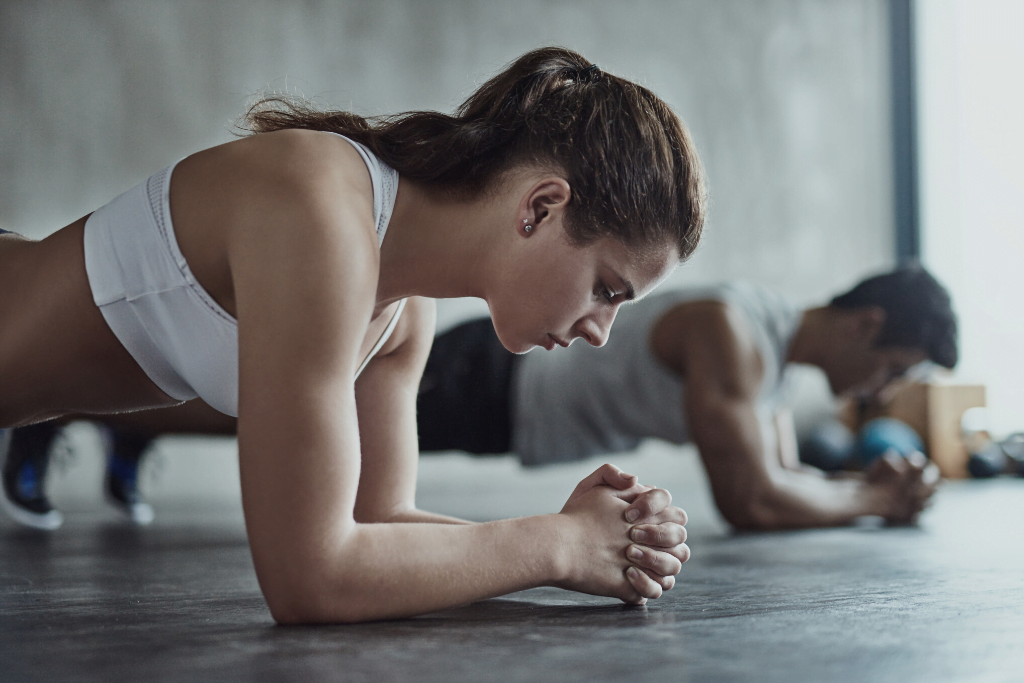
The plank builds overall core strength by working all your stabilizing muscles at once.
Start in a push-up position, then lower onto your forearms. Keep your elbows beneath your shoulders and your body in one straight line. Hold for 20-30 seconds while breathing steadily. Build up to 60 seconds over several weeks.
Avoid letting your hips sag or pike up. Keep your body straight from head to heels.
2. Side Plank
This move targets the obliques, the side muscles that help with twisting and side bending.
Lie on your side with your feet stacked. Lift onto your forearm with your elbow under your shoulder. Raise your hips so your body forms a straight line. Hold for 20-30 seconds, then switch sides.
Keep your bottom knee on the floor if you need extra support while building strength.
3. Dead Bug
This exercise trains core stability while moving your arms and legs, similar to many daily activities.
Lie on your back with your arms pointing straight up and knees lifted to 90 degrees. Lower your right arm overhead while straightening your left leg, keeping your lower back pressed to the floor. Return to start and switch sides. Do 8-10 reps per side.
Keep your lower back flat against the floor throughout to protect your spine.
4. Bird Dog
This move builds balance and coordination while strengthening your core and back.
Start on your hands and knees. Extend your right arm forward and left leg back, keeping your hips level. Hold for 3-5 seconds, return to start, and switch sides. Do 8-10 reps per side.
Keep your hips square to the floor throughout the movement.
5. Glute Bridge
This exercise strengthens your glutes and lower back while engaging your core.
Lie on your back with your knees bent and feet flat. Press through your heels to lift your hips toward the ceiling. Squeeze your glutes at the top, then lower slowly. Do 12-15 reps.
Once regular bridges feel easy, try single-leg bridges for more challenge.
6. Modified Bicycle Crunch
This targets your obliques through rotation while being easier on your neck than regular crunches.
Lie on your back with your hands lightly behind your head. Lift your shoulders slightly off the floor. Bring your right elbow toward your left knee while extending your right leg. Switch sides in a pedaling motion. Do 10-12 reps per side.
Use your core muscles to lift your shoulders, not your hands.
7. Pallof Press
This anti-rotation exercise trains your core to resist twisting. You’ll need a resistance band attached to something sturdy at chest height.
Stand sideways, holding the band at your chest with both hands. Press your hands straight out, resisting the pull. Hold for 3 seconds, then return to your chest. Do 10 reps, then switch sides.
8. Mountain Climbers (Slow Tempo)
This brings movement and light cardio while engaging your core.
Start in a high plank position. Draw your right knee toward your chest, return to plank, and switch legs. Keep your hips level throughout. Do 10-12 reps per side at a slow, controlled pace.
Step your feet forward one at a time if the full movement feels too challenging.
9. Seated Russian Twist
This rotation exercise works your obliques and builds rotational strength.
Sit on the floor with your knees bent and feet flat. Lean back slightly while keeping your back straight. Clasp your hands at your chest. Rotate your torso to tap your hands beside your hip, then switch sides. Do 10-12 reps per side.
Hold a light medicine ball or water bottle once this feels easier.
10. Hollow Body Hold
This advanced beginner move builds serious core strength through a static hold.
Lie on your back with your arms overhead. Press your lower back into the floor. Lift your shoulders and legs a few inches off the ground. Hold for 15-20 seconds. Build up to 30-45 seconds over time.
Keep your knees bent or arms at your sides if the full position is too hard initially.
Building Your Routine
Pick 3 or 4 exercises from the list above to start. Do 2 or 3 sets of each, and rest for 30 to 60 seconds between sets. The whole workout should take about 15 to 20 minutes.
A simple routine to start with is front plank for 30 seconds, dead bug for 10 reps on each side, glute bridge for 12 reps, and modified bicycle crunch for 10 reps on each side. Do this routine 2 or 3 times a week, making sure not to do it on back-to-back days.
After 2 or 3 weeks, if these exercises start to feel easier, add one or two more moves or increase your hold times and reps.
Form Beats Everything
According to the National Academy of Sports Medicine, poor form during core exercises can strain your back rather than strengthen it. Watch for lower back arching during planks or dead bugs, hips sagging or rotating during single-side exercises, holding your breath, and neck strain during crunches or twists.
If you notice any of these problems, shorten your hold time, take a break, or pick an easier version. Good form is always more important than doing more reps.
When to Make It Harder
You know you’re ready to move forward when you can do all the reps with good form, the last few reps don’t feel too hard, and you’re not very sore the next day.
Try increasing your hold times by 10 to 15 seconds, adding 2 or 3 more reps, picking harder versions, or using light resistance. Change one exercise at a time so you can keep good form as you get stronger.
Common Mistakes to Skip
Don’t try to do too much right away. Doing intense workouts every day can lead to burnout or injury. It’s better to stick with 2 or 3 sessions each week.
Remember to keep breathing while you exercise. Holding your breath can raise your blood pressure and make it harder to perform well.
Don’t just focus on your abs. A balanced routine works your front, side, back, and deep core muscles.
Finally, don’t rush your reps. Moving slowly and with control helps you build strength better than going fast with poor form.
What to Expect Over Time
When you’re new to training your core, progress happens gradually. Most people notice better balance and stability within 2 to 3 weeks, reduced lower back discomfort in about 4 to 6 weeks, and more visible muscle tone after 8 to 12 weeks of consistent effort. This timeline is typical when following well-structured core exercises for beginners, rather than pushing too hard too soon.
Aim for two or three sessions per week. You can track progress by noticing how long you can hold a plank or how controlled each repetition feels. These small improvements add up, building strength that supports both workouts and everyday movement.
Over time, a stronger core improves posture, stability, and overall body control, helping your body move more efficiently in the long run.